
YUNHAN Air Filter for Bambu Lab 3D Printers Review
This review is based on real experiences shared by owners in online communities.
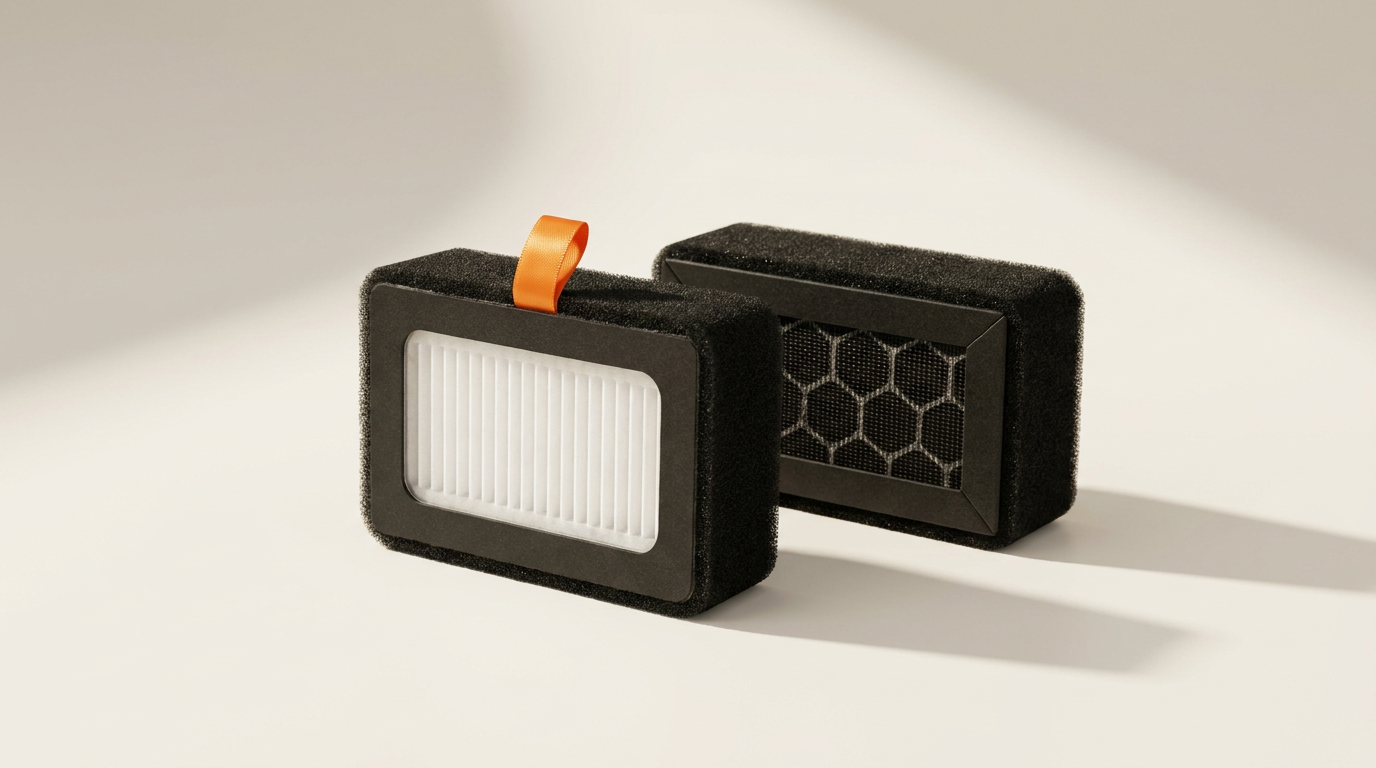
The increasing popularity of enclosed 3D printers like Bambu Lab's lineup has brought crucial attention to managing emissions. While these enclosures improve print quality, they concentrate volatile organic compounds (VOCs), ultrafine particulates (UFPs), and odors, particularly when printing with engineering filaments. A functional air filtration system is not merely a convenience but a health imperative, moving past the common misconception that simply containing fumes is sufficient.
Aftermarket filters like the YUNHAN two-pack promise a cost-effective solution for maintaining a safer printing environment. However, the core tension in this category often lies between upfront savings and sustained performance. This review evaluates whether the YUNHAN filters offer a genuinely comparable alternative to OEM options or if they represent what we term the 'carbon deficit dilemma' where a lower price point necessitates a compromise in filtration longevity and efficacy.
What owners love
- + Fits compatible Bambu Lab printers perfectly
- + Installation is quick and straightforward
- + Noticeably reduces odors and some VOCs
- + Significantly more affordable than OEM filters
- + Includes a HEPA-like layer for particulate filtration
Common complaints
- − Contains less activated carbon than OEM filters
- − Saturates more quickly, especially with high-VOC filaments
- − Long-term efficacy is questionable due to reduced carbon volume
- − Perceived value can be misleading if frequent replacement is necessary
Design & Build
The YUNHAN replacement filters feature a dual-stage design, integrating activated carbon with a pleated layer for particulate filtration. Owners consistently report that these filters replicate the physical dimensions of the OEM filters precisely, ensuring a snug fit within Bambu Lab X1, X1C, P1S, and P1P printers. Several users noted the filter appears well-made, mimicking the OEM aesthetic and packaging. However, a recurring theme among more discerning users is the filter's comparative lightness. This reduced weight signals a key design divergence from OEM specifications, which translates to a lower volume of activated carbon within the cartridge. While the 'beehive structure' is advertised to maximize surface area, the fundamental limitation of less active material remains a point of concern for comprehensive VOC absorption.
Setup & Ease of Use
Installation of the YUNHAN filters is universally described as effortless. The plug-and-play design requires users to simply remove the existing filter and slide the new cartridge into place. This process takes mere seconds, aligning with the manufacturer's claims of simplicity. The direct compatibility and identical physical footprint eliminate any compatibility concerns or the need for modifications, making this an accessible upgrade for any Bambu Lab owner. This 'set it and forget it' aspect for basic installation contributes significantly to the positive initial user experience.
Performance in Real Use
In day-to-day operation, the YUNHAN filters perform adequately for general odor reduction, particularly with common filaments like PLA and PETG. Owners printing these materials report a noticeable decrease in plastic smells, contributing to a more pleasant environment. The inclusion of a HEPA-like layer is a perceived benefit, addressing fine particulates alongside gaseous compounds. However, the performance narrative shifts when users engage with high-VOC filaments such as ABS, ASA, PC, or PA. Here, the 'carbon deficit dilemma' becomes pronounced; several long-term users indicate the filters saturate quickly, requiring more frequent replacements than OEM alternatives. While the initial filtering capacity is present, its duration is truncated, especially in setups where heavy VOC production is constant. This rapid saturation means that while the filter works, its effective lifespan for demanding applications can be significantly shorter, which is a critical consideration for sustained air quality.
Software & Ecosystem
As a passive filter cartridge, the YUNHAN product operates independently of any software or digital ecosystem. Its function is purely mechanical filtration, integrating directly into the physical design of the Bambu Lab printer without requiring any firmware updates, application controls, or connectivity. This simplicity means there are no software-related benefits or drawbacks to consider; the user experience is solely dependent on the physical filter's attributes and performance.
Value & Reliability
The primary appeal of the YUNHAN filters lies in their significantly lower price point compared to OEM options, often retailing for less than half the cost per filter. This value proposition is compelling for casual users or those primarily printing low-VOC filaments. For these scenarios, the filters offer a reliable and affordable means to maintain basic air quality. However, the 'hidden cost of carbon' emerges for users who frequently print high-VOC materials. The reduced activated carbon volume necessitates more frequent filter changes, potentially eroding the initial cost savings over time. While the filters are reliable in their initial performance, their long-term value hinges on individual printing habits and the type of materials processed. If replacement intervals double or triple, the cost parity with OEM filters quickly approaches, undermining the initial budget advantage.
Verdict
Consider - These filters offer a cost-effective entry into improved air quality for casual 3D printing, but carry a hidden cost for power users.
These YUNHAN filters are a suitable option for Bambu Lab printer owners who primarily use low-VOC filaments (PLA, PETG) or engage in infrequent, short print jobs. Their low cost and ease of installation make them an accessible upgrade for basic odor management. Buyers seeking a budget-friendly way to enhance their printing environment without extensive VOC concerns will find value here. Those printing high-temperature, high-VOC materials like ABS or ASA should approach with caution; the reduced carbon volume means more frequent replacements, potentially negating the upfront savings.
Ultimately, these filters highlight the 'first-layer cliff' in aftermarket consumables: they meet the immediate need for a basic replacement at a competitive price, but they fall short in sustained, heavy-duty performance. This product exemplifies the trade-off between superficial compliance and actual filtration capacity, reinforcing that true VOC mitigation requires a more robust and perhaps more expensive solution, rather than simply ticking a box for filter presence.
FAQ
More 3D Printer Parts & Accessories reviews
ELEGOO 3D Printer Adhesive Glue Review: Reliable Bed Adhesion
SAHVAIM AMS Lite Filament Hub Review: Quick Fix for Bambu A1
IdeaFormer-3D Bambu Lab Textured PEI Plate Review
Wefuit 0.2mm Hardened Steel Hotend Review: Budget Precision
HzdaDeve P1S/P1P Hotend Assembly Review: Cheap Downtime Insurance
3DZWMAN RGB LED Lamp Kit 001 Review: Better Than OEM
This review is based on real experiences shared by owners in online communities.