
OilStick 3D Printer Lubricant Brush Review
By AValidReview. An AI-assisted summary of customer feedback, not a hands-on test.
Most 3D printer owners spend hours tuning slicer profiles, pressure advance, and input shaping while actively ignoring the physical motion system underneath. The reason is not ignorance; it is the maintenance friction tax. Applying conventional machine oil from a standard dropper bottle into the cramped enclosure of a modern CoreXY machine is an exercise in mess avoidance. A single errant drip onto a textured PEI plate ruins first-layer adhesion, while overspray from aerosol alternatives degrades rubber timing belts.
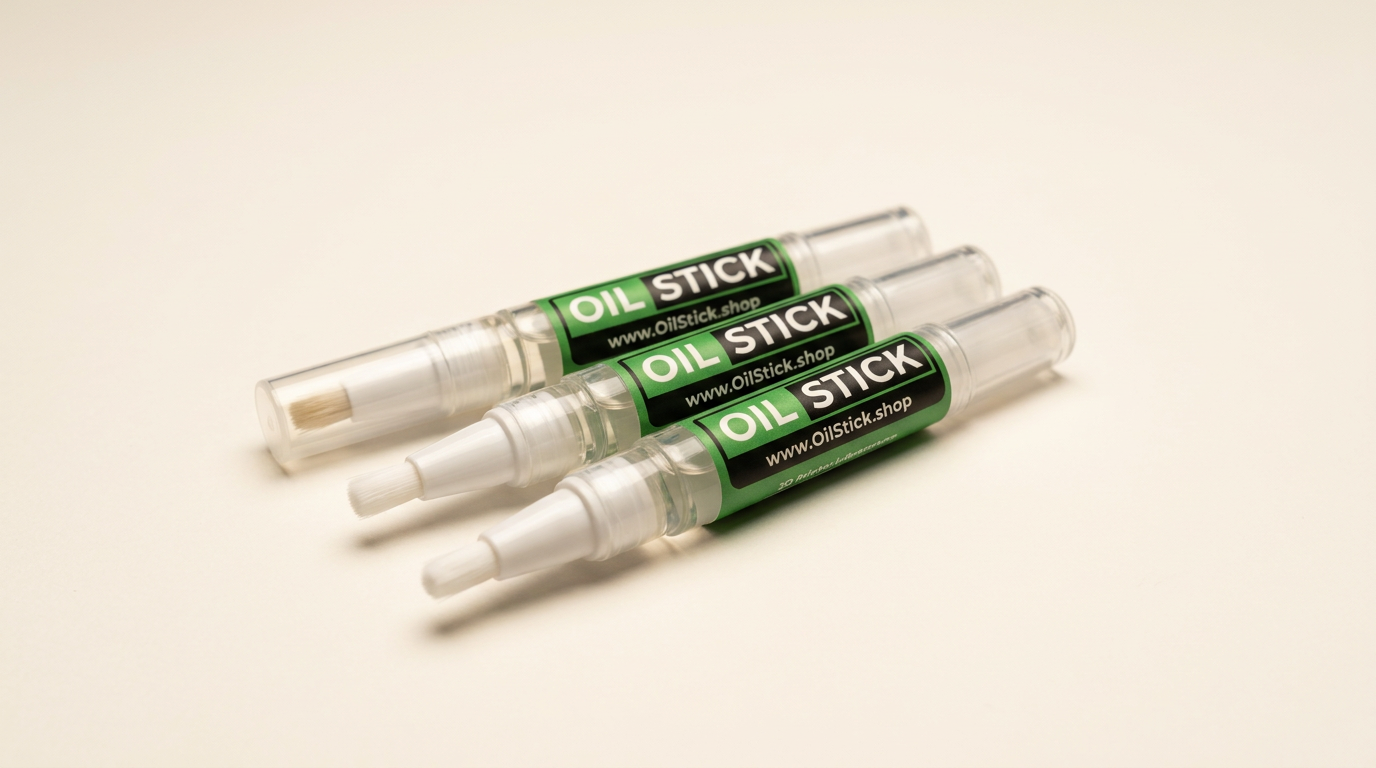
The OilStick approaches this mechanical chore from an ergonomic angle. Rather than selling bulk fluid, it packages ISO G100 PTFE-infused machine oil inside a twist-to-load pen applicator with an integrated brush tip. By borrowing a delivery form factor familiar to cosmetics and watchmaking, it targets the precise contact points of linear rails, guide rods, and lead screws.
Our evaluation reveals a product that does not try to reinvent mechanical lubrication chemistry, but instead fixes the application method that causes so many operators to delay routine servicing. For anyone managing tight-tolerance machines in enclosed chambers, this form factor turns an awkward, rag-heavy workshop ritual into a controlled, ten-second routine.
What owners love
- + Precision twist-to-load brush eliminates errant drips on print beds
- + Slender pen profile reaches tight clearances inside enclosed printers
- + Noticeable acoustic dampening on neglected rails and lead screws
- + High-visibility exterior stands out in cluttered tool drawers
- + Three-pack provides an extended supply for multi-printer setups
Common complaints
- − Higher unit cost per ounce than bulk industrial oil containers
- − Sealed applicator body prevents refilling with custom lubricants
- − Owners must verify whether specific motion systems specify oil rather than grease
Design & Build
The OilStick adopts a pen-style silhouette with a twist mechanism at the base and a dense brush applicator at the top. The casing is finished with bright, high-visibility labeling designed specifically to prevent it from vanishing inside dark tool organizers or beneath print farm workbenches. The core innovation here is the mechanical metering: rotating the dial advances a controlled volume of ISO G100 synthetic oil into the core of the brush fibers without pressurizing the reservoir. The brush bristles are stiff enough to trace the ball raceways of miniature linear guides, yet compliant enough to coat the helical grooves of a Z-axis lead screw without splaying out of shape.
Setup & Ease of Use
Using traditional squeeze bottles inside enclosed gantries like the Bambu Lab P1S or compact bedslingers typically requires contorting your hands around frame extrusions while holding a shop towel underneath to catch runoff. The OilStick replaces that awkward balancing act with what we call targeted micro-dosing. Priming the pen requires only a couple of clicks until the translucent fluid glistens at the base of the bristles. From there, users draw the brush directly along metal guide rods or screw threads. Because the fluid remains bound by capillary action within the brush fibers until it contacts metal, owners consistently report zero dripping onto stepper motors, heated beds, or electrical wiring below.
Performance in Real Use
In practical maintenance workflows, the PTFE-infused formulation demonstrates immediate acoustic and mechanical benefits. Owners servicing machines running on dry factory lubricant, such as mid-sized CoreXY or Cartesian units several months into service, report an immediate reduction in high-frequency travel chatter along linear rails. The ISO G100 viscosity strikes an appropriate balance: it is fluid enough to wick into recirculating ball bearings without creating excessive viscous drag, yet heavy enough to avoid slinging off during rapid travel accelerations. Beyond dedicated 3D printer hardware, the brush tip proves equally capable at silencing stubborn household hinges, confirming its utility as a general precision oiler.
Software & Ecosystem
While lubricants are purely physical consumables, modern 3D printers increasingly incorporate firmware-level maintenance timers that demand regular user intervention. When a machine flashes a scheduled maintenance prompt across its touchscreen, the bottleneck is rarely diagnostic; it is whether the user has the patience to execute the service immediately. The OilStick fits neatly into this ecosystem by lowering the barrier to compliance. It is worth noting, however, that printer motion components are not uniform. While linear rails and steel guide rods thrive on thin machine oil, certain heavy Z-axis lead screws or POM anti-backlash nuts originally call for lithium grease. Buyers should consult their hardware manual to confirm oil compatibility before broad application.
Value & Reliability
Priced in the $20 to $30 range for a pack of three, the OilStick carries a clear premium when measured strictly by fluid volume against a generic quart of mineral oil. That comparison, however, misses the functional point of the package. Bulk oil requires secondary droppers, lint-free wipes, and frequent cleanups of over-saturated components. With each pen estimated to provide roughly a year of regular upkeep for a single machine, a three-pack easily covers multiple years of home use or services a modest print farm. The true financial return lies in preventative protection: avoiding contaminated print sheets and preventing premature ball-bearing pitting caused by neglected motion rails.
Verdict
Buy - The cleanest, most ergonomic method for applying precision oil to linear motion rails without risking print bed contamination.
This accessory is ideally suited for owners of enclosed 3D printers, multi-machine farm operators, and hobbyists who find themselves repeatedly putting off routine rail maintenance due to the mess of liquid droppers. If you run machines like the Bambu Lab P1S, Elegoo Centauri, or custom Voron builds, having one of these pens tethered to your workbench ensures you actually lubricate your hardware on schedule.
Industrial users with dozens of open-frame printers who consume fluid ounces of oil each month may prefer bulk grease and shop rags to save money. For everyone else, the OilStick solves a persistent usability failure in hardware upkeep: it transforms a dreaded, drip-prone workshop chore into a clean, five-second habit.
FAQ
More 3D Printer Parts & Accessories reviews
Eracosy Filament Storage Bags Review: The Seal Lottery
Fungiworks Filament Storage Box 4-Pack Review
Hemulac Hardened Steel Extruder for Bambu P1P and P1S Review
Creality Star-Shaped PTFE Tube Review: Smart Design, Mixed Results
YOOPAI 2-Pack Cold Build Plate Review: Aggressive Bed Grip
Wefuit Bambu Lab Liquid Bed Adhesive Review
This review is based on real experiences shared by owners in online communities.