
AAKQ 3D Printer Oil Stick Review: Cleaner Rail Care
By AValidReview. An AI-assisted summary of customer feedback, not a hands-on test.
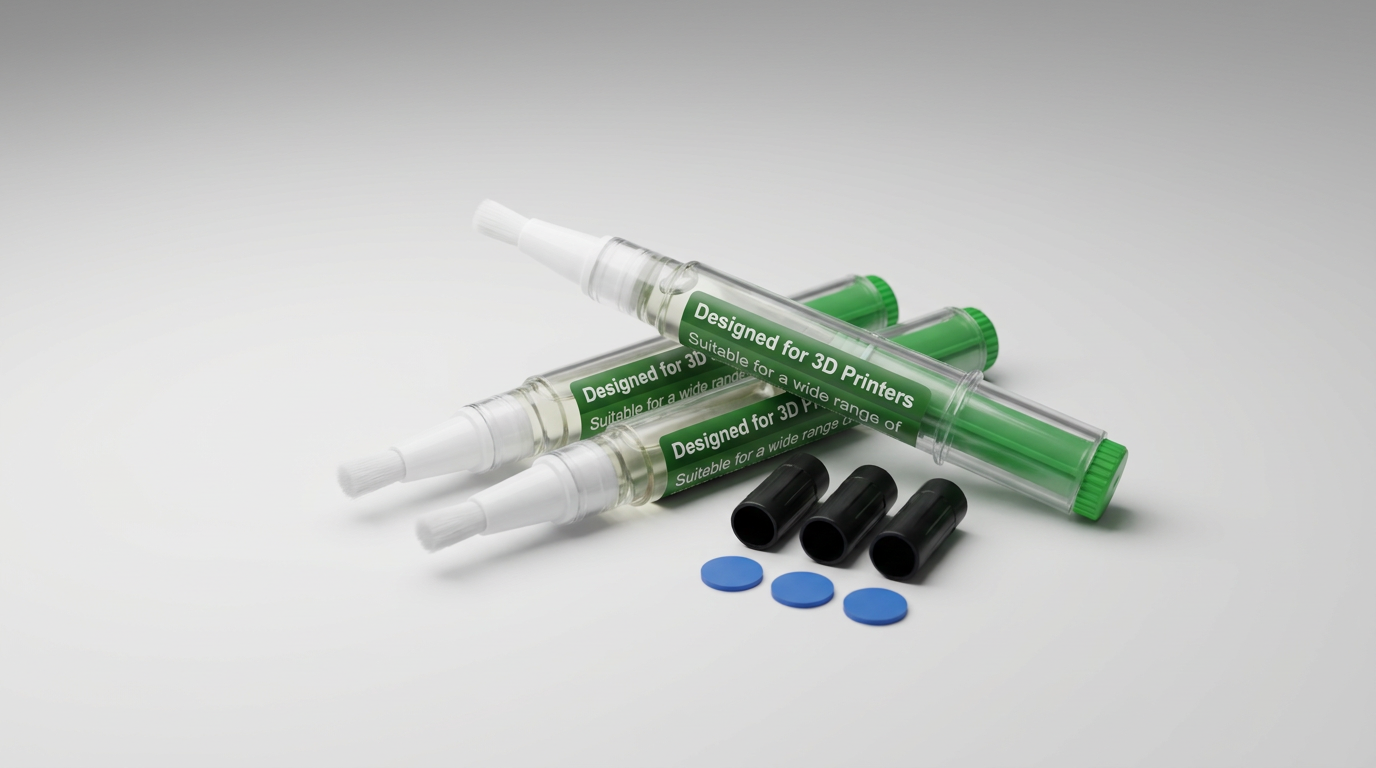
Most 3D printer owners delay routine maintenance because of the rag-and-grease penalty: the messy ritual of hunting down lint-free wipes, squeezing excess oil from standard bottles, and wiping sticky overspray off aluminum extrusions. When lubrication is messy, motion systems suffer. Linear rods dry out, lead screws chatter, and layer lines gradually deteriorate. AAKQ attempts to eliminate this friction point by borrowing a classic cosmetic design, packaging PTFE-infused machine oil into a twist-to-dispense brush pen.
By turning a messy mechanical service task into a targeted, single-handed swipe, this three-pack aims to make routine care frictionless. Instead of flooding lead screws and collecting dust, the pen delivers a controlled thin film directly to contact surfaces. It is an unpretentious utility tool, but one that targets a genuine point of user neglect across open-frame bedslingers and enclosed CoreXY machines alike.
While the delivery mechanism represents a clear upgrade over traditional dropper bottles, it also introduces its own quirks. Dispensing viscous lubricant through an internal piston requires patience, and over-twisting can lead to a delayed surge of oil. Even so, for workshop users and print farm operators who prioritize clean workspaces, this small applicator reshapes daily maintenance habits.
What owners love
- + Integrated brush prevents overspray and messy hands
- + PTFE-infused oil spreads evenly without gumming up rods
- + Reaches tight gantry spaces inside enclosed printer frames
- + Three-pack bundle provides ample supply across multiple machines
- + Includes supplemental felt pads and mounting clips
Common complaints
- − Twist mechanism suffers from metering lag that can cause excess flow
- − Small fluid reservoir compared to standard grease bottles
- − Requires careful wiping of the brush tip between uses to prevent grit transfer
Design & Build
The AAKQ applicator uses a cylindrical plastic barrel featuring a rotating base dial and a tapered nylon brush head. Rather than relying on gravity or squeeze pressure, rotating the end cap drives an internal plunger forward, forcing lubricant up through the core and directly into the bristles. The design is essentially a modified cosmetic twist pen repurposed for industrial fluids, and it works surprisingly well in an additive manufacturing environment. High-contrast labeling wraps the exterior, making it easy to identify quickly in a cluttered tool drawer filled with hex keys, scrapers, and flush cutters. In the hand, the plastic shell feels lightweight yet sufficiently durable for workshop duty. The brush bristles are stiff enough to scrub debris from lead screw threads while remaining soft enough to conform around the curvature of cylindrical linear rods without splaying prematurely.
Setup & Ease of Use
Getting lubricant to flow requires priming the feed mechanism. Because new units ship with an air pocket between the piston head and the brush root, users must turn the ratchet base several clicks before the first drop reaches the bristles. This introduces what can be called metering lag: turning the dial compresses internal air before the fluid actually moves, tempting the user to over-twist. Owners note that learning to regulate flow takes a couple of tries. Once primed, however, operating the pen is straightforward. Instead of masking off belts and build plates, you simply stroke the damp brush along linear rails, Z-axis rods, or bearing races. AAKQ also bundles auxiliary felt pads and clips, offering an alternate wiper-style contact method for machines with dedicated carriage oilers.
Performance in Real Use
In day-to-day operation, the PTFE-blended lubricant performs reliably on typical motion hardware. Applied in a thin, controlled sheen, it quieted squeaking lead screws and relieved minor axis binding without leaving behind the thick, gummy residue typical of automotive lithium grease. Machine owners report that treated surfaces do not attract excessive ambient dust or filament wisps under normal printing conditions. The brush tip proves especially advantageous on enclosed CoreXY printers, where reaching rear Z-screws and lower idler bearings often requires awkward contortions. By keeping the fluid contained on the brush fibers, the stick prevents stray drops from landing on heated build surfaces, where silicone or oil contamination can ruin first-layer adhesion.
Software & Ecosystem
While this is a purely mechanical accessory without firmware or companion software, its utility directly influences printer health and automated calibration routines. Modern high-speed machines rely heavily on precise input shaping and sensor-based resonance testing to compensate for vibration. Dry linear rails or inconsistent friction across the gantry introduce mechanical noise that confuses accelerometer readings and leads to ghosting artifacts on prints. Incorporating a quick swipe of the AAKQ stick into weekly maintenance schedules ensures that stepper motors face uniform resistance, preserving mechanical repeatability without requiring users to disassemble axis carriages or dismantle gantry assemblies.
Value & Reliability
Priced in the $20 range for a three-pack, the AAKQ kit commands a moderate markup per ounce compared to buying a bulk bottle of machine oil and a box of swabs. However, the value lies entirely in the convenience and reduction of waste. A single stick contains enough fluid to service a standard printer through dozens of maintenance cycles because the brush format prevents the heavy over-application typical of squeeze bottles. Having three distinct pens allows operators to station units across multiple workstations or dedicate separate pens to lead screws and high-precision linear guides. As long as users keep the protective caps secured to keep the bristles clean between sessions, the package offers strong utility for the cost.
Verdict
Buy - A clever packaging pivot that makes regular 3D printer rail maintenance clean, controlled, and effortless.
FAQ
More 3D Printer Parts & Accessories reviews

Uczdru Mini RGB LED Tea Lights for Bambu Lab KC020 Review
OilStick 3D Printer Lubricant Brush Review
Eracosy Filament Storage Bags Review: The Seal Lottery
Fungiworks Filament Storage Box 4-Pack Review
Hemulac Hardened Steel Extruder for Bambu P1P and P1S Review
Creality Star-Shaped PTFE Tube Review: Smart Design, Mixed Results
This review is based on real experiences shared by owners in online communities.