
Wefuit Bambu Lab Liquid Bed Adhesive Review
By AValidReview. An AI-assisted summary of customer feedback, not a hands-on test.
In an era of auto-tramming load cells and textured PEI build surfaces, bed adhesives should theoretically be obsolete. Yet modern high-speed CoreXY printing has simply shifted the failure point into what we call the Release Dilemma. Filaments like TPU and high-temp PETG no longer fail just by lifting off the plate. Instead, they bond with such extreme ferocity that removing a finished model threatens to rip the PEI coating straight off the spring steel sheet. Adhesives in this ecosystem are no longer just sticky helpers; they are sacrificial protective layers.
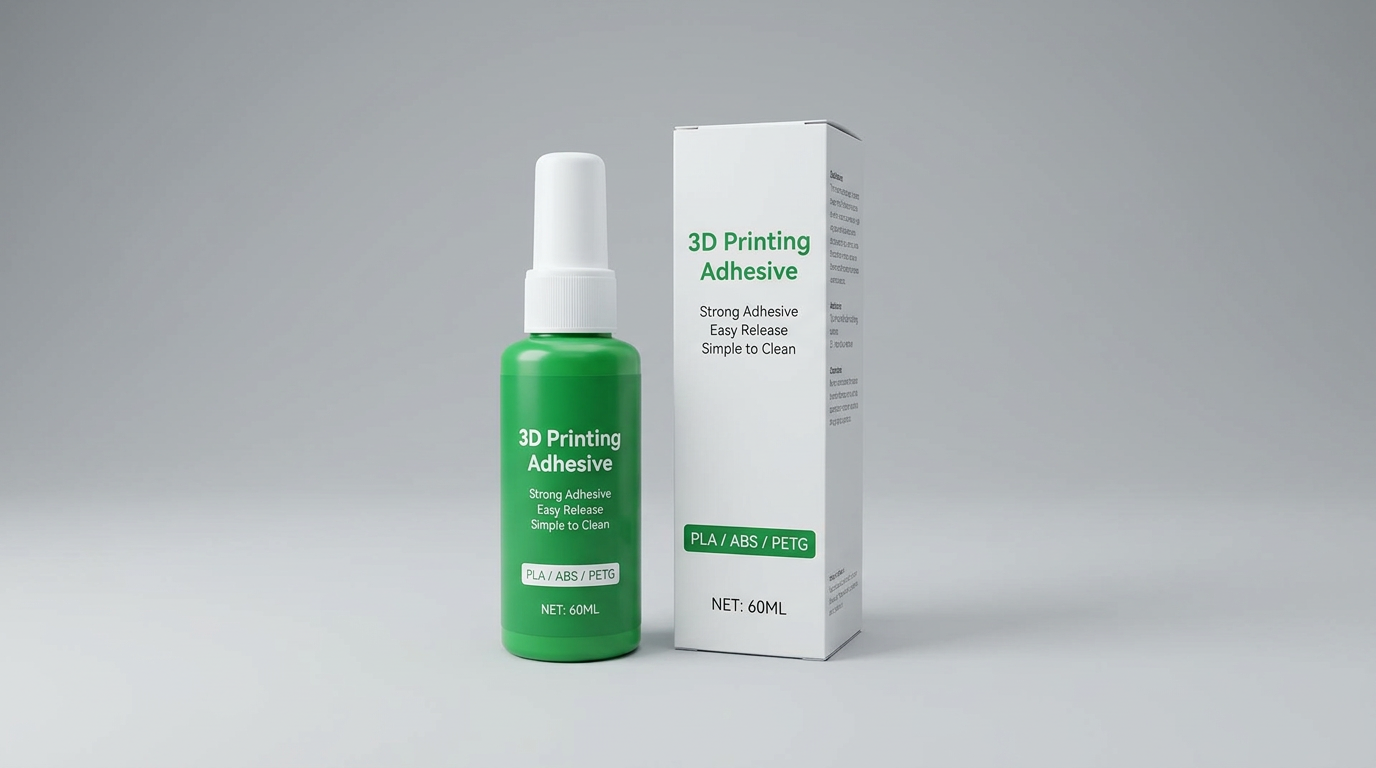
Wefuit liquid adhesive targets Bambu Lab owners looking for an alternative to traditional purple glue sticks. Packaged in a compact 60ml bottle with a valve-controlled applicator head, it aims to deliver a micro-thin, uniform barrier for everything from PLA to warp-prone ABS and elastic TPU. It promises the grip of an industrial bonding agent with the cleanup simplicity of water-soluble chemistry.
After analyzing owner feedback across hundreds of print hours, the reality shows clear advantages over solid sticks alongside a few mechanical compromises. While it solves the problem of clumpy bed residue, its manual application requires a practiced touch to avoid cosmetic defects on bottom layers.
What owners love
- + Functions as a reliable sacrificial barrier to prevent TPU from bonding permanently to PEI
- + Rinses away completely with plain tap water with zero mechanical scraping required
- + A single thin application can withstand multiple consecutive print cycles
- + Leaves a much flatter profile than crusty solid glue sticks
- + Resists edge lifting on high-shrinkage materials like ABS and PETG
Common complaints
- − Valve dispenser demands firm pressure and can accidentally dump excess liquid
- − Costs significantly more than standard PVA craft sticks per fluid volume
- − Over-application leaves visible streak marks transferred to the bottom layer
- − Slow to dry if applied mid-print onto an already heated build plate
Design & Build
Wefuit packages this liquid adhesive in a cylindrical 60ml plastic bottle equipped with an internal push-valve and a porous sponge top. The mechanical premise is straightforward: pressing the applicator tip down against the build plate opens an internal valve, releasing liquid into the sponge for a clean, wipe-on pass. In theory, this eliminates the uneven ridges left behind by solid glue sticks. In practice, owners experience the applicator tax. The internal spring mechanism requires deliberate, heavy pressure to open. Push too gently and the sponge drags dry across the steel; press a fraction too firmly and the bottle discharges a puddle that requires rapid wiping to salvage. The bottle cap seals adequately to prevent early evaporation, but the valve assembly introduces unnecessary friction to what should be an effortless pre-flight routine.
Setup & Ease of Use
Applying the fluid requires a clean plate, ideally degreased with isopropyl alcohol or warm dish soap. Spreading the liquid cold yields the best results. Owners who attempt what we term emergency mid-job patching, applying liquid mid-print to rescue a tipping purge tower, discover that the formula does not dry faster on a hot plate. Instead, it forms a sticky sludge that smears rather than cures. Post-print maintenance exposes the Dissolution Gap. If you attempt to scrape dried residue off a cooled plate with a metal spatula, the film resists like dried stucco and risks gouging the build sheet. Take the exact same plate to a sink, however, and warm tap water dissolves the adhesive film instantly without any scrubbing. The formula lives up to its water-soluble claim, provided users avoid treating it like traditional mechanical gunk.
Performance in Real Use
During active printing, the adhesive balances hold and release exceptionally well. For ABS parts running inside enclosed chambers, it generates sufficient tensile grip to counteract thermal contraction along sharp corners. More importantly, it solves the catastrophic bonding problem inherent to flexible filaments. Printing TPU directly on smooth PEI usually destroys the build sheet during removal; Wefuit adhesive creates an intermediate shear barrier that releases cleanly once the steel sheet cools to room temperature. Durability between coats is another asset. Owners report running four to six cycles before needing to reapply, making the 60ml volume go considerably further than expected. The primary compromise appears on aesthetic parts. If the user overlaps passes during application, the liquid leaves distinct swipe marks on the plate that imprint directly onto the first layer of the finished print.
Software & Ecosystem
Because this adhesive directly mimics the factory liquid glue offered for Bambu Lab P1P, P1S, and X1-Carbon machines, it integrates cleanly with printer hardware. Unlike textured hairsprays that create airborne aerosol mist inside enclosed gantry tracks and carbon rods, this sponge-down liquid stays strictly on the build plate. It works across smooth PEI, textured sheets, and Bambu Engineering plates without causing false positives during the Micro Lidar calibration sequence. High-contrast streaks from heavy coats can occasionally cause bed inspection algorithms to flag phantom first-layer imperfections, but a thin, uniform spread clears scanning without error. The formulation behaves consistently with manufacturer slicer temperature presets, requiring no customized bed temperature profiles.
Value & Reliability
Sitting in the $15 to $20 range, Wefuit liquid adhesive occupies an awkward pricing bracket. Skeptical owners frequently point out that a multipack of standard purple craft glue costs under $5 and delivers comparable raw adhesion. That criticism is valid if raw holding power is your only metric. What buyers are really paying for here is surface uniformity and fast maintenance. A solid glue stick leaves chunky, irregular plate topography that ruins smooth bottom finishes and requires vigorous scrubbing to strip. Because this liquid formula requires only a micro-meter layer that lasts across several runs, a single 60ml bottle comfortably manages months of active hobbyist printing. It represents a modest premium for saved prep time, even if it feels overpriced compared to basic stationery alternatives.
Verdict
Buy - Reliable first-layer hold and clean water washouts make this liquid adhesive worth the premium for high-speed printing.
This adhesive is the right choice for owners running demanding filaments like ABS, PETG, and TPU on smooth or engineering build plates. If your priority is protecting expensive print sheets from tear-out while keeping bottom surfaces flat and residue-free, the convenience easily outweighs the price. Skip this bottle if you print exclusively with standard PLA on textured PEI sheets, or if you do not mind scrubbing purple glue crust off your plates to save a few dollars.
Modern 3D printing consumables are shifting from adhesion promoters to sacrificial insurance policies. Wefuit 60ml liquid glue proves that the value of an adhesive is no longer measured by how tightly it clamps down, but by how cleanly it steps aside when the job is done.
FAQ
More 3D Printer Parts & Accessories reviews
YOOPAI 2-Pack Cold Build Plate Review: Aggressive Bed Grip
Miskis 46-Piece 3D Printer Tool Kit Review: Bench Essentials
Dynta Silk PLA Bundle Review: 6 Colors, 250g Spools
HysiPrui P1S/P1P Integrated Hotend Review: Cheap Spares, Real Trade-Offs
HP OfficeJet Pro 8135 Review: The Cloud-Tethered Workhorse
HzdaDeve Bambu P1S Hotend 3-Pack Review: Value Meets Risk
This review is based on real experiences shared by owners in online communities.