
Vacbird Upgraded Filament Storage: Essential for Serious 3D Printing
This review is based on real experiences shared by owners in online communities.
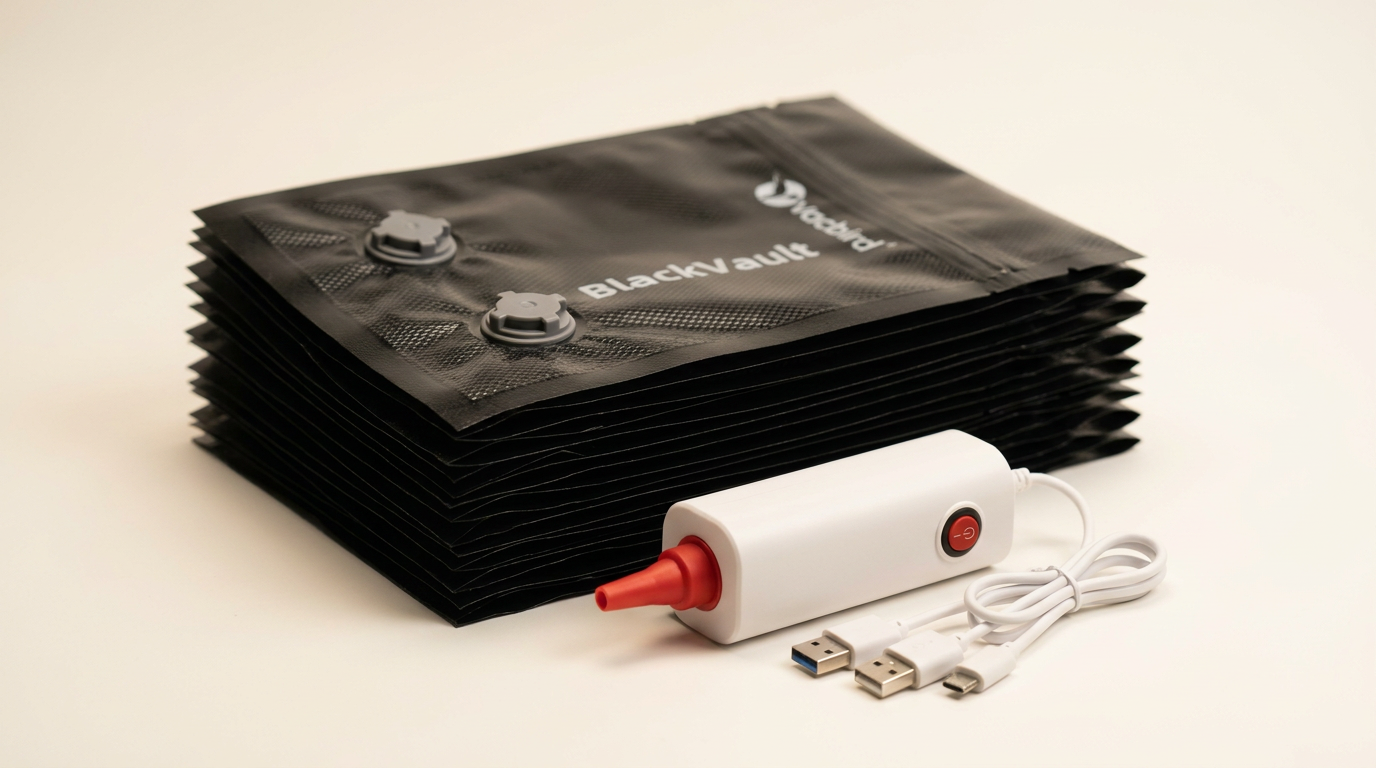
3D printing filament, particularly hygroscopic types, degrades rapidly with moisture exposure, leading to failed prints and wasted material. While vacuum sealing bags have long been a common mitigation strategy, their adoption has been hampered by cumbersome manual pumps and inconsistent bag quality. The Vacbird Upgraded 3D Filament Vacuum Storage Bags address these pain points with a key upgrade: an integrated USB-powered pump.
This system positions itself as an essential tool for any serious 3D printer owner, shifting filament storage from a chore to an efficient, automated process. Its primary value proposition lies not just in moisture prevention, but in enabling a streamlined workflow that maintains material integrity without significant user effort.
However, its effectiveness hinges on managing subtle operational nuances and recognizing that, even with improved automation, proper technique remains paramount. It represents a significant step towards democratizing robust filament preservation, yet it introduces its own set of minor considerations for optimal performance.
What owners love
- + Integrated USB pump offers significantly faster and easier air removal than manual options
- + Bags maintain a vacuum seal effectively for extended periods, often months
- + Thick, durable bag material resists punctures and supports repeated use
- + Light-blocking design helps protect filament from UV degradation
- + Compatible with a wide range of filament spool sizes, including 1KG rolls
Common complaints
- − Pump alignment on the bag valve requires careful positioning for effective suction
- − A small percentage of bags may exhibit seal leakage on first or subsequent uses
- − Tight bag opening can make inserting some filament spools challenging
- − Pump's USB power source requires a separate adapter; it is not battery-operated
- − Strong vacuum can deform cardboard spools if not monitored
Design & Build
The Vacbird storage system components reflect a pragmatic design philosophy aimed at durability and function. The bags, constructed from a PA+PE composite material, draw consistent praise for their thickness and perceived robustness. Owners describe them as heavy-duty and capable of withstanding repeated sealing cycles, a crucial attribute for long-term use. The dual-sided design, featuring a transparent front for content identification and an opaque rear for light blocking, demonstrates a considered approach to filament preservation, protecting against both moisture and UV degradation. This 'layered defense' is a notable differentiator from simpler clear bags. While the bags are generally well-sized for 1KG spools, a recurring observation is the tight fit, occasionally necessitating careful manipulation to avoid stressing the bag opening during insertion. The pump itself is compact and fits comfortably in hand, a design choice that supports its portable USB-powered nature, though some users note its specific power source requirement (USB-A) and lack of internal battery.
Setup & Ease of Use
Setting up the Vacbird system initially presents a slight learning curve, particularly regarding pump alignment. While the manufacturer advertises quick, auto-stop sealing, several owners report that achieving effective suction requires precise placement of the pump over the bag's valve. The 'flat surface principle' emerges as a critical operational insight: ensuring the bag is laid flat, especially under the valve, significantly improves pump performance. Some users even resort to placing an object, such as a desiccant container, or a soft surface, like a cloth placemat, under the valve area to facilitate proper sealing. Once this technique is mastered, the process becomes straightforward, leading to rapid air removal. The zip-clip mechanism for the primary bag seal receives consistent approval for its effectiveness, preventing air re-entry prior to vacuuming. This system embodies the 'operational fluency' model, where initial friction gives way to efficient execution once specific user habits are formed.
Performance in Real Use
In day-to-day operation, the Vacbird system delivers on its core promise of effective filament preservation. Owners consistently report that bags hold their vacuum seals for extended periods, often months, significantly prolonging filament viability and improving print quality. The electric USB pump is a standout feature, praised for its surprising strength and speed, drastically outperforming manual hand pumps. This 'automation dividend' transforms a tedious task into a quick one. The vacuum pressure generated is substantial enough to tightly compress the bags around spools, occasionally leading to a phenomenon owners call 'spool deformation' or 'the squeeze effect,' particularly with cardboard spools. This indicates the system's power but also highlights a need for user awareness to avoid overtightening. While the vast majority of bags perform flawlessly, a small percentage of 'dud' bags with initial leaks or sealing issues are occasionally reported, underscoring the variability inherent in mass-produced components. For optimal results, users have found that ensuring the filament tip is tucked inward prevents accidental punctures.
Software & Ecosystem
As a hardware-focused accessory, the Vacbird system operates independently without dedicated software or a digital ecosystem. Its functionality is entirely self-contained within the physical components: the bags and the USB pump. This simplicity can be seen as both a strength and a limitation. It eliminates software-related issues, connectivity problems, or firmware updates, ensuring a consistent user experience. However, it also means there are no smart features, no remote monitoring of humidity levels, or automated re-sealing capabilities, which more advanced (and significantly more expensive) storage solutions might offer. The 'ecosystem' here is essentially plug-and-play convenience with existing USB power sources, making it universally accessible but devoid of interconnected smart home or workshop integrations. For most 3D printing enthusiasts, this level of simplicity is entirely adequate and desirable, prioritizing reliability and straightforward operation over complex digital features.
Value & Reliability
The Vacbird storage system, priced in the sub-$50 range for a multi-pack, offers compelling value given its features and performance. The inclusion of an electric pump, a significant upgrade over manual alternatives, contributes substantially to this perceived value. Owners who have experienced past systems with manual pumps universally highlight the electric pump as a major quality-of-life improvement. While a small percentage of bags are reported to have initial sealing issues-referred to by some as a 'failure rate' of around 10% or 'duds'-the overall reliability of the majority of bags and the pump's consistent performance outweigh these isolated incidents. Many users note that bags are reusable multiple times, further extending their utility. The company's customer service has also been positively mentioned for addressing defective components, enhancing trust in the brand. This product largely represents a 'reliability-first' design, where occasional individual component variance does not detract from the system's overall efficacy and cost-effectiveness for preserving valuable filament.
Verdict
Buy - This system significantly improves filament longevity and print quality through effective, semi-automated moisture control.
This is an excellent purchase for any 3D printer owner who regularly prints with hygroscopic filaments (like PETG, nylon, or flexibles) or maintains a large filament inventory. It is particularly valuable for those seeking an efficient alternative to manual vacuum pumps or those storing filament in less-than-ideal environmental conditions. Individuals on a tight budget who prioritize absolute consistency with zero bag failure might consider lower-cost bag-only solutions and manually remove air, though this sacrifices convenience.
The Vacbird system excels as a 'maintenance minimizer' for filament management. Its core innovation isn't just vacuum storage, but in delivering sufficient automation to remove friction from the critical task of preventing moisture-related print failures. It democratizes effective filament preservation, moving it from an occasional chore to a seamlessly integrated step in the 3D printing workflow.
FAQ
More 3D Printer Parts & Accessories reviews

ELEGOO 3D Printer Adhesive Glue Review: Reliable Bed Adhesion
SAHVAIM AMS Lite Filament Hub Review: Quick Fix for Bambu A1
IdeaFormer-3D Bambu Lab Textured PEI Plate Review
Wefuit 0.2mm Hardened Steel Hotend Review: Budget Precision
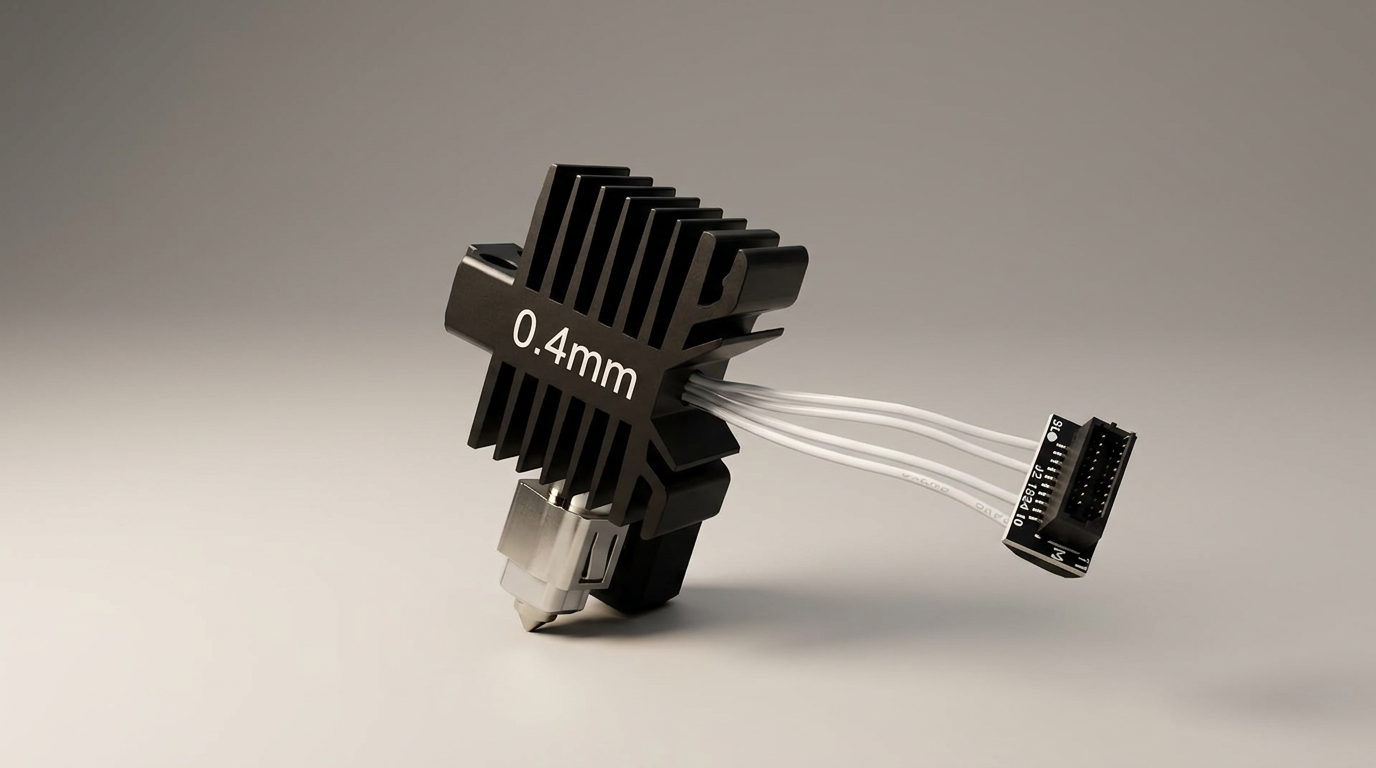
HzdaDeve P1S/P1P Hotend Assembly Review: Cheap Downtime Insurance

3DZWMAN RGB LED Lamp Kit 001 Review: Better Than OEM
This review is based on real experiences shared by owners in online communities.