
uxcell 3D Scanner Markers: Precision Tracking for Diverse Projects
This review is based on real experiences shared by owners in online communities.
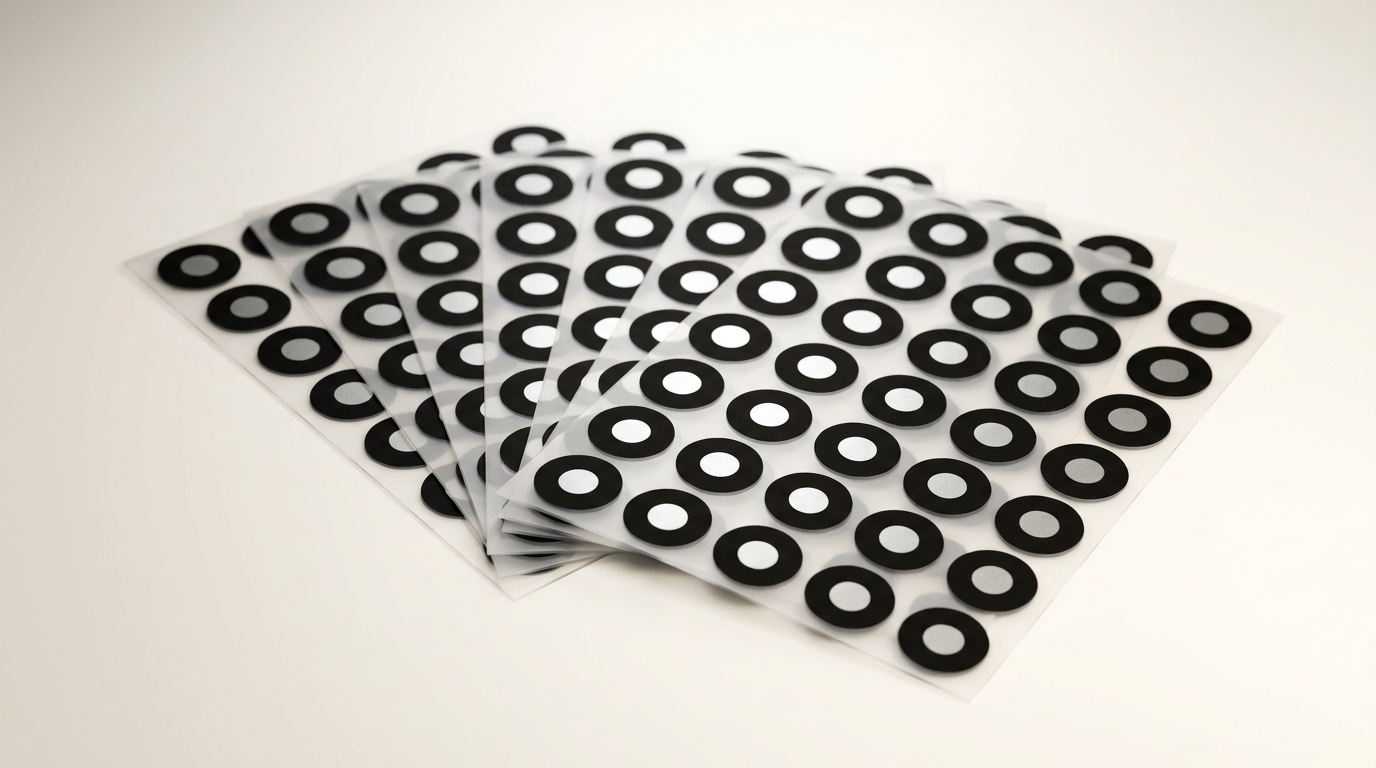
In the specialized world of 3D scanning, the humble reference marker often receives less attention than the scanners themselves. Yet, these small, reflective dots are foundational to achieving accurate, repeatable results, particularly when object geometry is complex or the scanning environment is challenging. The uxcell 3D Scanner Markers enter this segment offering a high-volume, cost-effective solution for establishing reliable tracking points.
Most buyers understand the utility of these markers at a high level. However, the true utility lies in what we term the "Fidelity Multiplier"- how consistently these markers translate physical surfaces into usable digital data, influencing the final model's integrity. uxcell aims to provide this foundational accuracy without breaking project budgets.
This review evaluates whether these markers deliver on their promise of industrial-grade precision and ease of application, assessing their performance based on real-world owner experiences with various 3D scanning setups.
What owners love
- + Delivers effective and accurate scanning tracking
- + Adheres securely to various surfaces
- + Large quantity provides excellent long-term value
- + Removes cleanly without leaving residue
- + Compatible with a wide range of laser 3D scanners
Common complaints
- − Small size presents challenges for some scanning applications
- − Peeling individual markers from sheets can be difficult
- − Requires careful handling to avoid damage during removal from sheet
Design & Build
The uxcell 3D scanner markers feature a standard design for reflective tracking points, measuring 6mm in inner diameter and 10mm outer diameter. Owners describe them as dots, which aligns with their circular, low-profile form factor. The core function is diffuse reflection, designed to provide a consistent target for laser 3D scanners. Their construction prioritizes adhesion, ensuring they remain in place throughout the scanning process. Owners confirm they stick well, a critical factor for maintaining scan integrity over time or through multiple passes. This adhesive quality forms the bedrock of their utility, preventing what we call "drift variance"- inconsistent tracking due to markers shifting during a scan.
Setup & Ease of Use
Applying the uxcell markers is straightforward once they are removed from their backing sheets. The adhesive foil backing facilitates placement. However, several owners report that peeling individual markers off the sheet can be a tricky endeavor. The small size, while beneficial for precision on intricate objects, makes handling a delicate operation. Some users resort to fingernails or plastic blades for extraction, indicating that the initial setup phase requires a degree of patience and care. This initial friction point, though minor, affects workflow efficiency when many markers are needed across a surface.
Performance in Real Use
When properly applied, these markers perform their essential function effectively. Owners consistently report that the markers work well, enabling successful 3D scanning and allowing for proper tracking. One owner specifically mentioned positive results with a MetroY Pro scanner, suggesting broad compatibility. The high reflectivity ensures that laser scanners can consistently detect and reference these points. The primary limitation cited in performance concerns their size; one user found them "too small to scan anything useful." This suggests a potential "resolution bottleneck" for certain projects, where larger objects or specific scanner types may require larger reference points to maintain adequate tracking fidelity across a wider field of view.
Software & Ecosystem
As passive components, the uxcell 3D Scanner Markers do not directly interface with software or possess their own ecosystem. Their utility is entirely dependent on the 3D scanning hardware and accompanying software. Manufacturers highlight their wide compatibility with Laser 3D Scanners, a claim supported by owner reports of successful use. The markers integrate into existing scanning workflows by providing consistent data points for triangulation and feature tracking. This broad compatibility means they do not introduce additional software dependencies, simplifying integration into diverse industrial and consumer scanning setups.
Value & Reliability
With 2400 pieces in a single pack, the uxcell markers offer significant quantity for their price, which typically falls in the sub-$30 range. This volume makes them a cost-effective choice for projects requiring numerous reference points or for consistent scanning operations. Owners describe them as reliable; they stick well and fulfill their reflective purpose. The ability to remove them easily with a fingernail or plastic blade, without leaving residue, speaks to their design for temporary application and clean project completion. This combination of high quantity, effective performance, and clean removal positions them as a strong value proposition for repeat users.
Verdict
Buy - These markers reliably deliver accurate tracking for most 3D scanning projects at an excellent bulk value.
This product is ideal for hobbyists, small businesses, and educational institutions performing a high volume of 3D scanning on objects where 6mm reference points provide sufficient detail. It suits those who prioritize cost-effectiveness and reliable basic functionality over premium ease-of-use features. Buyers seeking a dependable, high-quantity supply of tracking dots for their laser 3D scanners, particularly those working within a budget, will find strong utility here.
However, those engaged in ultra-large-scale industrial scanning, or projects demanding larger target areas per marker to minimize placement density, may find the 6mm size limiting. If your scanning workflow frequently requires placing and removing hundreds of markers, the slight difficulty in peeling them from the sheet could become a cumulative frustration. Consider larger, more easily handled markers if high-speed application is a critical factor. Ultimately, the uxcell markers epitomize the "functional workhorse" in the scanning accessory market- not flashy, but essential and effective for its intended purpose, embodying the silent precision that underpins successful digital capture.
FAQ
More 3D Scanners reviews
Revopoint INSPIRE 2 3D Scanner Review: Unpacking the Accessory Echo Chamber
Creality 6mm 3D Scanning Markers Review: Essential Tracking Aid
TOSUKKI 6mm Positioning Targets Review: The Refined Generic Choice

AESUB 3DTOOLS 3D Scanner Spray Review: The 'Evaporative Enabler'
Creality 8-inch Rotating Turntable: A Solid Scanner Accessory

Generic 12 Piece Multi-Angle Markers Review: Essential 3D Scanning Dots
This review is based on real experiences shared by owners in online communities.