
LIANGYUNZE 500 Magnetic 3D Scanner Markers Review
By AValidReview. An AI-assisted summary of customer feedback, not a hands-on test.
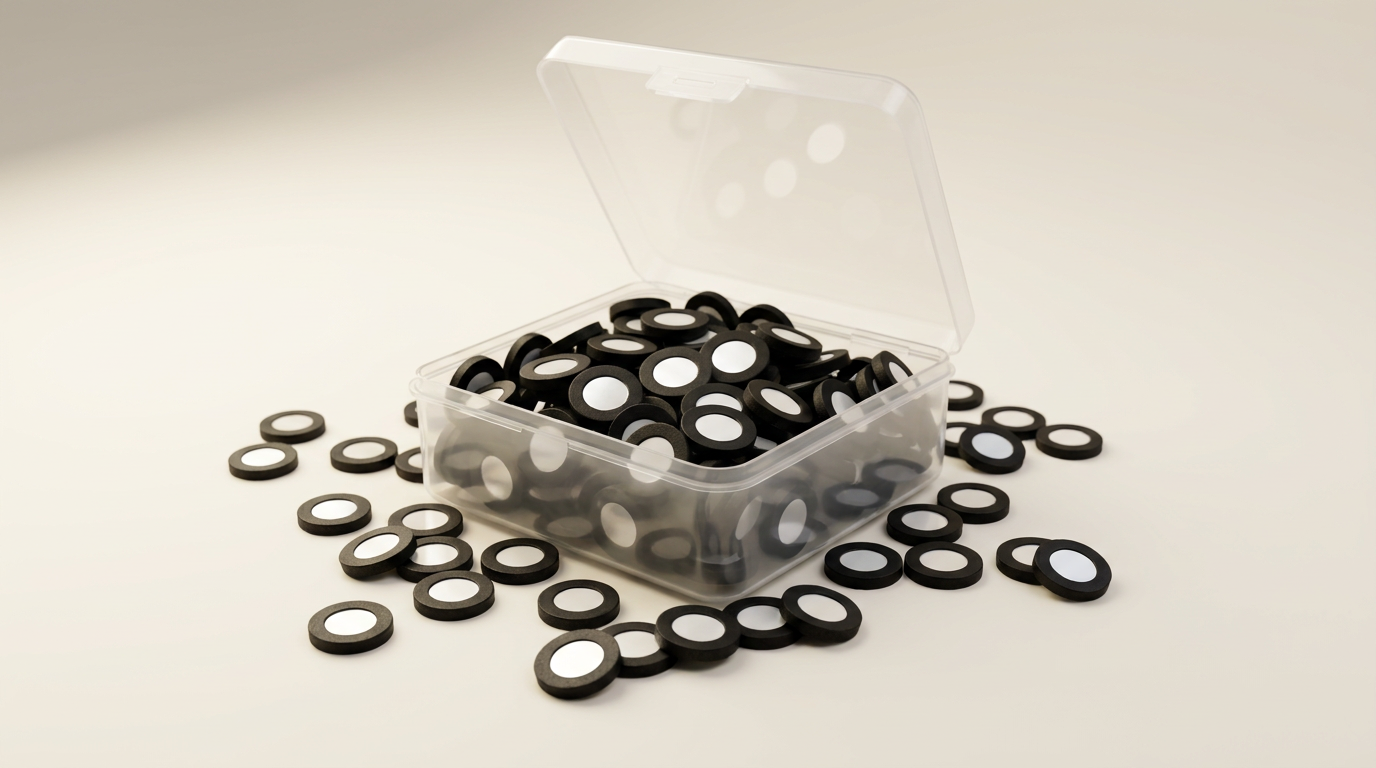
Optical 3D scanning carries a hidden operational bottleneck that hardware spec sheets never mention: the disposable marker tax. Technicians regularly spend more time peeling paper backings, pressing adhesive targets onto cast iron parts, and subsequently scraping gummy residue off finished metal than they do capturing actual point clouds. LIANGYUNZE targets that exact friction point by mounting standard retro-reflective targets onto flexible magnetic discs.
This simple pivot shifts tracking dots from a sacrificial consumable to durable bench tooling. Packaged in a 500-piece bulk container, these 10mm discs with 6mm reflective cores are built specifically for reverse-engineering machinery, engine bays, sheet metal fabrication, and shop-floor repairs. They transform target layout into an interactive, zero-waste process.
Yet the utility of this kit operates strictly within what we call the ferrous boundary. Where steel and cast iron unlock swift workflow gains, non-magnetic surfaces stop these markers cold. For technicians working in the right medium, however, this pack changes the economics and pacing of scan preparation.
What owners love
- + Replaces single-use adhesive dots with durable, reusable magnetic discs
- + Generous 500-piece quantity handles large industrial or automotive projects
- + Bright 6mm retro-reflective core registers quickly on structured light scanners
- + Strong magnetic grip holds securely in vertical and inverted orientations
- + Includes a compact, reusable hard plastic storage case
Common complaints
- − Strictly limited to ferrous surfaces without auxiliary adhesive
- − 1.25mm base thickness creates a slight profile offset over the raw surface
- − 10mm footprint is too large for tight crevices and miniature scan subjects
Design & Build
The LIANGYUNZE markers measure 10mm in total diameter with a central 6mm retro-reflective circle, a geometry standard across many professional optical scanners. Owners note the overall disc measures roughly 1.25mm thick, built from a pliable magnetic sheeting material rather than rigid neodymium. This soft-magnet construction is an intentional design choice: it provides enough flexibility to conform slightly to subtle surface curves while keeping the mass exceptionally low. The reflective inner dot features a bright micro-prismatic coating that returns direct light efficiently back to scanner sensor pods. The package includes a sturdy, recloseable hard plastic shell, which is essential given that loose magnetic dots naturally bunch together into stubborn clusters if dumped into a standard bag or drawer.
Setup & Ease of Use
Deploying tracking markers usually represents the most tedious phase of structured light scanning, but magnetic placement removes virtually all resistance. Users report being able to flick markers onto steel tooling, adjust their spacing dynamically, and pull them off in seconds without leaving a trace of chemical adhesive. This ease allows for dynamic layout adjustments on the fly: if your scanner loses tracking tracking over a featureless plate, you can slide an additional dot into place in two seconds flat. The magnetic hold is strong enough to keep the lightweight markers stable on vertical surfaces and even under inverted engine hoods. Naturally, setup ease falls to zero the moment you move to aluminum, brass, or plastic, where you must revert to standard sticky tape or tack.
Performance in Real Use
In operational scanning, the retro-reflective centers perform reliably across white light and laser scanning systems. Software tracking algorithms identify the 6mm dots cleanly, maintaining high contrast against both the black perimeter ring and the surrounding metal. Because the markers sit 1.25mm above the physical workpiece, they introduce a distinct physical profile into your raw mesh data. This creates what photogrammetry operators recognize as an elevation offset: your software will capture the top plane of the dot rather than the bare metal underneath. For reference tracking during registration, this elevation is immaterial, but operators must plan on post-processing hole-fills or surface trimming where the dots rested during the capture pass.
Software & Ecosystem
Because these targets rely on passive optical retro-reflection, they remain completely platform-agnostic. Whether you run mid-range consumer hardware from Revopoint and Creality or industrial rigs from Shining 3D and Peel 3D, any tracking engine configured for 6mm targets locks onto these dots without friction. They also integrate cleanly into workflows utilizing temporary scanning spray. While scanning sprays can ruin the tack on traditional adhesive stickers, magnetic markers sit comfortably on lightly dusted surfaces and wipe clean after the job is done. The universal sizing ensures you do not need dedicated calibration parameters or proprietary software modules to maintain tracking stability.
Value & Reliability
Selling in the $20 to $25 range for 500 units, the LIANGYUNZE pack delivers exceptional cost efficiency. Enthusiasts and commercial users note that acquiring equivalent quantities from overseas storefronts often involves weeks of shipping lag, whereas these arrive promptly without sacrificing dot quality. Because the markers are reusable across dozens of projects, a single 500-pack replaces thousands of disposable paper targets over its lifespan. The retro-reflective layer resists moderate handling, though keeping them stored in the included plastic case prevents abrasive grit from degrading the reflective surface over repeated shop floor cycles.
Verdict
Buy - An affordable, highly efficient target solution for anyone scanning ferrous machinery and tooling.
This 500-pack is an easy recommendation for fabricators, mechanics, quality-control inspectors, and reverse engineers working primarily with iron and steel. The ability to drop hundreds of high-gain tracking targets onto a chassis or casting in minutes - and reclaim them instantly without cleaning solvent - saves hours of bench labor.
Skip this set if your workload revolves around 3D prints, carbon fiber, aluminum castings, or small jewelry. Without a ferrous base metal, the magnetic advantage disappears, leaving you with thick discs that require separate tape to mount.
The LIANGYUNZE markers do not reinvent tracking technology, but they eliminate the tedious consumable overhead of precision scanning. By turning target placement from a disposable chore into reusable modular tooling, they pay for themselves on the very first engine block you scan.
FAQ
More 3D Scanners reviews

AESUB Violet 3D Scanning Spray Review
3DMakerpro Moose Review: Precision Scanning Meets a Real Learning Curve

Creality Otter Lite Basic 3D Scanner Review: Reality Capture
Creality Pika 3D Scanner Review: Precision Meets The Compute Cliff
Revopoint POP 4 Magnetic Outdoor Filter Review
3DMakerpro Moose Lite Premium 3D Scanner Review
This review is based on real experiences shared by owners in online communities.