Toybox Alpha Three Review: Is this the Ultimate Kid-Friendly 3D Printer?
This review is based on real experiences shared by owners in online communities.
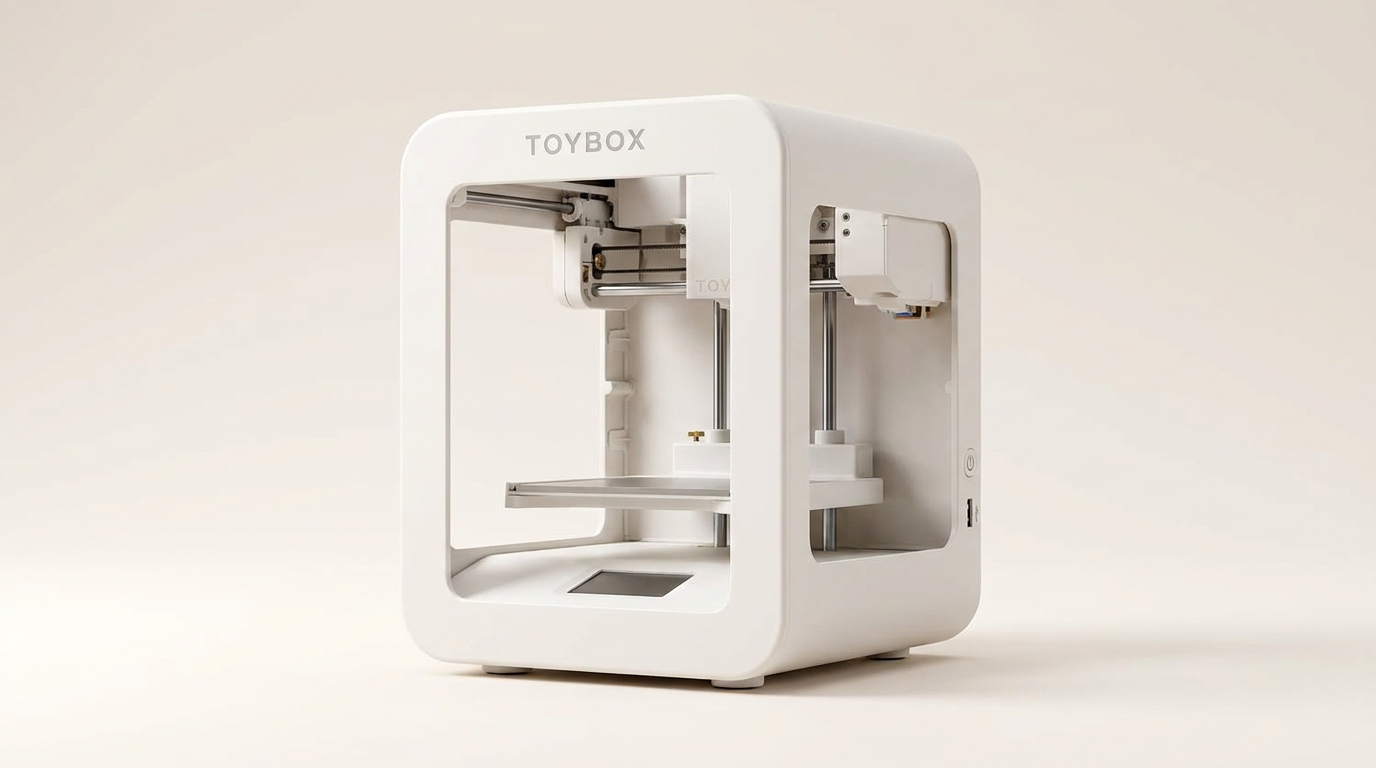
The Toybox Alpha Three enters a consumer 3D printing market often characterized by complexity and a steep learning curve. While many manufacturers chase speed and precision for hobbyists, the Alpha Three positions itself distinctly: as a direct-to-toy gateway for children and families. This isn't a scaled-down professional tool, but rather a purpose-built appliance designed to demystify 3D printing and prioritize immediate, tangible results over technical mastery.
Most mainstream 3D printers expect users to become fluent in CAD software, slicing parameters, and filament properties. The Alpha Three, by contrast, seeks to create a 'frictionless fabrication' experience, where the act of printing is as simple as selecting a digital toy from a curated library. This design philosophy bypasses many traditional hurdles, but also introduces a unique set of trade-offs, particularly for those whose expectations extend beyond simple toy creation. Understanding this fundamental distinction is key to evaluating its true utility.
What owners love
- + Extremely easy setup and immediate operation
- + Intuitive app interface for model selection and printing
- + Large library of kid-friendly, licensed designs
- + Compact footprint suitable for small spaces
- + Reliable Wi-Fi connectivity reported by many
- + Prints relatively fast with decent detail for its class
Common complaints
- − Prone to filament clogging, requiring adult intervention
- − Limited build volume restricts print size and complexity
- − Customer service response times are inconsistent
- − Print quality can be inconsistent, leading to wasted prints
- − Subscription model for premium content raises concerns among some owners
Design & Build
The Toybox Alpha Three prioritizes a child-safe and compact design, a clear departure from the open-frame, often exposed mechanics of many entry-level printers. Owners consistently describe its footprint as small, making it suitable for a child's desk or a shared family space. The build quality itself appears robust, with reports of custom-fit styrofoam packaging protecting components during shipping. The enclosed nature of the printer also contributes to its kid-friendly appeal, reducing access to moving parts. However, this enclosed design does not prevent issues, as recurring reports of filament clogs indicate that internal maintenance, while infrequent, becomes a task for adults. This creates a 'parental intervention dividend,' where the device's apparent autonomy for children requires a hidden layer of adult technical support.
Setup & Ease of Use
This is where the Alpha Three delivers on its primary promise. The setup process is consistently highlighted as exceptionally straightforward, often taking less than 15 minutes from unboxing to first print. Owners report that children as young as seven or eight can manage most of the process independently, particularly after initial Wi-Fi connection. The app-driven interface is intuitive, allowing quick selection and one-touch printing without complex slicing software. Even users with prior, more frustrating 3D printer experiences note the Alpha Three's remarkable simplicity. This ease of use is a core differentiator, creating a low barrier to entry that encourages exploration and reduces the common initial frustration associated with 3D printing.
Performance in Real Use
For its target audience and intended use, the Alpha Three generally performs well. Prints are described as fast and offer surprising detail for a machine in this category. Many owners report consistent satisfaction with the output, citing printed toys as clean and fun to assemble. The upgrade from prior models, specifically the Alpha Two, is noted for improved speed and detail. However, this positive performance is not universal. A significant number of users encounter recurrent filament clogs, which disrupt prints and necessitate adult troubleshooting. This inconsistency means that while the ideal 'frictionless fabrication' is often achieved, a 'clog-induced cooldown' period is also a common occurrence, leading to frustration and wasted filament. The limited build volume also inherently restricts the scale of creations, a design trade-off for its compact size.
Software & Ecosystem
The Toybox app is central to the Alpha Three experience, serving as both a design library and print controller. Owners praise its user-friendly interface and the extensive catalog of over 7,000 ready-to-print designs, including licensed content. The ability to import custom STL, OBJ, and gCode files is also a valuable feature for those wanting to expand beyond the curated library. Wi-Fi connectivity is generally stable, facilitating seamless printing. However, the app's dependence on an active connection and occasional reports of login issues or difficulties accessing calibration templates hint at areas for refinement. Concerns also emerge regarding the premium subscription model and the loss of accumulated 'bolts' upon cancellation, introducing a 'content access tax' that some users find dissatisfying and opaque.
Value & Reliability
The value proposition of the Alpha Three is primarily tied to its ease of use and its role as an educational tool for children. Priced in the mid-hundreds, it represents a significant investment for a device primarily focused on toy creation. While many express satisfaction, citing it as an excellent first 3D printer and a hit with kids, a vocal minority reports significant reliability issues, particularly recurring clogs. Support for these issues is described as responsive in some cases but inconsistent in others, with some users unable to submit help tickets or facing challenges with warranty claims after initial periods. This creates a 'support lottery,' where the long-term ownership experience can vary dramatically based on individual unit reliability and support interaction.
Verdict
Consider - The Toybox Alpha Three offers a uniquely accessible entry into 3D printing for children, but its reliability can be inconsistent.
This printer is an ideal choice for parents seeking to introduce young children to 3D printing without the complexities of traditional machines. Its intuitive app, extensive content library, and simple setup make it an excellent gift for curious kids under $400. Buyers prioritizing immediate gratification and a curated, kid-friendly experience will find it rewarding.
However, those expecting a maintenance-free device or a tool for serious hobbyist printing should look elsewhere. The recurring filament clogs and potential customer service issues indicate that an adult will likely need to provide technical support periodically. If robust reliability and advanced print capabilities are priorities, exploring options well north of $500 might be necessary.
The Toybox Alpha Three effectively embodies the 'toyification of tech,' reducing a complex manufacturing process to an appliance for instant gratification. Its success hinges not on technical prowess, but on its ability to transform 3D printing into an engaging, accessible play experience, albeit one that sometimes requires a parent to step in and reset the magic.
FAQ
More 3D Printers reviews
QIDI Q2 3D Printer Review: High-Temp Power at a Consumer Price
Flashforge Adventurer 5M Smooth PC Plate Review
FLASHFORGE Creator 5 Pro Review: Multi-Toolhead Efficiency
HP OfficeJet Pro 9135 Review: Two Trays and a Tight Leash
Flashforge Creator 5 Pro Review: Multi-Material Toolchanger
Bambu Lab P2S Combo Review: The 3D Printer Appliance
This review is based on real experiences shared by owners in online communities.