
Davercop 3D Printed Latte Art Camera Review
By AValidReview. An AI-assisted summary of customer feedback, not a hands-on test.
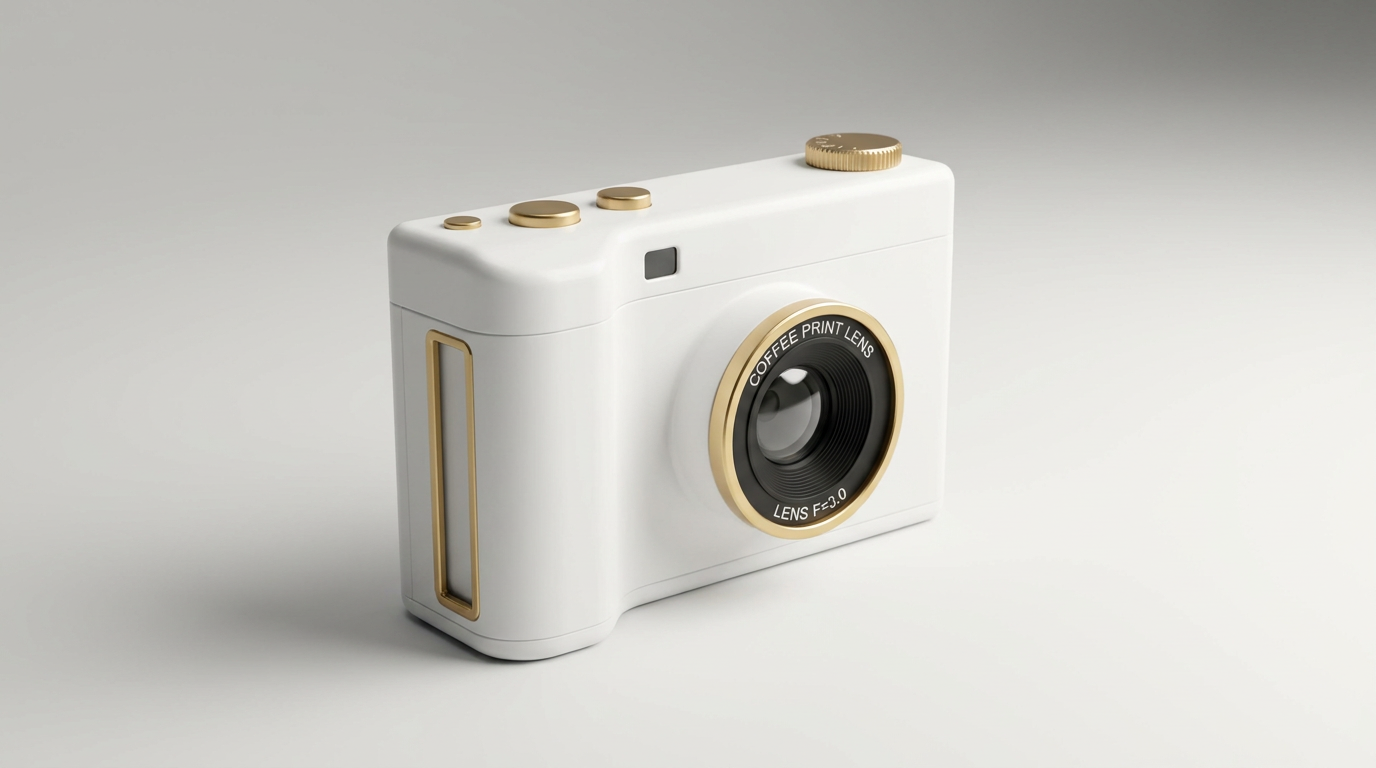
The home coffee space regularly sees an influx of novelties promising cafe-grade presentation for minimal investment. The Davercop 3D Printed Latte Art Camera attempts to gamify drink decoration by dressing a manual powder sifter in the silhouette of a vintage rangefinder. On paper, the concept sounds whimsical: load cocoa powder, slot in a stencil plate, and depress the mechanical shutter to stamp an image cleanly onto milk foam. In practice, the device represents what can best be termed the desktop manufacturing arbitrage, where rough, hobbyist-grade additive manufacturing is rushed directly to storefronts as a finished consumer appliance.
Stenciling cocoa onto microfoam is fundamentally an exercise in micro-tolerances. The moment dry particles fall through an open gap, air displacement and kinetic dispersal degrade pattern definition. By placing a crude mechanical actuator inside an unpolished 3D-printed shell, the Davercop highlights the widening gap between clever viral concepts and the unforgiving reality of powder dynamics.
For home baristas seeking consistent morning presentation, this gadget introduces immediate friction. Between rough layer lines that trap moisture and powder, bizarre stencil choices, and an inconsistent mechanical plunger, it quickly reveals itself as an unfinished prototype rather than a dependable kitchen tool.
What owners love
- + Fully manual operation requires no batteries or charging cables
- + Clever camera-inspired aesthetic looks distinctive on a display shelf
- + Includes both coarse and fine mesh filters for different powders
- + Rear storage slot holds extra stencil cards neatly
Common complaints
- − FDM print lines feel brittle and trap stray cocoa powder
- − Dispensed designs scatter into blurry, unrecognizable smudges
- − Included stencil patterns have limited practical appeal
- − Arrives in bare packaging without basic documentation or instructions
- − Mechanical shutter button binds and requires delicate handling
Design & Build
The Davercop camera relies on consumer-grade fused deposition modeling (FDM), leaving exterior surfaces defined by visible layer lines and coarse seams. While the retro camera silhouette and contrast gold button capture attention from across the room, handling the unit immediately dispels any illusion of refinement. The plastic feels lightweight, hollow, and brittle. Owners consistently report that the construction resembles a low-grade toy rather than durable culinary ware. Because standard layered printing produces micro-ridges throughout the interior chamber, dry cocoa and cinnamon tend to cling to the walls rather than dropping cleanly through the bottom aperture. This raw surface finish also makes thorough cleaning nearly impossible, as water and trapped organic powder quickly settle into the layer striations.
Setup & Ease of Use
Setting up the unit is an exercise in trial and error. The camera typically arrives in an unmarked brown box without user manuals, safety documentation, or setup diagrams. To prep the device, you must invert it, load fine powder into the lower reservoir, insert one of the two included mesh screens, and slide a stencil plate into the bottom channel. This upside-down loading sequence frequently spills fine powder across countertops. Pressing the top gold shutter is intended to trip an internal agitator that sifts powder through the card. Instead, the mechanism frequently binds. The lack of smooth mechanical tolerances requires careful, delicate finger pressure, contradicting the spontaneous, playful experience suggested by the camera form factor.
Performance in Real Use
The core failure of the Davercop camera stems from what can be called the focal-distance trap. In photography, depth of field allows for separation; in powder stenciling, any air gap between the stencil and the milk foam results in immediate aerodynamic scatter. If the camera base is held even a few millimeters above the cup, ambient air currents and falling velocity turn crisp silhouettes into indistinct brown blobs. Attempting to compensate by holding the base flush against the foam risks dipping the 3D-printed underside directly into warm milk, instantly gumming up the mesh. Even when operated under ideal conditions with dark cocoa powder, transferred designs remain faint and illegible. Furthermore, the four bundled stencil designs feature unusual, off-target imagery that few users would willingly present on a morning beverage.
Software & Ecosystem
As a purely mechanical accessory, there is no companion app or digital interface, but the physical stencil ecosystem leaves much to be desired. Davercop advertises compatibility with an expanded 30-card pattern set sold separately, but the base bundle provides only four stock plates. Swapping these cards requires sliding them manually into thin printed guide rails that offer noticeable friction. The dual mesh inserts, designed to separate coarse cinnamon from fine chocolate powder, fail to resolve the core clumping issues. Because the chamber lacks an airtight seal, ambient steam rising from hot drinks enters the sifting chamber almost instantly, transforming dry particles into paste on the filter mesh after a single use.
Value & Reliability
Priced in the budget range under $20, the Davercop camera positions itself as an impulsive gift buy. However, low cost does not excuse non-functionality. Several buyers report receiving units with missing components or structural defects out of the box, with lengthy shipping intervals and non-refundable return shipping fees turning the purchase into a frustrating sunk cost. In terms of longevity, the mechanical components lack the structural integrity to withstand repetitive daily use. The delicate internal arms and thin sliding slots are prone to snapping under minimal lateral pressure, meaning the device offers virtually zero long-term reliability even as a casual kitchen accent.
Verdict
Stay Away - Flimsy 3D-printed construction and unworkable powder dynamics make this camera-shaped sifter functionally useless.
The Davercop Latte Art Camera might superficially appeal to shoppers looking for a lighthearted gift for a coffee enthusiast, but it cannot fulfill its primary function. Anyone seeking recognizable latte art should skip this device entirely. A standard five-dollar stainless steel stencil paired with a fine-mesh hand shaker delivers vastly superior precision, cleans easily, and will last indefinitely.
This product is a textbook example of the rapid monetization of hobbyist print files without basic quality assurance. When functional culinary mechanics demand tight clearances and food-safe ergonomics, rough layer lines and haphazard tolerances will always fail. A charming retro silhouette cannot compensate for broken physics.
FAQ
More 3D Printers reviews
Anycubic Kobra S1 Max Combo Review: Industrial Scale for Less
ugee Funbox 3D Printer Review: Safe Household Making
Original Prusa CORE One+ Kit Review: The Maker's CoreXY
ANYCUBIC Photon P1 Max Review: Scale Meets Detail
Anycubic Kobra S1 ACE 2 Pro Combo 3D Printer Review
Toybox Alpha Two 3D Printer Review: The Zero-Fuss Toy Factory
This review is based on real experiences shared by owners in online communities.