
3D Printed Latte Art Camera Review: Novelty Falls Flat
By AValidReview.
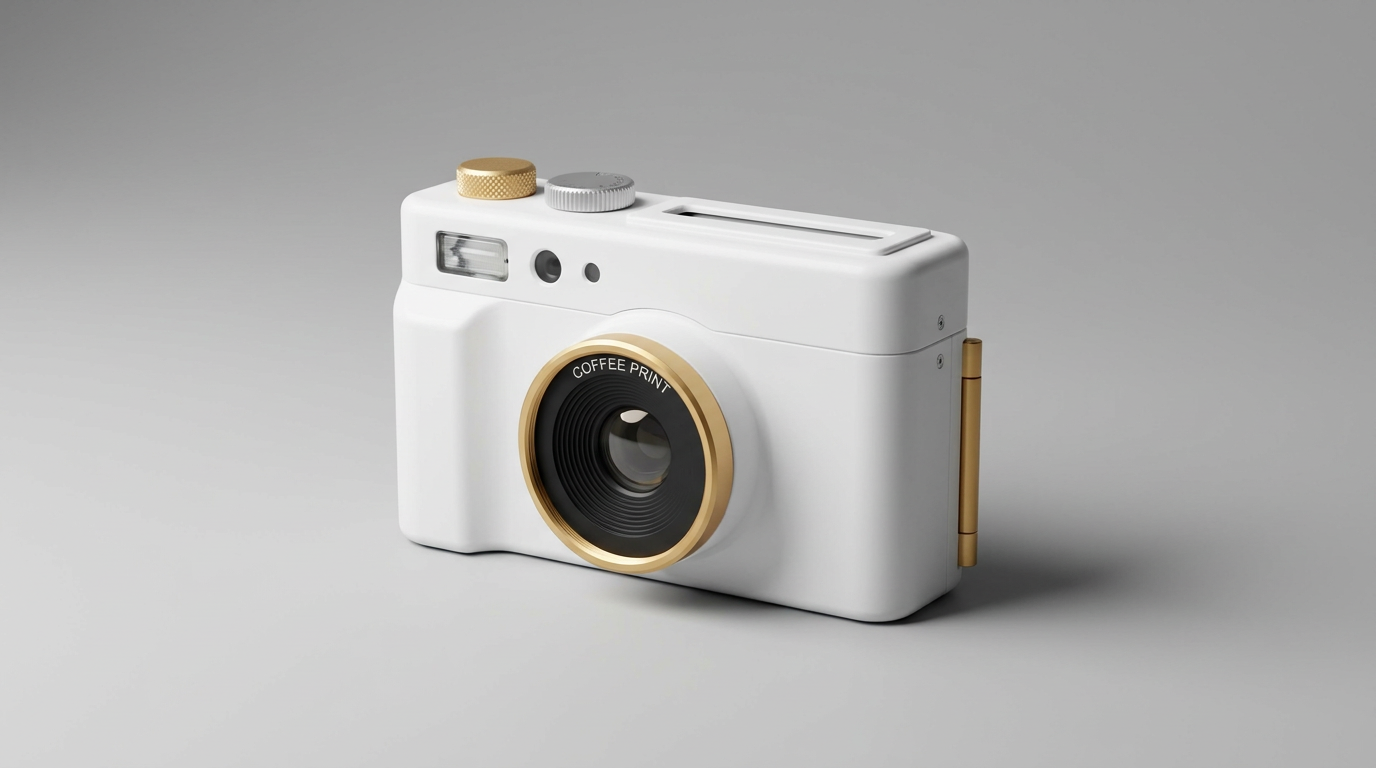
The modern coffee accessory market is flooded with social-media-friendly gadgets designed to turn morning routines into photogenic rituals. The 3D Printed Latte Art Camera promises to deliver that charm through an analog, instant-camera aesthetic: drop in a stencil card, dust fine cocoa or cinnamon, and depress a shutter-style plunger to stamp decorative shapes onto milk foam. It attempts to bypass motorized complexity with a purely mechanical, manually actuated mechanism.
Yet this novelty exposes a growing friction in budget kitchen retail: the render-to-reality collapse. When additive manufacturing shifts from rapid prototyping to direct consumer production without refined post-processing, tolerances suffer. Instead of receiving a polished countertop appliance, buyers often receive what is functionally an unfinished shop experiment.
While one owner found joy in the playful button-press action, the broader consensus reveals a deeply flawed execution. From fused seams that block powder loading to low-grade stencils, this novelty camera struggles to fulfill even its most basic functions.
What owners love
- + Clever instant-camera aesthetic stands out on a coffee bar
- + Purely mechanical operation requires no batteries or power cords
- + Rear slot holds interchangeable stencil cards in one place
- + Delivers charming results when mechanical tolerances cooperate
Common complaints
- − Rough 3D-printed exterior looks and feels like a cheap toy
- − Loading compartment is frequently stuck or appears completely sealed
- − Included stencil cards do not match promotional imagery
- − Confusing mechanical design lacks intuitive operation
Design & Build
The Latte Art Camera adopts the playful silhouette of a vintage instant camera, complete with a top-mounted plunger mimicking a shutter release and a rear card organizer. However, the production method undermines the concept. The chassis is produced via fused deposition modeling (FDM), leaving coarse layer lines, rough edges, and visible extrusion seams throughout. Multiple owners describe the final unit as resembling an inexpensive plastic toy rather than a functional kitchen tool. In consumer fabrication, tight tolerances are non-negotiable for moving parts; here, erratic filament deposition frequently leads to parts sticking together or misaligning straight out of the box.
Setup & Ease of Use
Initial onboarding represents the product's steepest hurdle. The manufacturer advertises a simple process: open the base, load fine powder, insert a card, and press the top button. In practice, multiple verified buyers reported an inability to open the unit at all, with some noting that the powder chamber arrived seemingly sealed shut with no obvious seams or access points. Without clear guidance or molded release latches, owners are left attempting to pry apart layered plastic parts. What should be an effortless morning routine instead turns into an exercise in deciphering accidental weld points created during the printing process.
Performance in Real Use
For the rare unit with functional moving parts, the experience can provide brief amusement. Depressing the top plunger dispenses a light shower of powder across your milk foam, provided the cocoa or cinnamon is sifted extremely fine. Unfortunately, the included stencil plates generate significant customer friction. Buyers point out that the actual stencil patterns look nothing like the crisp, artistic designs advertised in marketing photos. Coarse cutout tolerances cause powder to clump or bleed into indistinct shapes, transforming what was meant to be sharp latte art into a messy dusting on top of the beverage.
Software & Ecosystem
As a fully manual accessory, the camera operates without apps, Bluetooth connectivity, or battery management. The physical ecosystem relies on interchangeable stencil inserts stored along the rear of the housing. While modular cards are a smart idea in theory, third-party support does not exist. You are entirely confined to the stock templates provided in the box, which owners frequently criticize for poor fidelity. Furthermore, standard FDM plastics contain microscopic surface fissures that easily trap moisture, cocoa grease, and fine spices, making sanitary maintenance and deep cleaning between pattern changes unusually difficult.
Value & Reliability
Priced in the budget range under $20, the unit is positioned as a low-risk stocking stuffer or impulse purchase for home baristas. Even at this accessible entry point, however, value depends on baseline utility. When an item arrives inoperable due to fused plastic seams or unusable stencil cuts, even a low price tag represents pure waste. Commercial stencil shakers made of stamped stainless steel cost similar amounts while offering dishwasher safety, food-grade materials, and reliable action. The novelty camera form factor does not compensate for its severe failure rate.
Verdict
Stay Away - Fused tolerances, missing assembly cues, and cheap fabrication turn an amusing concept into unusable countertop clutter.
This gadget is designed for casual coffee drinkers seeking an easy way to dress up their morning cappuccinos, but almost no one should buy it. The build execution is simply too unpredictable to recommend as a functional tool or even a novelty gift.
Buyers eager to decorate drinks should skip this entirely and purchase a traditional metal cocoa shaker with a set of laser-cut acrylic stencils. You will spend around the same amount, retain the ability to sanitize your gear, and avoid fighting with fused layer lines on a hollow plastic toy.
The Latte Art Camera is a textbook example of the FDM finish tax: when a manufacturer treats raw 3D printing as an end-stage retail solution rather than a prototyping step, the customer pays the price in poor usability. Charming ideas cannot survive sloppy execution, and no amount of retro novelty can salvage an accessory you cannot even pry open.
FAQ
More 3D Printers reviews
3D Coffee Printer Latte Art Stencil Maker Review
Bambu Lab P1S Combo Renewed Review: High Speed, High Risk
QIDI Plus5 Combo 3D Printer Review: High Temp Powerhouse
Bambu Lab A1 Combo Renewed Review: Fast Multicolor Printing
Hephi3d TINA2S Review: Compact, Accessible 3D Printing
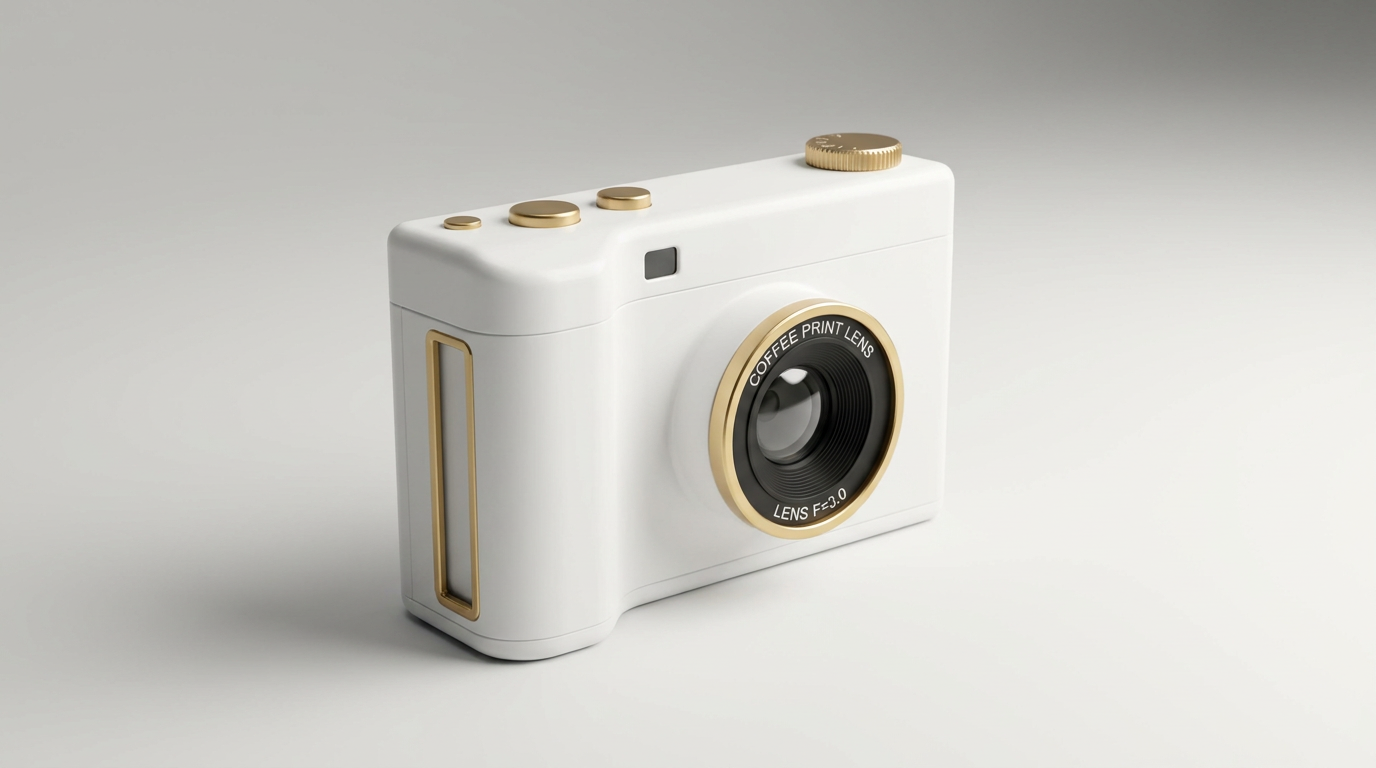
Davercop 3D Printed Latte Art Camera Review
This review is based on real experiences shared by owners in online communities.