
TOSUKKI 3mm Reflective 3D Scanning Targets Review
This review is based on real experiences shared by owners in online communities.
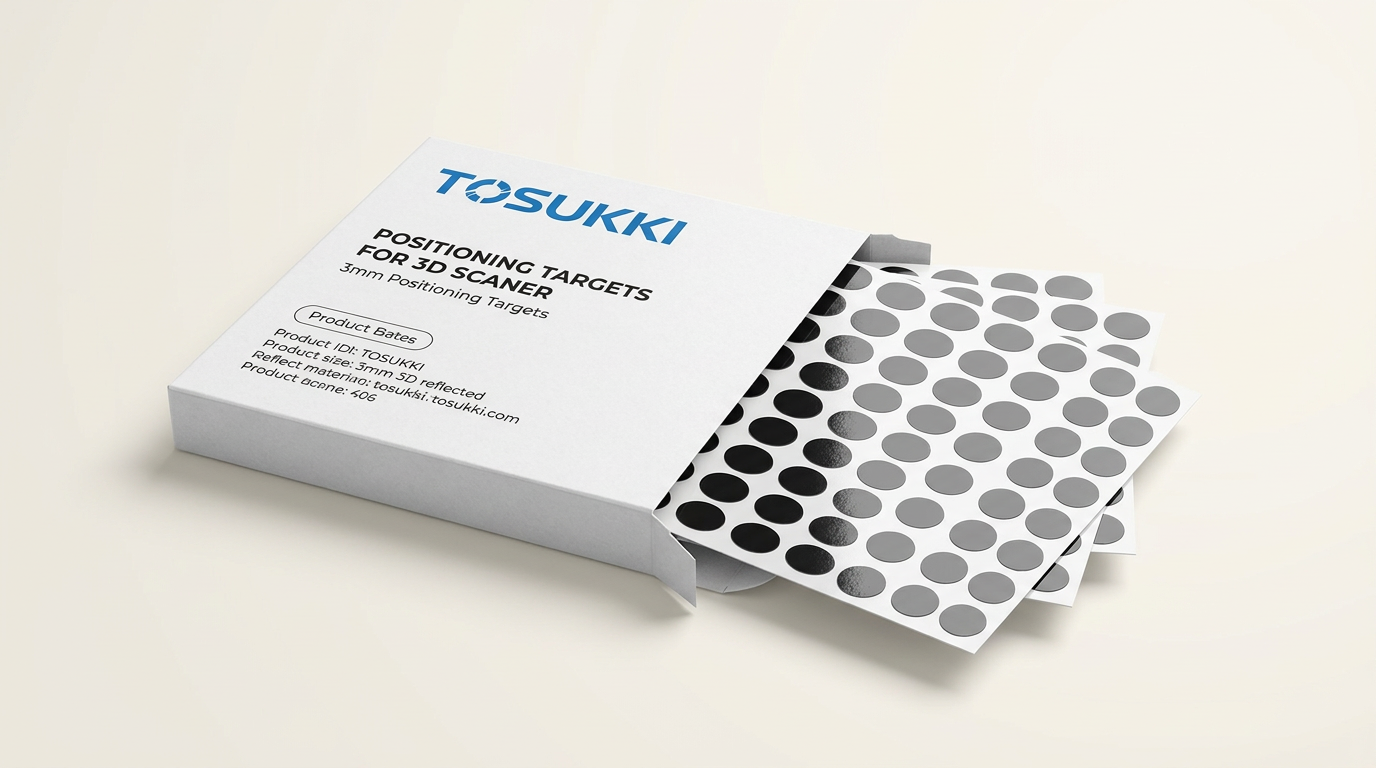
The unsung heroes of precision 3D scanning are often the reflective targets themselves. These small, adhesive markers provide critical reference points for scanners, dictating accuracy and workflow efficiency. While premium options from brands like Zeiss dominate the professional landscape, the emergence of more accessible alternatives, such as the TOSUKKI 3mm reflective targets, presents a compelling proposition for cost-conscious operations. However, the true value of these markers lies not just in their reflective properties, but in their adhesion, durability, and consistent performance across diverse scanning environments.
Most buyers approach these targets expecting parity with higher-priced counterparts, overlooking a fundamental trade-off: the 'durability dividend'. Premium markers integrate robust adhesives and more resilient reflective coatings, minimizing workflow disruptions from lost targets or inconsistent reflectivity. Budget options, by contrast, often prioritize initial cost savings over long-term reliability, a decision that can silently inflate operational expenses through rescan time and wasted material. Understanding this core tension is key to evaluating the TOSUKKI offering.
This review assesses whether the TOSUKKI 3mm targets deliver adequate performance for professional tasks or if their lower price point introduces unacceptable compromises in precision and user experience. We examine their physical properties, application ease, and scanning performance against the backdrop of real-world use.
What owners love
- + Economical solution for high-volume needs
- + Suitable for various 3D scanner types
- + Works well enough in some scanning scenarios
Common complaints
- − Difficulty detaching targets from backing
- − Adhesive strength proves insufficient for some applications
- − Retroreflective coating quality is inconsistent
- − Thicker material compared to premium options
Design & Build
The TOSUKKI 3mm targets are manufactured with a reflective vinyl material, advertised as having a 3mm inner diameter and 6mm outer diameter. Owners describe the material as somewhat coarse and thick compared to professional-grade markers. This bulkiness potentially affects how the target conforms to complex surfaces and its overall discreetness in scanning. The critical ‘material consistency tax’ emerges here: cheaper materials often entail less precise manufacturing tolerances and a greater variance in physical properties, impacting both adhesion and reflective quality across a batch.
Setup & Ease of Use
A recurring challenge for users involves the application process. Several owners report significant difficulty in peeling the individual targets from their backing film. This friction during setup can slow down prep time, especially in high-volume operations or when applying numerous markers. This ‘application overhead’ quickly erodes any initial cost savings through increased labor time and potential frustration on the job site. The ease of deployment is a significant factor in any field-based tool, and these targets introduce an unnecessary hurdle.
Performance in Real Use
While the targets function for 3D scanning, their performance exhibits variability. Owners note that the retroreflective coating does not appear as potent as that found on more expensive alternatives. This diminished reflectivity can force scanners to work harder or require more optimal lighting conditions, occasionally struggling to acquire reliable data. Furthermore, a significant complaint centers on adhesive strength; multiple users report the targets falling off too easily. This lack of reliable adhesion leads to the ‘re-marking penalty,’ where objects must be re-prepped, costing valuable project time and potentially jeopardizing data integrity. When targets detach mid-scan, the entire process can be compromised, requiring costly reshoots.
Software & Ecosystem
These targets are designed to be universally compatible with various 3D scanners, including popular brands like Creaform, Zeiss, Shining 3D, and Hexagon, as well as a range of optical trackers. The manufacturer explicitly states compatibility with 3mm internal circle diameter requirements, covering red/blue laser and white/blue-LED technologies. There is no specific software or ecosystem tied directly to the TOSUKKI targets themselves, as their function is passive. Their efficacy is entirely dependent on the scanner’s ability to detect and process their reflective properties, which owners indicate can be inconsistent due to the coating quality.
Value & Reliability
Priced well under $50 for a box of nearly a thousand targets, the TOSUKKI markers offer an attractive cost per unit. However, this low cost must be weighed against their reported reliability issues. The 'hidden cost of cheap markers' becomes evident when factoring in time lost due to difficult application, dropped targets, or scanners struggling with reflectivity. For critical, high-precision, or time-sensitive projects, the potential for workflow disruption and compromised data quality might outweigh the initial savings. While a large quantity of targets is provided, their inconsistent performance means that users might consume more targets per job due to replacement needs or re-scanning efforts.
Verdict
Hold Off - The TOSUKKI 3mm targets present too many reliability concerns for consistent professional use.
These targets might suit hobbyists or those with very occasional, non-critical scanning needs where budget is the absolute priority and re-scanning is not a major issue. Projects with ample time buffers and no strict adherence requirements could find value in this sub-$50 bulk option. Anyone with a low-volume, non-professional use case who understands the trade-offs in adhesion and reflectivity might consider them.
Professionals, especially those using high-end equipment like Zeiss T-Scan Hawks or operating under tight deadlines, should avoid these. The operational overhead from poor adhesion and inconsistent reflectivity will quickly negate any initial cost savings, leading to increased labor, project delays, and potential data integrity issues. Opting for targets from scanner manufacturers or established metrology brands, even at prices well north of $50, provides a critical 'workflow resilience dividend' that these markers simply cannot deliver. The TOSUKKI targets exemplify the false economy often encountered in critical consumables; saving pennies on the markers can cost dollars in lost time and re-work.
FAQ
More 3D Scanners reviews
Revopoint INSPIRE 2 3D Scanner Review: Unpacking the Accessory Echo Chamber
Creality 6mm 3D Scanning Markers Review: Essential Tracking Aid
TOSUKKI 6mm Positioning Targets Review: The Refined Generic Choice
AESUB 3DTOOLS 3D Scanner Spray Review: The 'Evaporative Enabler'
Creality 8-inch Rotating Turntable: A Solid Scanner Accessory

Generic 12 Piece Multi-Angle Markers Review: Essential 3D Scanning Dots
This review is based on real experiences shared by owners in online communities.