
Starry 2000 Dots 3D Scanner Markers Review: The Unsung Workhorse
This review is based on real experiences shared by owners in online communities.
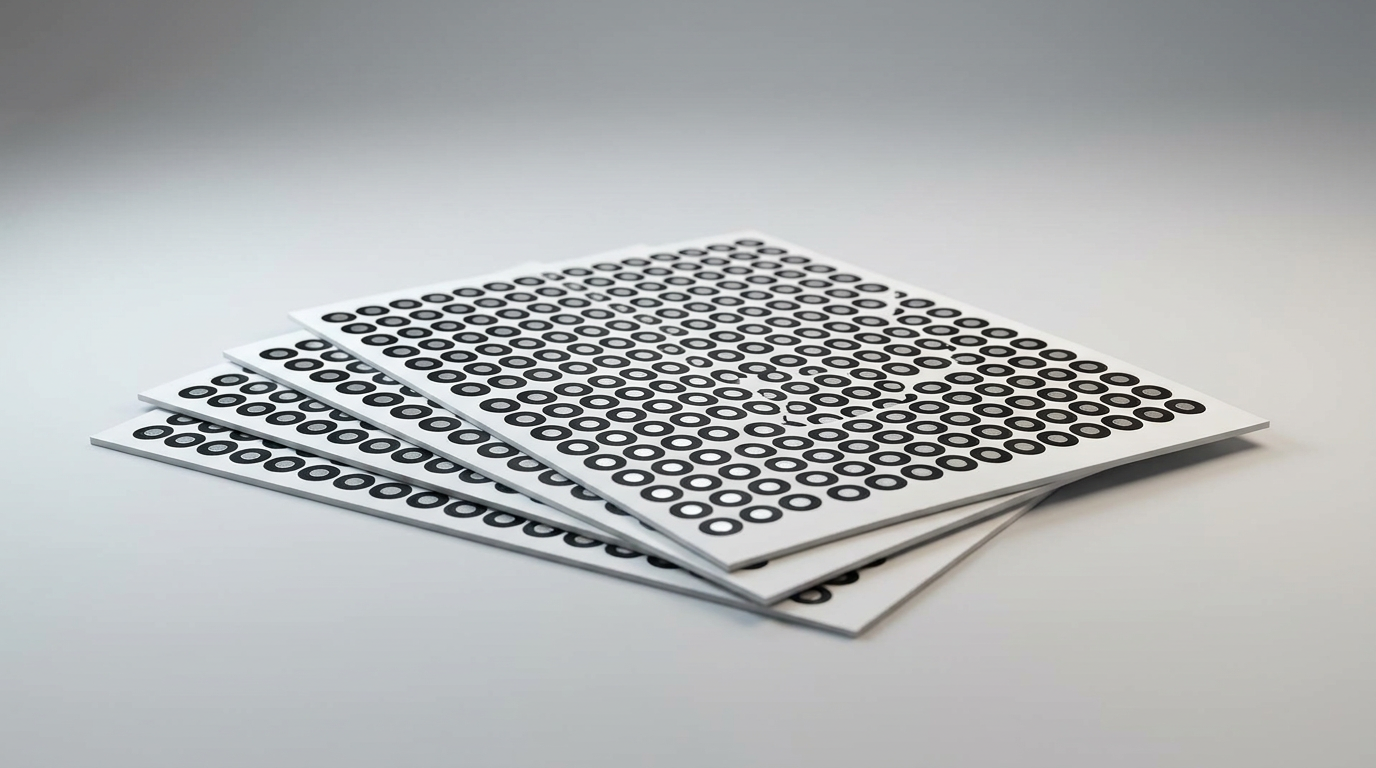
In the specialized world of 3D scanning, where cutting-edge hardware often takes center stage, the seemingly mundane accessory of scanner markers remains a foundational component. These small, reflective dots are not just an add-on; they are the bedrock upon which high-fidelity scan alignment often rests. They represent a fundamental truth in metrology: precision frequently hinges on the simplest, most consistent reference points.
The Starry 2000 Dots 3D scanner markers, a collection of 6.0mm reflective targets, do not aim to innovate the category. Instead, they focus on delivering reliable performance where it matters most: providing stable, detectable anchor points for scanner software. The true measure of such a product lies not in flashy features, but in its consistent, quiet competence, enabling users to overcome the inherent challenges of scanning complex or featureless geometries.
This review assesses whether the Starry markers provide the necessary 'tracking scaffolding' that converts scanning frustration into productive data capture, examining their adherence, reflectivity, and overall utility in demanding environments. They offer a window into how an unassuming consumable can define the practical limits of advanced imaging technology.
What owners love
- + High reflectivity ensures reliable detection by scanners
- + Adheres well to diverse surfaces, including untreated wood, metal, and glass
- + Removes cleanly without leaving residue on most materials
- + Generous quantity provides ample markers for extensive projects
- + Consistent size and reflectivity aid scan alignment and stability
Common complaints
- − One report of poor IR reflectivity, making them ineffective for some scanners
- − Adhesion can be problematic on treated wood surfaces
- − Markers may be slightly smaller than some users anticipate
Design & Build
The Starry 2000 Dots are 6.0mm circular markers, a common size for 3D scanning applications. Owners consistently report the dots are cleanly cut and uniform, indicating a manufacturing process that prioritizes consistency. The material composition is engineered for high reflectivity, a critical factor for accurate scanner detection. The 'reflectivity sweet spot' is a subtle but important aspect of marker design; sufficient brightness ensures detection, while excessive reflection can lead to 'blown-out' tracking points that scanners struggle to interpret. Owners widely praise the Starry markers for hitting this balance, appearing bright enough for instant lock-on without overwhelming the sensor. This suggests the markers employ a reflective coating optimized for typical structured-light and IR-based scanning systems.
Setup & Ease of Use
Application of the Starry markers is straightforward. The adhesive backing allows for direct placement on scan objects or dedicated scanning boards. Users find them easy to peel from the sheets. A significant advantage reported by multiple owners is the markers' adhesion across a range of materials, including raw wood, various plastics, metals, and glass. This broad surface compatibility minimizes the need for specialized preparation. Crucially, the markers also remove cleanly and without residue on most surfaces, preventing damage to prototypes or finished parts. This 'clean exit' property is often overlooked but proves vital for preserving material integrity and workflow efficiency, preventing the hidden cost of cleanup or surface repair.
Performance in Real Use
The primary function of these markers is to provide stable reference points, and owners confirm the Starry dots excel in this role. Scanners, including specific models like the EINSTAR Rockit and 3DMakerPro Moose Pro, detect them without difficulty. The high reflectivity and consistent size are repeatedly cited as factors that improve scan alignment and stability, particularly for objects lacking distinct geometric features or those with smooth, challenging surfaces. This performance helps users overcome the 'featureless object paradox,' where highly polished or simple objects, counter-intuitively, present some of the greatest scanning difficulties. The markers' ability to maintain strong signals from multiple angles further contributes to reliable data capture during complex, multi-angle scanning sessions. However, one notable counterpoint emerged: a single owner reported the markers were not IR reflective, rendering them ineffective for their specific scanning setup. While this appears to be an isolated incident, it highlights the importance of matching marker specifications to scanner technology, especially for less common IR-only systems.
Software & Ecosystem
As passive accessories, the Starry markers do not include proprietary software. Their value lies in their compatibility with the algorithms and tracking systems inherent to most commercial 3D scanners. Owners report successful integration with various handheld scanners, implying a broad, vendor-agnostic utility. The markers effectively provide the visual cues that scanning software requires for precise registration and alignment of multiple scan passes. This makes them a critical component within a broader 3D scanning ecosystem, acting as reliable 'software facilitators' by offering the consistent data points that allow sophisticated algorithms to perform their tasks accurately. Their widespread adoption for diverse applications, from reverse engineering to metrology, underscores this fundamental compatibility.
Value & Reliability
The Starry 2000 Dots offer substantial value, with a package containing a large quantity of markers for a price well under $50. The sheer number of dots alleviates a common pain point: running out of reference points mid-project. Users appreciate this generous supply, which prevents the 'scanner's stutter' often caused by insufficient tracking points or the need to ration consumables. Reliability is further supported by reports of marker reusability in some cases, where gentle peeling and re-sticking were possible without compromising adhesion. This enhances their cost-effectiveness over time. The consistent performance, ease of application, and clean removal establish these markers as a dependable, low-friction consumable that ultimately supports higher productivity and more reliable outcomes in 3D scanning workflows.
Verdict
Buy - These markers deliver consistent, high-quality reference points essential for effective 3D scanning.
This product is ideal for any 3D scanner owner, particularly those who frequently work with objects that lack distinct geometric features, have smooth or reflective surfaces, or require multi-angle scanning for complete data capture. Users involved in reverse engineering, industrial inspection, or high-precision metrology will find these markers a pragmatic and reliable aid. Conversely, individuals with specific IR-only scanning systems should exercise caution, as one report indicates potential incompatibility, though this appears to be an outlier. If your scanner relies on visible light or structured light for tracking, these markers are a sound investment.
The Starry 2000 Dots represent the foundational 'calibration constant' of the 3D scanning process. They are not the glamorous part of the workflow, but their consistent performance reveals a broader truth: often, the most significant improvements in technical fields stem from optimizing the simplest, most overlooked components. These markers embody the principle of 'reliable basics enabling advanced outcomes,' proving that high-tech workflows still depend on precise, unexciting fundamentals.
FAQ
More 3D Scanners reviews
Revopoint INSPIRE 2 3D Scanner Review: Unpacking the Accessory Echo Chamber

Creality 6mm 3D Scanning Markers Review: Essential Tracking Aid
TOSUKKI 6mm Positioning Targets Review: The Refined Generic Choice

AESUB 3DTOOLS 3D Scanner Spray Review: The 'Evaporative Enabler'
Creality 8-inch Rotating Turntable: A Solid Scanner Accessory

Generic 12 Piece Multi-Angle Markers Review: Essential 3D Scanning Dots
This review is based on real experiences shared by owners in online communities.