
Slice Engineering Plastic Repellent Paint Review: Nozzle Defense
By AValidReview. An AI-assisted summary of customer feedback, not a hands-on test.
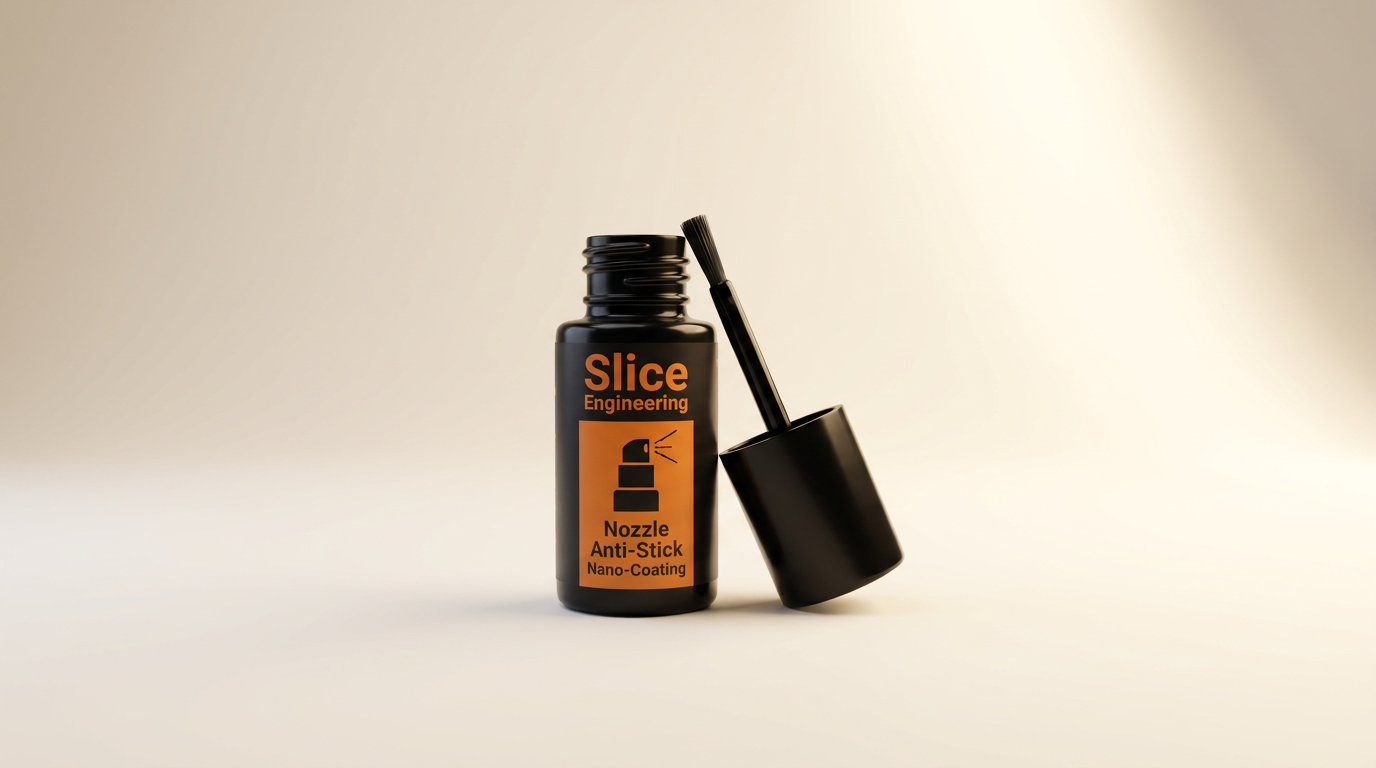
In the quest for perfect 3D prints, the recurring frustration of filament adhering to the nozzle often feels like an unavoidable tax. This "nozzle adhesion tax" manifests as inconsistent layers, marred surfaces, and the dreaded "blob of death" that can ruin a print and even damage hardware. While meticulous printer calibration and material selection help, many experienced users still contend with plastic accumulation, particularly with temperamental filaments like PETG.
The Slice Engineering Plastic Repellent Paint positions itself as a direct countermeasure to this persistent issue. Marketed as a brush-on PTFE nanosuspension, it promises to create an anti-stick barrier on the nozzle, ensuring clean plastic release and preventing buildup. Owners consistently report its effectiveness in mitigating the "nozzle adhesion tax," suggesting a fundamental shift in how one approaches nozzle maintenance.
This review evaluates whether this small bottle delivers on its significant claim, examining its real-world performance, application nuances, and overall value in the context of common 3D printing challenges.
What owners love
- + Effectively prevents filament buildup on nozzles.
- + Significantly reduces print defects caused by nozzle contamination.
- + Easy and quick application process.
- + Compatible with a wide range of filaments and nozzle types.
- + One bottle offers numerous applications, providing good value.
Common complaints
- − Requires reapplication after a number of prints or heavy use.
- − Some users report no improvement for specific multi-extruder issues.
- − Incorrect application or curing can reduce effectiveness.
- − Does not prevent blobs of death if plastic escapes under the hotend cover.
- − Limited effectiveness above 270°C due to material properties.
Design & Build
The Slice Engineering Plastic Repellent Paint is a purpose-built coating designed to protect 3D printer nozzles from plastic adhesion. Its core composition is a water-based PTFE nanosuspension, chosen for its non-stick properties and thermal stability. The product arrives in a small 3 mL bottle, equipped with an integrated brush applicator for precise delivery. Owners find this design practical for targeting the nozzle tip and surrounding hotend components. The compact size, while seemingly small for its price, is consistently noted as providing a high number of applications, highlighting an efficient material concentration. The product's rated thermal threshold of 300°C accommodates most common 3D printing filaments, though users printing at higher temperatures, particularly with exotic engineering plastics, should note the caution around 270°C to avoid degrading its non-stick properties or releasing fumes. This represents a thoughtful material selection for its intended operating environment, balancing efficacy with user safety and hardware longevity.
Setup & Ease of Use
Application of the Plastic Repellent Paint is straightforward, contributing to its high user satisfaction. The recommended process involves cooling the nozzle, cleaning it thoroughly to remove any existing residue, and then brushing on a thin, even layer. Owners generally follow a two-coat approach, allowing approximately 60-90 seconds for each coat to dry before reattaching the nozzle. The final step involves heating the hotend to around 200°C to cure the coating, a process that takes minutes. This simplicity is a significant advantage; users report the entire procedure takes only a few minutes. The included applicator brush facilitates precise application, ensuring the coating targets the nozzle tip effectively. This low-friction setup, a clear benefit for frequent users, minimizes downtime and integrates easily into routine printer maintenance.
Performance in Real Use
In day-to-day operation, the Plastic Repellent Paint consistently delivers on its promise of preventing filament adhesion. Owners printing with notoriously sticky materials like PETG, ASA, and even PCTG report a dramatic reduction in plastic buildup on the nozzle. This directly translates to cleaner outer walls, reduced stringing, and a significant decrease in print failures caused by dislodged blobs. Users describe the effect as "like magic" or "slippery stuff," with melted plastic simply sliding off. For single-extruder setups, the performance is near-universal. Some owners using multi-extruder printers or water-soluble support materials note that while it helps, it does not always entirely eliminate issues stemming from complex wipe processes or material interactions. The coating's lifespan varies, with common feedback suggesting reapplication every 10 prints or weekly for frequent users. This indicates a manageable maintenance cadence, demonstrating a sustained performance curve rather than an instant, permanent fix. The product functions as a consistent defense against print-destroying nozzle gunk, offering peace of mind where previously there was constant vigilance.
Software & Ecosystem
As a consumable coating, the Slice Engineering Plastic Repellent Paint does not interact with software or a digital ecosystem. Its value lies purely in its physical application and performance. However, its existence addresses a common pain point often mitigated through print settings in slicing software. By physically preventing plastic adhesion, it reduces the need for aggressive retraction settings, specific wipe towers, or complex prime lines that software attempts to manage. This allows users to optimize slicing profiles for print quality and speed, rather than solely for nozzle hygiene. It integrates seamlessly into any 3D printing setup, from entry-level hobbyist machines to advanced production farms, without requiring any specific hardware or software compatibility. This universality underscores its utility as a foundational maintenance product rather than a system-dependent accessory.
Value & Reliability
The Slice Engineering Plastic Repellent Paint offers substantial value despite its small volume and price point in the mid-teens. Owners frequently describe it as an "excellent investment" and "worth every drop," citing its ability to save numerous prints and even hardware from catastrophic failures like the "blob of death." For users who were frequently replacing nozzles or spending considerable time cleaning them, the paint provides a clear economic benefit. Many attest that the bottle, despite its 3 mL size, lasts for well over 100 applications, making the cost per application minimal. This longevity, combined with its consistent performance, establishes it as a highly reliable product within its category. Its ability to prevent print failures and reduce maintenance directly contributes to a more efficient and less frustrating 3D printing experience, offering a tangible return on investment for any serious maker or professional.
Verdict
Buy - This product effectively mitigates persistent filament adhesion issues, particularly with challenging materials.
This paint is a strong recommendation for any 3D printer owner experiencing filament buildup on their nozzle, especially those frequently printing with PETG, ASA, or other sticky materials. It is ideal for users seeking to reduce print failures, improve surface finish, and minimize nozzle cleaning time. Those with multi-extruder setups might find it helpful, but should temper expectations for complete resolution of all inter-material contamination. Given its price point, generally under $20, and the number of applications per bottle, it offers significant value for nearly all users.
The Plastic Repellent Paint represents a silent but profound category shift, moving nozzle maintenance from reactive damage control to proactive prevention. While many 3D printing accessories focus on incremental performance gains or convenience, this product tackles a fundamental problem that often underlies numerous printing issues. It frees the user from a pervasive, low-level anxiety about nozzle cleanliness, allowing focus to shift back to design and execution. This isn't just about a cleaner nozzle; it's about enabling a higher-fidelity, less stressful printing experience by addressing the foundational problem of material adherence, proving that sometimes the smallest solution delivers the biggest impact.
FAQ
More 3D Printer Parts & Accessories reviews
HysiPrui P1S/P1P Integrated Hotend Review: Cheap Spares, Real Trade-Offs
HP OfficeJet Pro 8135 Review: The Cloud-Tethered Workhorse
HzdaDeve Bambu P1S Hotend 3-Pack Review: Value Meets Risk
Fannova 23.6" Large Printer Stand Review
Ultrafashs 3D Printer Cleaning Rope Review
ELEGOO 3D Printer Adhesive Glue Review: Reliable Bed Adhesion
This review is based on real experiences shared by owners in online communities.