
SAHVAIM PEO PET Bambu Lab Build Plate Review
This review is based on real experiences shared by owners in online communities.
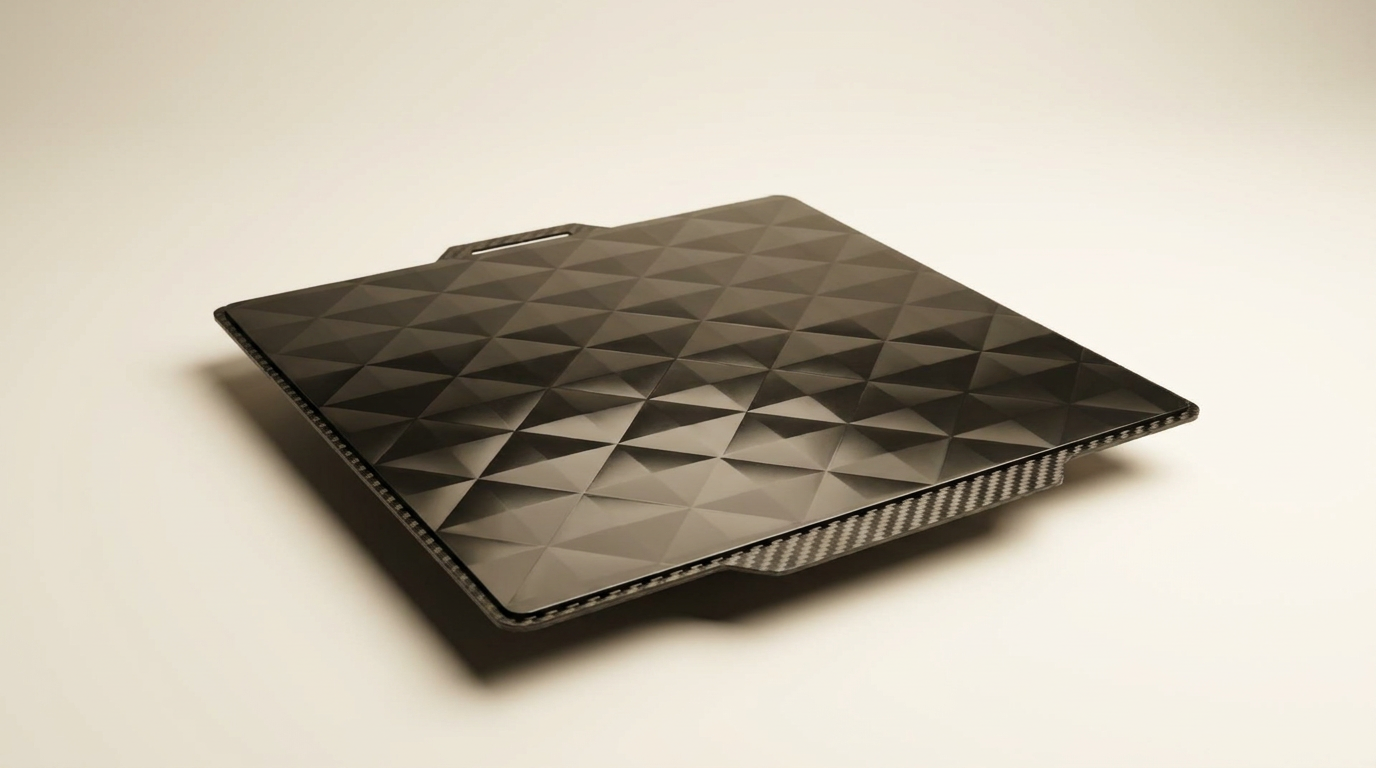
In a 3D printing landscape increasingly focused on speed and automation, the tactile and aesthetic qualities of the first print layer often receive less attention. Many users opt for the standard textured PEI plates that ship with popular printers, accepting a consistent but uninspired bottom finish. The SAHVAIM PEO PET build plate, however, represents a counter-current, offering a dual-sided patterned surface designed specifically to imbue prints with distinct visual flair directly at the bed interface.
While functionality remains paramount, this plate leans into the "aesthetic layer" as a primary selling point. It promises excellent adhesion and easy removal, but its true value proposition lies in the ability to transfer diamond PEO and carbon fiber PET patterns onto the base of a printed part. This review assesses whether this plate delivers on both its foundational utility and its decorative promise, and for whom this specific blend of performance and visual customization provides the most tangible benefit.
What owners love
- + Consistently delivers distinct diamond PEO and carbon fiber PET patterns to prints.
- + Maintains strong adhesion for common filaments like PLA and PETG.
- + Prints release easily once the plate cools, often without additional tools.
- + Constructed from durable spring steel, resisting deformation.
- + Offers significant value compared to official or branded patterned plates.
Common complaints
- − Requires proper cleaning before each use to ensure optimal adhesion.
- − May necessitate disabling plate detection on certain Bambu Lab printer models.
- − Some users reported initial adhesion issues, resolved with heat or cleaning.
- − Pattern resolution can vary between different batches of similar plates.
- − Not as thick as some first-party build plates, though durability is not impacted.
Design & Build
The SAHVAIM build plate features a spring steel base, a material choice widely favored for its flexibility and resistance to permanent deformation. Owners report a sturdy feel and a consistent, well-applied surface texture on both sides. One side presents a diamond PEO pattern, yielding a smooth, somewhat reflective finish. The reverse side carries a carbon fiber PET pattern, providing a subtle, matte texture. This dual-sided approach maximizes utility, offering two distinct aesthetic options from a single plate. While some owners note it feels marginally thinner than official Bambu Lab plates, this does not translate to compromised rigidity or long-term structural integrity. The consistent feedback regarding its solid construction suggests a product built to withstand repeated use within its operational parameters.
Setup & Ease of Use
Installation on compatible Bambu Lab printers, including the X1C, P1S, and A1, is straightforward; the plate dimensions of 257x257mm ensure a precise fit onto the magnetic print bed. Owners consistently highlight the magnetic adhesion to the printer's heated bed as robust and reliable. However, the plate introduces a minor procedural adjustment for some users: printers like the X1C may require disabling 'Enable detection of build plate position' in settings. Additionally, users must manually select 'Smooth PEI Plate/High Temp' in their slicer software to optimize printing parameters. Adhesion performance is largely dependent on meticulous pre-print cleaning; wiping the surface with a damp cloth followed by a dry one before each print is critical. Neglecting this step often leads to initial adhesion failures, a common thread in feedback that highlights the 'clean surface imperative' for optimal results with smooth, patterned build plates.
Performance in Real Use
The primary draw of this plate is its pattern transfer, and owners overwhelmingly confirm its effectiveness. The diamond PEO and carbon fiber PET patterns reliably impart unique textures to the first layer of prints. For filaments like PLA and PETG, adhesion is generally excellent, particularly once the plate is heated to recommended temperatures (60-65°C for PLA, 70-90°C for PETG). Owners report minimal warping or detachment during printing. Post-print, the spring steel's flexibility simplifies part removal; models typically detach with a gentle bend of the plate once it has cooled, often negating the need for scrapers. This 'cold release' mechanism is a significant convenience. Some users noted that while the texture is pronounced, finely tuned slicer settings might be required to ensure the patterned surface stands out against visible layer lines on more complex geometries. The 'aesthetic layer' phenomenon is genuinely delivered here, but its prominence depends on print parameters.
Software & Ecosystem
As a third-party build plate, the SAHVAIM unit operates outside of Bambu Lab's integrated ecosystem for plate detection. This means users must manually configure their slicer settings, typically selecting a generic 'smooth PEI' profile, and, as mentioned, potentially disable automatic plate detection on certain printer models. While this adds a small cognitive load compared to using an official Bambu Lab plate with its QR code recognition, owners generally find these adjustments minor and easily managed. The plate's design is optimized for the Bambu Lab 257x257mm platform, ensuring mechanical compatibility, but the software side requires user intervention. This represents a typical 'third-party tax' where direct compatibility features are traded for expanded material and aesthetic options.
Value & Reliability
Positioned in the lower price tier, typically under $20, the SAHVAIM PEO PET build plate consistently receives high marks for its perceived value. Many owners highlight the exceptional quality-to-price ratio, noting that it offers a comparable, if not superior, experience to more expensive branded options, especially for its unique patterned surfaces. The spring steel construction contributes to its reported durability, with owners expecting a reasonable lifespan provided basic care is maintained. The consensus indicates a reliable performance for its cost, making it an attractive option for users seeking to expand their aesthetic printing capabilities without a significant financial outlay. The product's consistent 5-star feedback underscores its strong position within the value segment of aftermarket printer accessories.
Verdict
Buy - This build plate offers a compelling combination of aesthetic variety, reliable performance, and excellent value.
This plate is ideal for Bambu Lab printer owners who frequently print parts where the first layer's visual appeal is important, such as display pieces, aesthetic enclosures, or functional prints that benefit from a distinct bottom texture. It suits users who are comfortable with minor slicer adjustments and appreciate having two unique patterned surfaces on a single, durable spring steel sheet. Those primarily focused on pure speed or using highly specialized engineering filaments might find less utility, but for general PLA and PETG printing, it's a solid choice. If you demand a precise 'OEM' experience with automated plate detection, you might consider official options, but for most, the trade-off is minimal.
The SAHVAIM PEO PET plate is more than just a functional component; it's an 'aesthetic multiplier.' In a hobby often focused on geometric accuracy, this product introduces an accessible way to layer surface design directly into the fabrication process, transforming a usually overlooked print face into an intentional design element. It quietly reveals a growing demand for visual customization that extends beyond filament color, pushing the boundary of what a simple build plate can contribute to a finished print.
FAQ
More 3D Printer Parts & Accessories reviews
SAHVAIM AMS Lite Filament Hub Review: Quick Fix for Bambu A1
IdeaFormer-3D Bambu Lab Textured PEI Plate Review
Wefuit 0.2mm Hardened Steel Hotend Review: Budget Precision
HzdaDeve P1S/P1P Hotend Assembly Review: Cheap Downtime Insurance

3DZWMAN RGB LED Lamp Kit 001 Review: Better Than OEM
ELEGOO Filament Storage Bags Review: The Unsung Hero of 3D Printing
This review is based on real experiences shared by owners in online communities.