
RPLIDAR A1M8 Review: A Capable Entry Point for Robot Perception
This review is based on real experiences shared by owners in online communities.
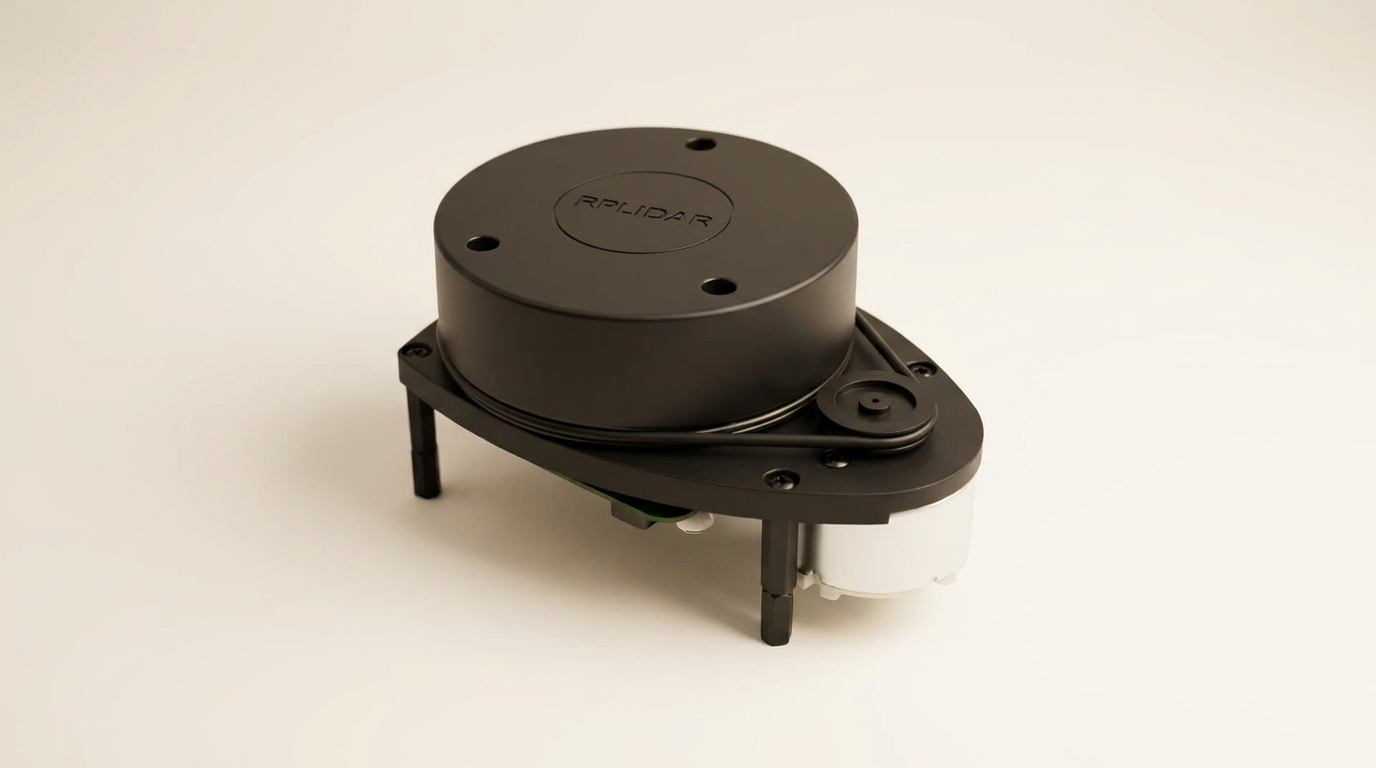
The robotics community often faces a difficult choice between prohibitive costs and limited functionality when sourcing perception components. The RPLIDAR A1M8 2D LIDAR sensor positions itself as a long-standing answer to this dilemma, a component that, despite its age, continues to find utility in a specific niche. Its enduring presence on the market suggests a resilience not in cutting-edge features, but in foundational effectiveness.
Most buyers approach the A1M8 expecting an out-of-the-box solution, but its true value lies in its role as an enabler for the self-reliant builder. It is less a consumer product and more a development tool, a distinction critical for setting appropriate expectations. For those building autonomous robots, particularly with a ROS framework, the A1M8 represents a pragmatic option.
This review unpacks the A1M8's performance, its integration challenges, and what its continued relevance signifies for budget-conscious robotics development. It explores how this sensor manages to remain a viable option, not through aggressive updates, but through a core competency that remains largely untouched by newer, more expensive alternatives.
What owners love
- + Reliable and precise 2D scanning for its class
- + Excellent, native integration with ROS/ROS2
- + Strong value proposition for budget-conscious projects
- + Supports multiple operating systems via SDK (macOS, Linux, RPi)
- + Consistent performance for non-critical mapping and navigation
Common complaints
- − Outdated and often inconsistent official documentation and software
- − Requires significant technical proficiency and troubleshooting
- − Official software primarily supports Windows, limiting other OS users
- − Lack of essential mounting hardware, design flaws for cable management
- − Reports of inconsistent unit quality and DOA components
Design & Build
The RPLIDAR A1M8 presents a compact form factor, generally described as small and fairly quiet in operation. Its physical construction includes mounting holes for integration, though owners frequently note the absence of essential mounting screws. This omission creates an immediate hurdle for project integration. A recurring design complaint centers on the cable's placement on the bottom of the unit, which prevents stable, flat-surface deployment without custom modification. This indicates a design philosophy optimized for fixed, elevated mounting rather than standalone use. Some users find the unit "a little heavy," but this does not generally impede functionality. The 'OPTMAG Original Design' is marketed for lifespan extension, a claim that aligns with reports of units performing reliably over time, suggesting robust internal components despite external design shortcomings.
Setup & Ease of Use
Setup of the A1M8 presents a stark dichotomy. For those within a ROS (Robot Operating System) environment, integration is often described as 'plug and play.' Owners consistently report that with ROS/ROS2, the sensor immediately publishes real-time scans, with specific nodes like RPLIDAR, AMCL, and RVIZ supporting it out-of-the-box. This creates a low friction point for a specific user base. However, outside of ROS, the experience changes drastically. The official software, Robostudio, is noted for its cumbersome, non-intuitive, and buggy interface, primarily supporting Windows. Attempts to integrate with platforms like Arduino are met with significant challenges; owners spend many hours debugging outdated libraries and inconsistent documentation. The 'First-Layer Cliff' phenomenon describes this experience: an initial hurdle for non-ROS users where the basic setup becomes an unexpectedly complex and time-consuming endeavor, requiring deep technical diving or custom code development to even begin receiving data.
Performance in Real Use
Once integrated, the RPLIDAR A1M8 generally delivers on its core promise of 2D laser range scanning. Its 12-meter range and 360-degree omnidirectional scan capabilities are frequently verified by users building mobile autonomous robots, robotic lawnmowers, and interactive art installations. Precision is generally reported as good, with one owner noting +/- 4 to 7cm repeatability in a noisy environment. The unit's ability to identify objects for obstacle avoidance and mapping is consistently praised. While it may not offer the cutting-edge performance of newer, more expensive LIDARs, its output is deemed sufficient and reliable for hobbyist and experimental robotics projects. Several long-term users attest to its sustained performance, even noting continued satisfaction with models two years after purchase. The A1M8 adheres to a principle of 'Sufficient Fidelity,' where its performance, while not class-leading, is entirely adequate for the practical demands of its target applications.
Software & Ecosystem
The software and ecosystem surrounding the A1M8 represent its most significant weakness. Official documentation is repeatedly cited as terrible, inconsistent, outdated, or even non-existent (QR codes pointing to dead pages). The manufacturer's SDK is available for macOS, Linux, and Raspberry Pi, allowing custom development in Python or C++, but the official Robostudio application for configuration and testing is Windows-only and often fails to detect the connected device. This forces users on other operating systems to rely on community-developed solutions or their own code, navigating confusing UART communication protocols. This reliance on a decentralized, user-driven ecosystem highlights what can be termed the 'Community Tax.' Users pay this tax in time and effort, sifting through GitHub repositories and forum posts to piece together working solutions, often due to the lack of updated or functional first-party resources. The disparity between Windows support and other OS support is a consistent point of friction.
Value & Reliability
At its price point, generally under $100, the RPLIDAR A1M8 offers strong value for makers and roboticists. Owners consistently describe it as a solid product that does exactly what it says for a good price. This positions it as an accessible entry into LIDAR technology, especially for learning and experimentation. However, reliability is a mixed bag. While many units work perfectly out of the box and continue to perform for years, there are notable reports of defective units, including devices that are dead on arrival (DOA) or cause damage to USB ports due to power issues. The lack of responsive customer support further compounds issues with defective units, leaving some users with non-functional hardware beyond the return window. This introduces a 'Quality Lottery' where the low price point comes with an elevated risk of receiving a faulty unit and facing minimal manufacturer recourse.
Verdict
Consider - The RPLIDAR A1M8 offers excellent value and capable 2D scanning, but demands significant technical investment.
This LIDAR is a strong consideration for hobbyist roboticists, students, and DIY builders already comfortable with ROS/ROS2 and prepared to write custom code or troubleshoot extensively. Its performance for basic navigation, mapping, and obstacle avoidance is more than adequate, especially given its modest price, typically under $100. Those requiring a polished, plug-and-play experience with comprehensive official support on non-Windows platforms should look elsewhere, potentially at sensors in the mid-hundreds dollar range.
The RPLIDAR A1M8 embodies the 'maker ethos' in its purest form: a technically capable but rough-around-the-edges component that requires ingenuity and community engagement to unlock its full potential. Its enduring presence underscores a fundamental truth in robotics development: foundational utility often triumphs over feature bloat, provided the user base is self-sufficient enough to navigate the accompanying documentation and software challenges. It is a tool for building, not just buying.
FAQ
More 3D Scanners reviews
Revopoint INSPIRE 2 3D Scanner Review: Unpacking the Accessory Echo Chamber
Creality 6mm 3D Scanning Markers Review: Essential Tracking Aid
TOSUKKI 6mm Positioning Targets Review: The Refined Generic Choice
AESUB 3DTOOLS 3D Scanner Spray Review: The 'Evaporative Enabler'
Creality 8-inch Rotating Turntable: A Solid Scanner Accessory

Generic 12 Piece Multi-Angle Markers Review: Essential 3D Scanning Dots
This review is based on real experiences shared by owners in online communities.