
READY 3D Build Plate Cleaner Review: Essential Adhesion Prep
This review is based on real experiences shared by owners in online communities.
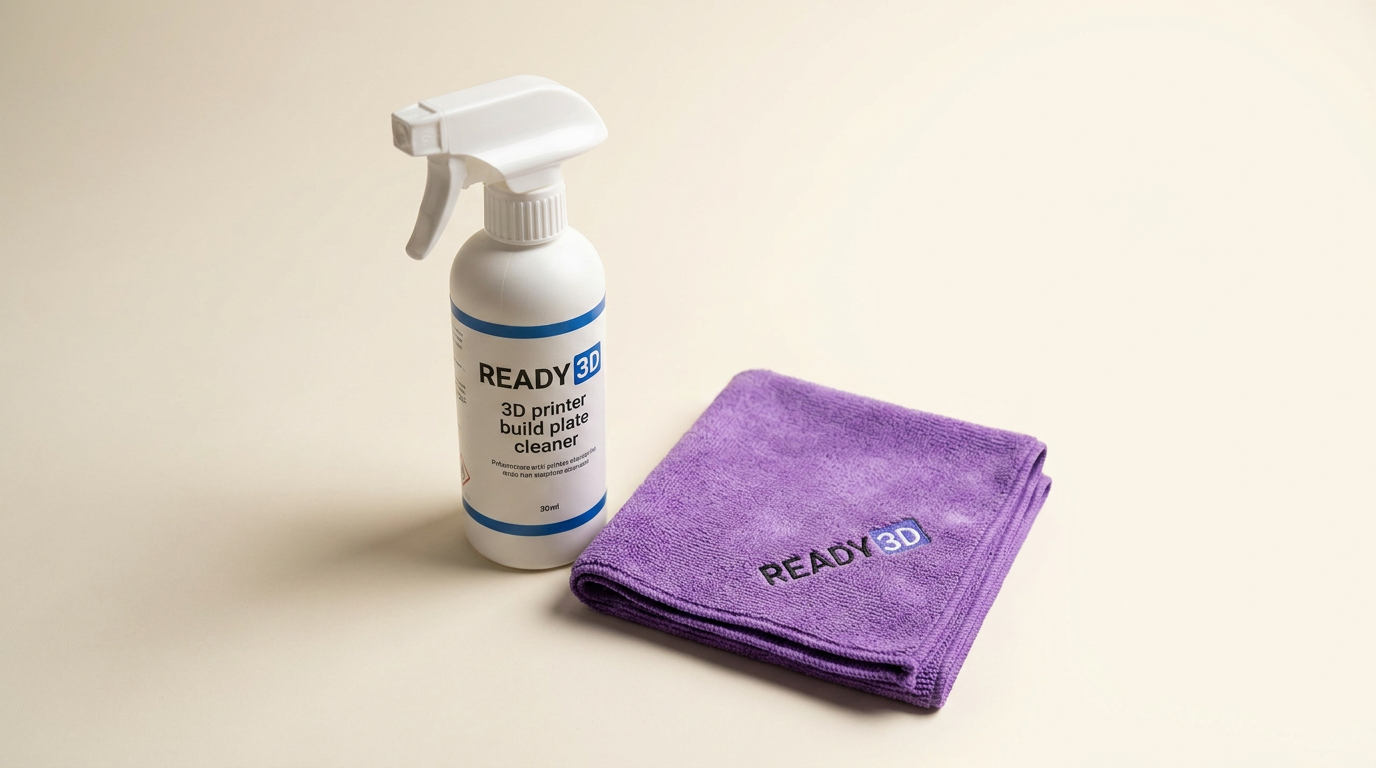
In the quest for flawless 3D prints, surface preparation often takes a backseat to filament choice or printer calibration, yet it remains a critical factor. Many users still resort to household cleaners, which can leave residues or, worse, damage specialized build surfaces over time. The READY 3D Build Plate Cleaner aims to address this oversight, offering a purpose-built solution designed to optimize print adhesion without the typical drawbacks of general-purpose solvents.
However, a dedicated cleaning solution for 3D printer build plates faces a unique challenge: the diverse array of plate materials and surface treatments. What performs excellently on a PEI sheet might yield different results on a textured plate, leading to what we term the "surface specific adhesion paradox." This cleaner positions itself as a universal answer, but the reality of 3D printing often demands nuanced approaches.
This review evaluates whether the READY 3D cleaner truly simplifies the often-overlooked step of build plate maintenance, or if its broad approach introduces new variables for specific printer setups. We examine its effectiveness against common residues, its non-toxic claims, and its impact on first-layer adhesion, a frequent source of frustration for enthusiasts and professionals alike.
What owners love
- + Effectively removes adhesive residue for many users
- + Non-toxic and odor-free formulation
- + Leaves surfaces oil-free, improving adhesion for some
- + Quick-drying, no-rinse formula simplifies workflow
- + Includes a microfiber cleaning towel
Common complaints
- − Leaking bottles are a recurring shipping issue
- − May leave a slight film on some surfaces
- − Incompatible with certain textured build plates, causing adhesion loss
- − Does not dissolve hard, baked-on filament residue
- − Some users report no improvement over basic soap and water
Design & Build
The READY 3D Build Plate Cleaner arrives in a standard spray bottle, accompanied by a 12x12-inch microfiber towel. The formulation is explicitly non-toxic, alcohol-free, and boasts a zero-VOC, odor-free composition. This emphasis on safety and environmental considerations aligns with a growing user demand for less aggressive chemical treatments in home workshops. Owners frequently commend the lack of harsh fumes, making it suitable for use in enclosed spaces. However, a significant number of reports highlight issues with the bottle's integrity during shipping. Leakage, ranging from minor seepage to nearly half the bottle emptying, is a consistent complaint, detracting from the overall user experience before the product is even applied. This suggests a "packaging vulnerability tax" where the product's value is diminished by transit damage, irrespective of its internal quality.
Setup & Ease of Use
Using the READY 3D cleaner is straightforward: spray, wipe, and allow to dry. The no-rinse formula is a key convenience factor, allowing for rapid plate turnaround. Owners describe the process as simple and quick, enabling faster progression to the next print. The included microfiber cloth is a practical addition, providing the necessary tool for optimal application. However, the simplicity of the process can sometimes mask underlying issues. For instance, some users note that while it cleans well, it does not magically remove deeply embedded or hardened filament, still necessitating scraping. This reveals a common user expectation mismatch where convenience is sought but practical limitations remain, particularly for more aggressive residue build-up.
Performance in Real Use
The cleaner's performance elicits mixed but generally positive feedback for specific use cases. Many users report excellent results on PEI plates, noting improved first-layer adhesion and easy print removal. They describe surfaces as clean and oil-free, leading to more reliable prints. The product appears effective at removing typical glue stick or adhesive spray residues. However, a critical divergence arises with textured build plates, particularly those from brands like Bambu Lab. Several owners of these specific plates report a severe degradation of bed adhesion after using the READY 3D cleaner, rendering prints unable to stick. This suggests the cleaner's formulation, while beneficial for smooth surfaces, might interact negatively with certain textured coatings, creating an unintended "adhesion-inhibiting film" that counteracts its purpose. This highlights the ongoing challenge of creating a truly universal cleaning solution in a rapidly diversifying hardware ecosystem.
Software & Ecosystem
This product operates in the physical realm of 3D printing, not the digital. There is no software or digital ecosystem component. Its place within the broader 3D printing workflow is as a maintenance tool, meant to prepare the physical printing surface. Its compatibility is dictated by material science, not code. While marketed as a general solution for most commercially available adhesives and build plates, the user feedback clearly indicates that material compatibility is not universal. This emphasizes a "chemical specificity gap" where the general marketing overreaches the actual functional compatibility across the varied materials now common in 3D printing.
Value & Reliability
Priced in the budget category, the READY 3D Build Plate Cleaner offers a compelling value proposition for many users. For those whose plates benefit from its formulation, it represents an affordable way to improve print consistency. The quantity provided typically lasts for numerous cleaning cycles. However, the reliability aspect is significantly impacted by two factors: bottle leakage and inconsistent performance across different build plate types. The persistent reports of leaked bottles mean a percentage of buyers receive less than the advertised product, directly affecting perceived value. More critically, its documented incompatibility with specific popular textured plates undermines its reliability as a universally trusted solution, especially for users relying on those specific surfaces. This split performance creates a situation where its value is high for one segment of the market but negligible or even negative for another.
Verdict
Consider - The READY 3D Build Plate Cleaner offers a convenient, non-toxic cleaning solution that significantly improves adhesion for many smooth build plates, but presents adhesion issues for certain textured surfaces.
This cleaner is a solid choice for users with standard PEI or other smooth build plates seeking a quick, odor-free way to maintain print adhesion. If you typically use glue sticks or adhesive sprays and print with common filaments like PLA, this product provides a straightforward workflow upgrade for a modest investment, typically under $20. It's especially useful for those who prioritize a clean working environment due to its non-toxic, fume-free composition.
However, users with specific textured build plates, particularly those from brands like Bambu Lab, should exercise caution or consider alternative cleaning methods. Several owners report a detrimental effect on bed adhesion, rendering the product counterproductive. If your primary goal is to clean heavily caked-on filament, this solution may also fall short, as it primarily targets adhesive residue. In these cases, traditional soap and water might offer more consistent results.
This product epitomizes the "universal cleaner's dilemma" in a highly fragmented hardware category. While its non-toxic, no-rinse formulation offers genuine convenience and a positive impact for many, its critical failing on popular textured surfaces reveals that in 3D printing, a single solution rarely serves all masters. The promise of simple maintenance still collides with the nuanced material science of diverse build surfaces.
FAQ
More 3D Printer Parts & Accessories reviews
YUNHAN Air Filter for Bambu Lab 3D Printers Review

HYHJMISTY 91PCS 3D Printer Tools Kit Review: A Focused Starter Set
Black Magic 3D Printer Adhesion Kit Review: The Applicator Advantage
Fuitnerd 184-Piece 3D Printer Tool Kit Review: Value-Focused Utility
CreatryLab A1/A1 Mini Hotend Review: Budget Reliability for Bambu Labs
Fuitnerd 142Pcs 3D Printer Tools Kit Review: A Maker's Essential?
This review is based on real experiences shared by owners in online communities.