
QIDI PLUS4 3D Printer Review: High-Speed, High-Temp Engineering
By AValidReview. An AI-assisted summary of customer feedback, not a hands-on test.
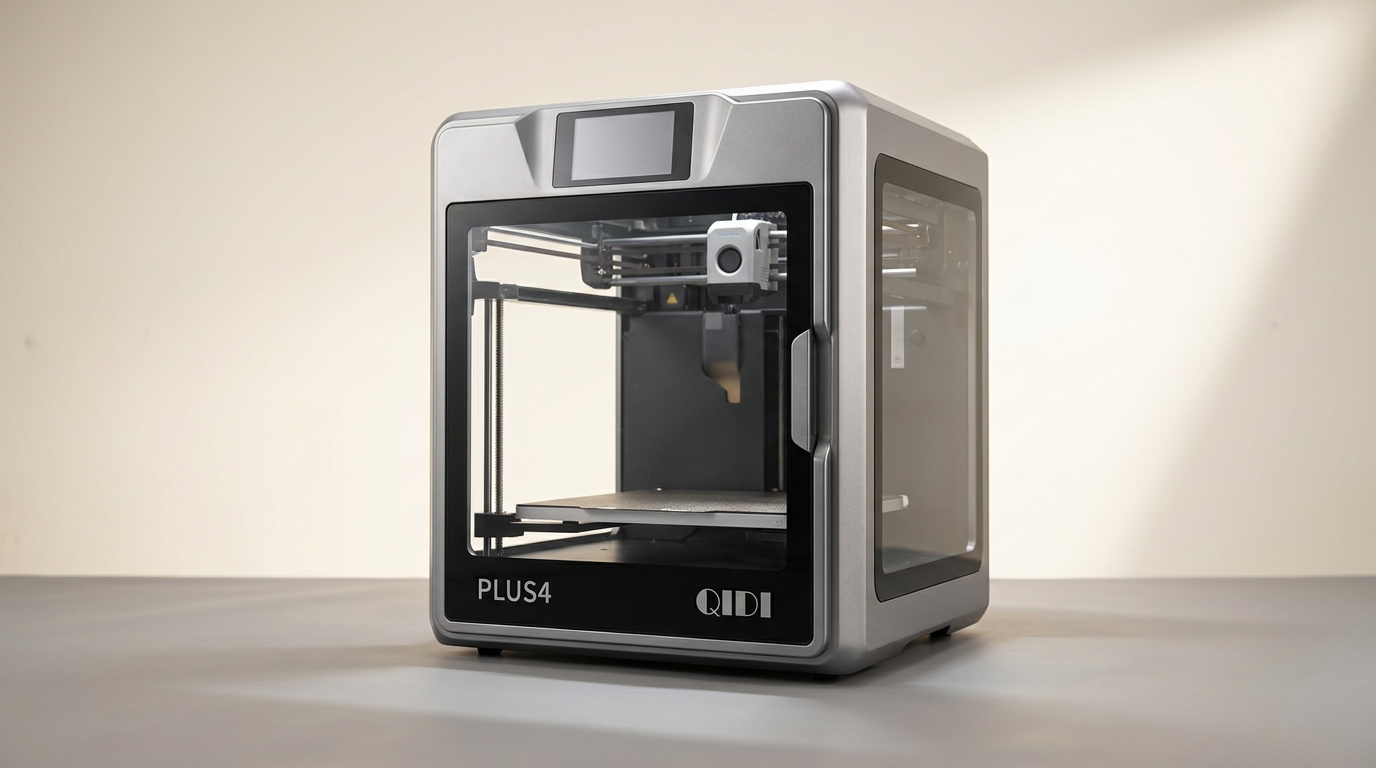
The QIDI PLUS4 3D printer targets users seeking to produce high-quality, large-scale prints with a broad range of materials, including demanding engineering-grade filaments. Positioned as a machine that balances speed with precision, its feature set includes a heated chamber, a high-temperature direct extruder, and a substantial build volume.
While some owners highlight its performance as exceptional straight out of the box, offering print quality comparable to or exceeding more expensive competitors, other feedback indicates occasional initial hurdles. This review examines how the PLUS4 performs in real-world scenarios, particularly its consistency, ease of use, and overall value in a competitive market.
What owners love
- + Delivers exceptional print quality, often surpassing competitors
- + Effective heated chamber and high-temperature hotend support engineering filaments
- + Robust build and components contribute to reliability
- + Prompt and effective customer support resolves issues quickly
- + Large build volume accommodates big projects
- + Open-source Klipper firmware allows advanced customization
Common complaints
- − Initial units experienced chamber heater or Z-probe issues
- − Software interface exhibits minor annoyances like screen lag
- − Z-offset logic is counter-intuitive for some users
- − Poop chute design directs waste inefficiently
- − Filament loading can be challenging initially
Design & Build
The QIDI PLUS4 features a robust, enclosed design, with owners frequently describing it as 'built like a tank.' Its metal frame contributes to stability and durability, essential for consistent printing, especially with demanding materials. The 6mm thickened aluminum hot bed platform and upgraded 10mm diameter linear shafts and lead screws on the independent dual motor-driven Z-axis enhance structural integrity and precision. While the outer cabinet is plastic, its construction is reported to be solid. Integrated handles simplify moving the printer, a thoughtful detail for a machine of its size. The electrical outlet and power switch placement on the side opposite the filament feeder is a minor design inconvenience, complicating placement against a wall.
Setup & Ease of Use
Many owners report a straightforward setup process, with some unboxing to printing in under 15 minutes. The printer comes largely pre-assembled, requiring minimal effort such as attaching the door handle, installing the glass top, and removing shipping restraints. Automatic leveling is consistently praised for its effectiveness, ensuring a reliable first layer and reducing common printing frustrations. However, a few users encountered initial difficulties, such as factory-jammed hotends or issues during filament loading, which required intervention. The Z-offset adjustment, while functional, operates with a logic that some experienced users found counter-intuitive compared to other machines, as it controls bed movement relative to the printhead.
Performance in Real Use
The PLUS4 is lauded for its high-quality prints and reliability, even if not the fastest machine on the market. Owners prioritize its consistent output over pure speed, noting that 'half the speed for double the quality and reliability' is a worthwhile trade-off. The upgraded heated chamber with a 400W heating power and optimized air circulation effectively reduces warping and cracking for high-temperature filaments, expanding material compatibility significantly. Its 370°C direct extruder handles a wide range of advanced materials, including PPS-CF, PPA-CF/GF, ABS, ASA, and PC. Long-term users report hundreds to thousands of hours of reliable operation, making it a workhorse for intensive printing needs. Print adhesion is generally strong, provided the bed is clean, and supports detach easily with minimal痕跡.
Software & Ecosystem
The QIDI PLUS4 runs on Klipper firmware, offering an open-source platform that appeals to users seeking customization and advanced control. The QIDI Studio slicer and mobile app facilitate remote printing, real-time progress tracking, and camera monitoring for time-lapse videos. While the software integration is effective, some users report minor interface issues, such as screen lag and the absence of a direct button for deleting prior prints. An integrated filament cutter and compatibility with the upcoming QIDI BOX (an automatic multi-filament feeding system) indicate future-proofing for multi-color printing capabilities. Firmware and software updates are regularly provided, demonstrating ongoing developer support for the platform.
Value & Reliability
The QIDI PLUS4 presents strong value, particularly for users requiring a large build volume and the ability to print engineering-grade filaments effectively. Its robust construction, high-temperature capabilities, and consistent print quality compare favorably against competitors, often at a more accessible price point. While early production batches had some reported issues, several long-term users attest to the printer's overall reliability and durability. A particularly strong aspect highlighted by nearly all owners is QIDI's customer support. Instances of technical issues, from board failures to heated bed problems, were met with prompt responses, replacement parts shipped quickly, and direct assistance, often from named representatives like 'Evelyn,' which significantly enhanced owner satisfaction and confidence in the brand.
Verdict
Buy - The QIDI PLUS4 delivers exceptional print quality and reliability, especially for high-temperature and engineering filaments, backed by outstanding customer support.
This printer is an excellent choice for experienced makers, professionals, and small businesses needing to print complex designs with demanding materials. Its large build volume, heated chamber, and robust construction make it ideal for functional parts and prototypes. Users accustomed to fine-tuning and leveraging Klipper's capabilities will appreciate its open architecture. The printer excels for those moving beyond traditional PLA/PETG into nylons, polycarbonates, and carbon fiber composites. Positioned in the mid-range price band, it represents strong value for its capabilities.
Beginners seeking a 'set it and forget it' experience might find the initial troubleshooting or interface quirks challenging, particularly if they lack prior 3D printing experience. Those on a strict budget who primarily print common filaments might find its advanced features excessive for their needs, as comparable quality for basic materials can be achieved with less expensive machines.
FAQ
More 3D Printers reviews
Anycubic Kobra S1 ACE 2 Pro Combo Review: Enclosed Multicolor Value
FLASHFORGE AD5M Pro Review: High Speed Enclosure on a Budget
FLASHFORGE Creator 5 Pro Review: Multi-Toolhead Utility
QIDI Q2 3D Printer Review: High-Temp Power at a Consumer Price
Flashforge Adventurer 5M Smooth PC Plate Review
FLASHFORGE Creator 5 Pro Review: Multi-Toolhead Efficiency
This review is based on real experiences shared by owners in online communities.