
Odilona 3D Printer Filament Storage Bags Review: A Gamble on Quality
This review is based on real experiences shared by owners in online communities.
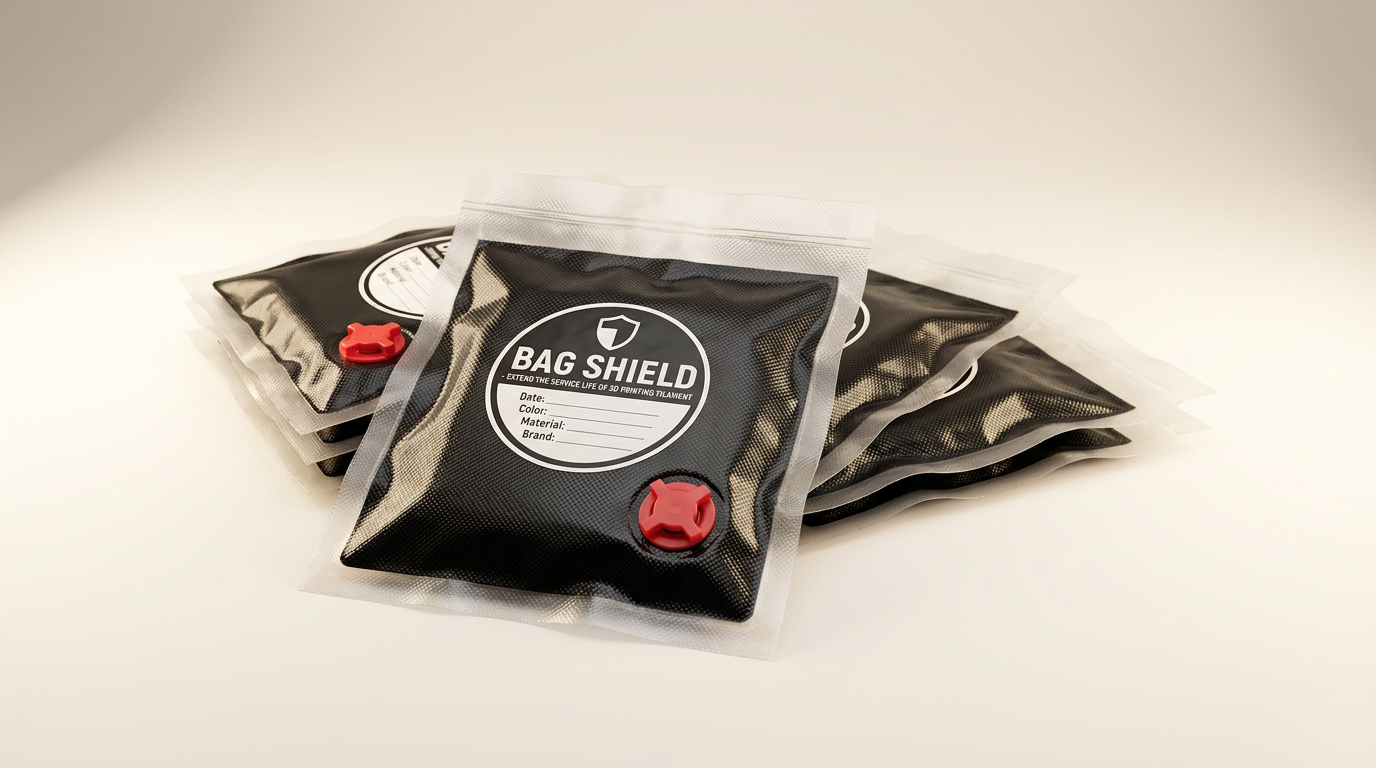
The promise of vacuum-sealed storage for 3D printer filament is compelling. Protecting hygroscopic materials like PLA, ABS, and PETG from environmental moisture directly impacts print quality, reducing issues such as stringing and brittle parts. While many solutions exist, simple vacuum bags offer a cost-effective approach to maintaining filament integrity between uses. However, this category often struggles with an underlying tension: the convenience of a disposable system versus the reliability demanded for material preservation.
The Odilona 3D Printer Filament Storage Bags arrive as a straightforward proposition: 20 bags designed to keep filament dry and dust-free. At first glance, they appear to address a common need without overcomplicating the process. Yet, the real-world performance reported by owners reveals a fundamental flaw in execution, making these bags a prime example of the 'seal lottery' effect often seen in budget vacuum storage solutions. This lottery introduces an unacceptable level of uncertainty for a product critical to maintaining print material quality.
What owners love
- + Effective at holding vacuum when functional
- + Clear front panel allows easy filament identification
- + Black back panel helps reduce light exposure
- + Fits most standard 1kg filament spools
- + Good suction reported by some users
Common complaints
- − High rate of defective vacuum valves
- − Inconsistent quality between batches
- − Bags fail to hold vacuum long-term for many users
- − Return window often closes before defects are discovered
- − Unreliable moisture protection for a significant portion of the pack
Design & Build
The Odilona filament bags feature a standard design for this product type: a clear front for visibility and a black back to mitigate light exposure. This dual-tone approach is practical, allowing users to identify filament types without opening the bag while offering some UV protection, a sensible consideration for plastic degradation. The bags are constructed from PA+PE material, a common choice for vacuum storage due to its barrier properties. They measure 12.6 x 13.4 inches, accommodating most 1kg spools. While the design concept is sound, the execution suffers from a critical manufacturing inconsistency. Owners frequently report that the integrated vacuum valves are prone to failure, often failing immediately or losing seal over time. This directly undermines the product's core function, rendering the material choice and size specifications irrelevant if the vacuum cannot be maintained.
Setup & Ease of Use
Setting up these bags is straightforward, adhering to the typical workflow for vacuum storage bags. Users place the filament spool and desiccant inside, seal the zipper with the included clip, and then use a vacuum pump (not included) to extract air. Owners note that when the bags function correctly, achieving a good suction around the spool is effective. The zipper and clip mechanism generally performs as expected. However, the simplicity of the process is overshadowed by the prevalent issue of valve failure. The ease of use becomes moot when a significant number of bags fail to hold a seal on the first attempt, forcing users into a frustrating process of trial and error rather than reliable storage. This introduces a 'failure overhead' that detracts from the intended convenience.
Performance in Real Use
When an Odilona bag successfully creates and maintains a vacuum seal, owners report it works well for moisture protection. However, consistent real-world performance is severely compromised by a high defect rate. Several users report that a substantial portion of the bags in a pack, sometimes more than half, are defective. These defects manifest as immediate valve leaks, audible hissing from the vacuum port, or slow deflation over time. This inconsistency means that while some individual bags may perform excellently, the overall pack reliability is low. For a product intended to safeguard sensitive materials, this level of unpredictability is a significant concern. The 'effective yield' of usable bags within a single purchase becomes the primary performance metric, and here, the Odilona bags fall short.
Software & Ecosystem
As a standalone physical consumable, the Odilona filament storage bags do not involve any software or digital ecosystem. Their utility is entirely dependent on their physical integrity and ability to perform their primary function of sealing. This simplicity means there are no integration hurdles or software compatibility concerns, focusing the entire user experience on the hardware's quality and reliability.
Value & Reliability
The Odilona filament storage bags are positioned at an accessible price point, often found under $25 for a pack of 20. This initially appears to offer good value for bulk storage. However, the recurring issue of defective bags drastically impacts the actual cost-per-usable-bag. Owners describe experiences where anywhere from a few to nearly all bags in a pack fail to maintain a vacuum. This 'quality lottery' means buyers are effectively paying for a significant number of unusable items. The lack of consistent reliability transforms what seems like an economical choice into a potentially wasteful one, as users often discover widespread defects only after the return window closes, leaving them with non-functional bags and unprotected filament. The true value proposition is undermined by this severe quality control deficit.
Verdict
Hold Off - The Odilona Filament Storage Bags suffer from critical quality control issues that undermine their core function.
These bags might appeal to those seeking the lowest possible entry price for filament storage and who are willing to accept a high rate of defective units. If you have minimal filament storage needs, a robust return policy available, and are prepared to test every bag immediately upon arrival, you might find some utility. However, for serious 3D printing enthusiasts or anyone needing reliable, consistent moisture protection for their filament stock, these bags present an unacceptable gamble. Those with valuable or sensitive filament should invest in more dependable solutions.
Ultimately, the Odilona bags highlight a common pitfall in budget-oriented consumables: the 'false economy of failure.' While the upfront cost is low, the hidden cost of wasted filament, failed prints due to moisture, and the sheer frustration of defective products far outweighs any initial savings. This product serves as a stark reminder that when safeguarding sensitive materials, reliability is not a premium feature but a fundamental requirement.
FAQ
More 3D Printers reviews
Refresh Sports Boomerang for Kids Review: Fun Returns, But at What Cost?
ANYCUBIC Photon Mono 4 & Wash & Cure 3.0 Review
3D Central DNA Double Helix: A Desk Ornament with a Scale Problem
ELEGOO Centauri Carbon 2 Combo Review: Bridging the Speed Gap
Creality Ender 3 V3 SE Review: A Gateway to 3D Printing
Creality Ender 5 Max Review: A High-Volume CoreXY for Production
This review is based on real experiences shared by owners in online communities.