
Magigoo MO2016 Adhesive Review: The Cost of Consistent 3D Prints
This review is based on real experiences shared by owners in online communities.
3D printing has moved past its early experimental phase, but a persistent pain point remains: consistent first-layer adhesion. Many enthusiasts still grapple with unreliable adhesion, warping, and failed prints, often resorting to an array of DIY solutions like hairspray or gluesticks. These methods, while functional, frequently introduce cleanup hassles and inconsistent results, adding friction to an otherwise empowering creative process.
The Magigoo MO2016 positions itself as a premium, all-in-one solution for this foundational challenge. It claims universal compatibility with major filament types and build surfaces, promising effortless application and easy cleanup. This review examines whether Magigoo truly delivers on its promise of a reliable, low-effort experience, assessing its performance against the backdrop of common adhesion struggles and the rising expectations in desktop additive manufacturing.
What owners love
- + Consistently improves bed adhesion for various filaments like PLA, PETG, ABS, and TPU
- + Prints release easily once the build plate cools
- + Applicator design offers cleaner and easier application than traditional gluesticks
- + Effective on diverse build surfaces including glass, PEI, and textured plates
- + Long-lasting, providing many prints per application
- + Odorless and cleans up easily with water
Common complaints
- − Higher price point compared to household adhesive alternatives
- − Applicator cap can detach if squeezed too forcefully
- − Applicator sponge may wear out prematurely, especially on abrasive surfaces
- − May require reheating the bed or chilling the part for stubborn releases
- − Less effective on specific materials like Nylon or textured plates
Design & Build
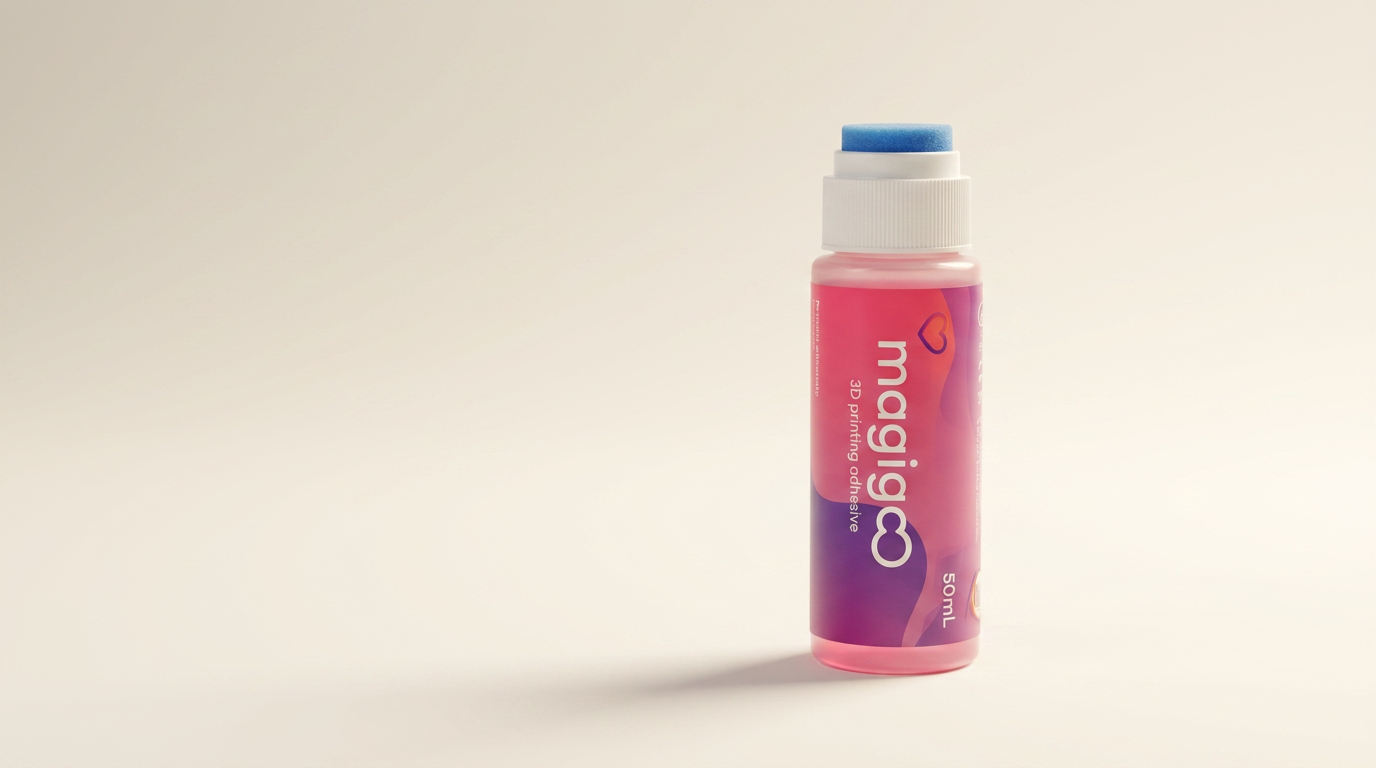
The Magigoo MO2016 comes in a compact 50mL bottle featuring a sponge-tip applicator. This design signals an intent to move beyond the mess often associated with 3D print adhesives. Owners frequently praise the applicator for enabling smooth, even coats, noting its superiority over standard gluesticks. However, the design exhibits a structural vulnerability: several users report the applicator cap detaching under excessive squeezing, particularly when attempting to prime it or apply a thicker layer. This highlights a design tension, where convenience is paired with a specific user handling requirement. The sponge itself also proves less durable on textured build plates, wearing down faster than on smooth surfaces.
Setup & Ease of Use
Magigoo emphasizes simplicity in its application process: shake, press, and spread. Owners largely confirm this ease of use. The typical workflow involves priming the applicator by pressing it onto the build plate, which releases the liquid into the sponge, then spreading a thin, even layer. The product dries quickly, making it ready for printing as the bed heats up. This straightforward application contributes significantly to its appeal, especially for users frustrated by the preparation steps of other adhesion methods. The primary caveat is learning the correct pressure to apply to avoid dislodging the cap, a minor but recurring issue that introduces a 'gentle squeeze' learning curve.
Performance in Real Use
This adhesive delivers on its core promise: reliable bed adhesion. Owners consistently report successful prints with materials like PLA, PETG, ABS, HIPS, and TPU, even on challenging parts prone to warping or lifting. The 'hot adhesion, cold release' mechanism is a standout feature; prints adhere firmly during the print cycle but often pop off easily once the build plate cools. For especially stubborn parts, reheating the bed or placing the print in a freezer aids release, indicating the material's strong grip. While generally effective across various build surfaces, some users note diminished performance on highly textured plates or with niche filaments like Nylon, suggesting a slight 'universal performance ceiling' where maximum adhesion might still require specialized solutions. The ability to achieve multiple prints from a single application is another frequently cited benefit, reducing reapplication frequency.
Software & Ecosystem
As a physical adhesive, Magigoo MO2016 does not feature software or a digital ecosystem. Its integration into the 3D printing workflow is purely mechanical. Its value lies in reducing reliance on software-based workarounds for adhesion issues, such as extensive brim settings or raft formations. By addressing the foundational physical layer, it allows users to optimize their slicer settings for print quality and speed rather than solely focusing on bed adhesion. This represents a return to fundamental print reliability, offloading a common variable from the software domain to a physical solution.
Value & Reliability
At a price point around $20, Magigoo represents a higher investment than household alternatives. However, owners frequently justify this cost through two main factors: reliability and longevity. The product consistently prevents print failures due to bed adhesion, saving both time and filament. Many users report the 50mL bottle lasting for well over 100 prints, sometimes months of continuous use, effectively spreading the initial cost over a large volume of operations. While the initial outlay is higher, the 'failure prevention dividend' and sustained effectiveness make it a compelling value proposition for those seeking predictable and stress-free printing, moving it beyond a mere consumable to an essential tool in a consistent workflow. Occasional applicator issues introduce a minor reliability concern but do not deter overall satisfaction with the adhesive itself.
Verdict
Buy - Magigoo MO2016 consistently solves bed adhesion problems across common filaments and surfaces, delivering reliable, hassle-free 3D printing.
This adhesive is ideal for any 3D printer owner seeking to eliminate first-layer adhesion failures and reduce print-related stress, particularly those using various filament types on glass or PEI beds. It is a smart purchase for users who prioritize consistent results and easy cleanup over the lower upfront cost of less reliable alternatives like gluesticks or hairspray. Those printing exotic, specialized materials like Nylon, or those who exclusively use textured PEI plates, might find its universal adhesion slightly less optimal, but it still offers a significant improvement over no adhesive.
The Magigoo MO2016 represents a departure from the 'creative problem-solving' ethos often associated with 3D printing, instead offering a clear, repeatable solution to one of its oldest challenges. It elevates the baseline expectation for consistent first layers, allowing users to focus on design and functional outcomes rather than continuous calibration and adhesion mitigation. This product does not just provide adhesion; it sells printing confidence, a commodity often undervalued in the pursuit of component cost savings.
FAQ
More 3D Printer Parts & Accessories reviews
Creality TPU 95A: A Flexible Filament for Patient Printers
UniTak3D Quick-Swap Hotend 0.4mm Review: A Solid Bambu A1 Alternative
3DZWMAN LED Lamp Kit Review: The Smart Alternative for 3D Print Lighting
XZN Silk PLA Filament Review: Visual Impact and Printing Consistency
ANKHOH Hard Case for 3Doodler Start+ Review: Essential Organization
ELEGOO 28BYJ-48 Stepper Motor Kit Review: The Prototype Enabler
This review is based on real experiences shared by owners in online communities.