
Layerneer Bed Weld Original Review: The End of 3D Print Warping
This review is based on real experiences shared by owners in online communities.
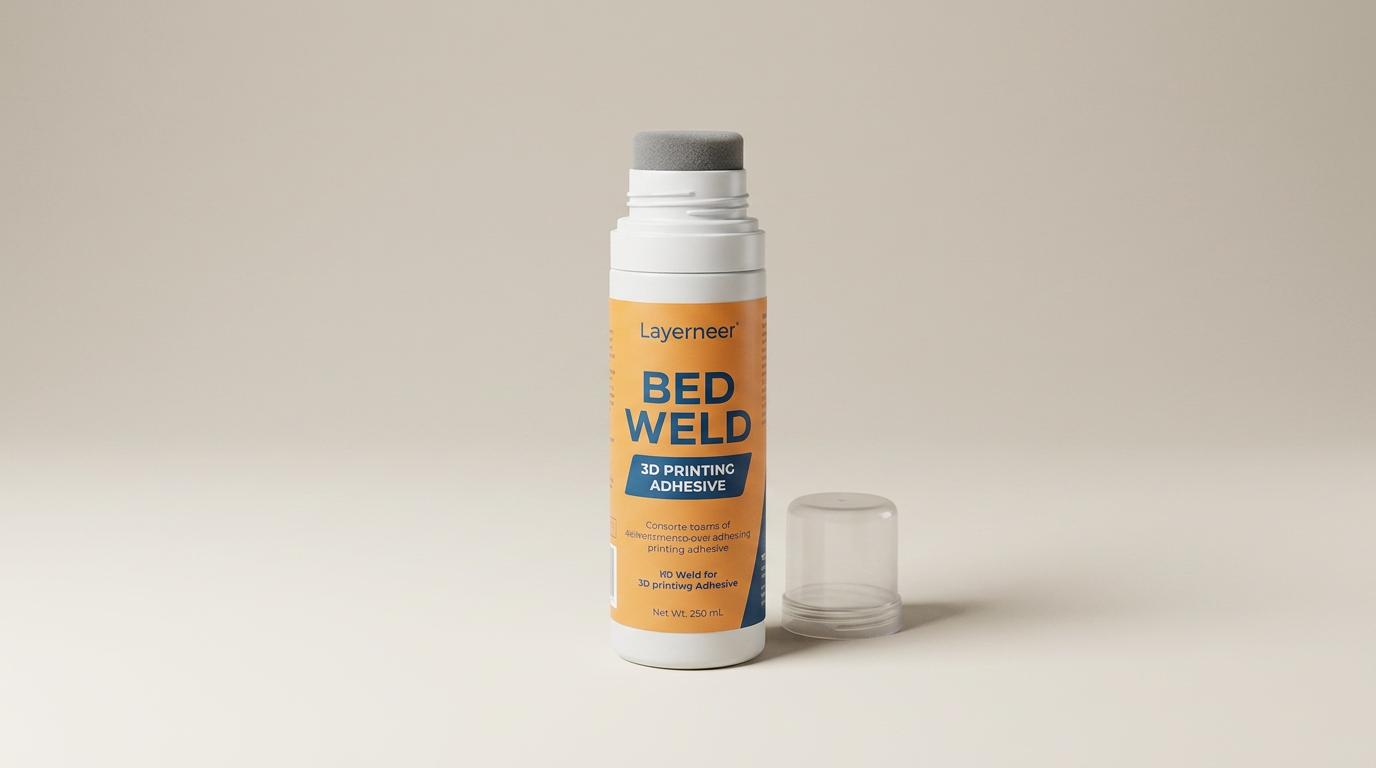
The modern 3D printing landscape, while offering unprecedented accessibility, still contends with fundamental physics. Among these, first layer adhesion remains a persistent challenge, often leading to wasted filament and failed prints. While many solutions exist, from basic glue sticks to specialized build surfaces, a recurring frustration is the trade-off between reliable adhesion during printing and easy part removal once cooled. Layerneer Bed Weld Original enters this crowded space promising a "thermal dynamic coating" that simplifies this complex interplay.
Owners often liken its effect to a "miracle" or "magic," suggesting it transcends the typical performance of its competitors. Its core claim of strong grip when hot and effortless release when cool, particularly on glass beds and with notoriously problematic filaments like PETG and ABS, warrants closer inspection. This review evaluates whether Layerneer Bed Weld delivers on its ambitious promises and reshapes the expectation for 3D print bed adhesives.
What owners love
- + Exceptional adhesion for various filaments, including PLA, ABS, PETG, and ASA.
- + Parts release cleanly and easily once the print bed cools.
- + Long-lasting application, often good for many prints before reapplication.
- + Low odor and water-soluble for easy cleanup.
- + Integrated foam applicator simplifies precise application.
- + Significantly reduces warping and lifting, particularly on tall or large prints.
Common complaints
- − Performance can vary significantly across different build plate types, notably Kapton tape.
- − Some textured PEI surfaces may experience overly strong adhesion, complicating removal.
- − Initial prints after application may require bed cycling or a brim for optimal adhesion.
- − Requires careful cleaning of the build plate before application for best results.
- − Higher initial cost compared to generic glue sticks or hairspray.
Design & Build
Layerneer Bed Weld Original arrives in a 4 fl oz bottle equipped with a integrated foam applicator, a design choice frequently praised by users. This applicator allows for controlled, even distribution of the liquid, minimizing mess and preventing accidental spills that are common with alternative methods like sprays or brush-on solutions. The formulation is described as a 'thermal dynamic coating,' suggesting a chemical composition designed to react to temperature changes. It is water-soluble, which simplifies cleanup, and owners consistently note its low odor, distinguishing it from harsher chemical alternatives that can off-gas during printing. This attention to user experience in application and environment demonstrates careful product design, positioning it as a more refined tool than the budget alternatives.
Setup & Ease of Use
Setting up Bed Weld is straightforward. The typical process involves applying a thin, even layer to a clean, cold build plate, then allowing it to dry as the bed heats to printing temperature. Some users suggest cleaning the bed thoroughly with soap and water or IPA before the first application, particularly if transitioning from other adhesives. While Layerneer states it dries quickly, a common observation is that the maximum adhesion for difficult materials like PETG might not manifest on the very first print after application. Owners sometimes recommend a quick heat-cool cycle or printing a small brim on the initial job to 'condition' the layer. The integrated applicator contributes significantly to its ease of use, eliminating the need for separate brushes or tools and maintaining a cleaner workspace compared to glue sticks or hairspray.
Performance in Real Use
The primary objective of a bed adhesive is consistent, reliable adhesion, and Layerneer Bed Weld largely delivers. Owners report exceptional grip for a wide range of filaments, including challenging materials like ABS, PETG, and ASA. The 'thermal dynamic' property is frequently highlighted, with prints adhering firmly during the hot printing phase and then practically detaching themselves once the bed cools to room temperature. This mechanism eliminates the need for scraping and prying, preserving both the print and the build surface. Users printing tall, vertical objects or large, flat panels specifically praise its ability to prevent warping and lifting. The longevity of a single application is a significant advantage; many users report achieving 8-20 prints or even months of use from one coating, defining an economic efficiency point over single-use adhesives. However, performance on certain surfaces, particularly Kapton tape, is reportedly poor, and some textured PEI sheets can experience overly strong adhesion, creating a 'welded' effect that makes removal difficult, even when cool. This indicates a 'compatibility ceiling' where the product's thermal adhesion mechanism can become too effective for certain build plate materials.
Software & Ecosystem
As a consumable adhesive, Layerneer Bed Weld operates outside of software ecosystems or digital integrations. Its effectiveness relies solely on its chemical properties and proper application. The lack of a digital interface ensures universal compatibility across all 3D printer brands and operating systems. This product represents a physical solution within a largely digital workflow, simplifying a critical mechanical interaction without adding software complexity. The 'ecosystem' here is the collection of best practices and community knowledge around 3D printing adhesion, where it largely performs as a premium, simplified alternative to less consistent methods like hairspray or conventional glue sticks.
Value & Reliability
Priced in the general range of specialized 3D printing adhesives, Layerneer Bed Weld is considered a good value by many users due to its longevity and effectiveness. A single bottle lasts for numerous prints, reducing the per-print cost significantly when compared to frequently reapplying cheaper but less effective solutions. Its reliability in preventing print failures, especially with difficult materials or long print jobs, translates directly into filament and time savings. Owners often emphasize its ability to deliver consistent results, minimizing the troubleshooting associated with first-layer issues. The claim of being able to 'recharge' a coating with a wet sponge adds to its perceived value by extending the lifespan of an application. Reliability is a recurring theme, with users noting a dramatic reduction in failed prints once they adopted Bed Weld, establishing it as a dependable component of their printing workflow.
Verdict
Buy - Layerneer Bed Weld Original consistently resolves common 3D print adhesion and warping issues for a wide array of users.
This product is ideal for any 3D printer owner struggling with first layer adhesion, particularly on glass build plates and when printing with challenging filaments like ABS, PETG, or ASA. Users seeking to reduce print failures, eliminate warping, and simplify print removal will find its core functionality highly beneficial. While its initial cost is higher than a generic glue stick, its longevity and effectiveness provide superior value per print.
However, those printing exclusively on Kapton tape or certain textured PEI surfaces should proceed with caution, as some reports indicate either ineffectiveness or excessive adhesion. If your current adhesion strategy is adequate and cost is the primary driver, cheaper alternatives exist, though they often come with compromises in reliability or ease of use. Layerneer Bed Weld serves as a prime example of the 'invisible infrastructure' of reliable 3D printing; it is not the printer or the filament, but the underlying, often taken-for-granted, adhesion layer that unlocks consistent success. Its true value lies in eliminating a significant source of frustration, allowing users to focus on design and production rather than bed adhesion mechanics, thereby democratizing reliable prints for more advanced materials.
FAQ
More 3D Printer Parts & Accessories reviews
Creality TPU 95A: A Flexible Filament for Patient Printers
UniTak3D Quick-Swap Hotend 0.4mm Review: A Solid Bambu A1 Alternative
3DZWMAN LED Lamp Kit Review: The Smart Alternative for 3D Print Lighting
XZN Silk PLA Filament Review: Visual Impact and Printing Consistency
ANKHOH Hard Case for 3Doodler Start+ Review: Essential Organization
ELEGOO 28BYJ-48 Stepper Motor Kit Review: The Prototype Enabler
This review is based on real experiences shared by owners in online communities.