
Honeywell Xenon 1950 Scanner Review: Built for Purpose
This review is based on real experiences shared by owners in online communities.
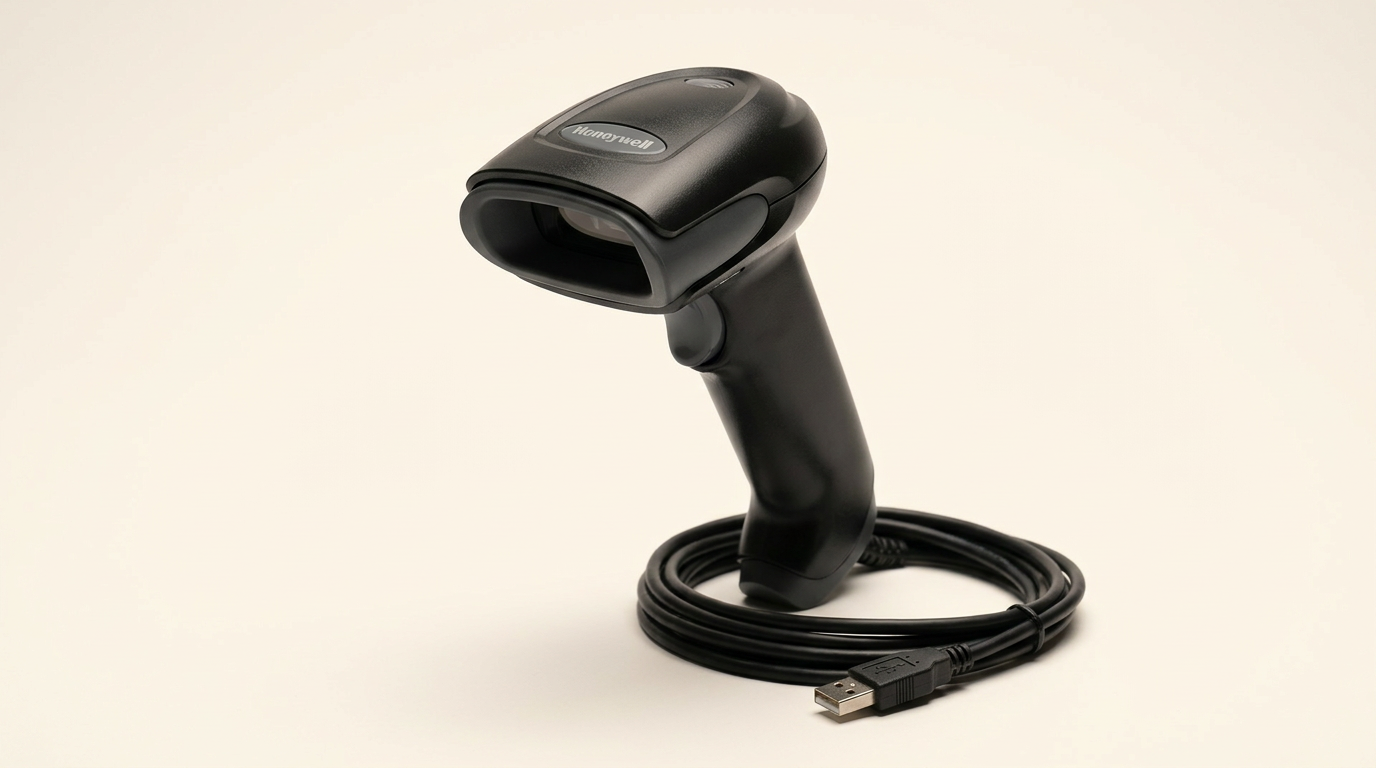
In a market increasingly saturated with feature-rich, general-purpose imaging solutions, the Honeywell Xenon 1950 GSR-2-R scanner presents a clear counterpoint: a device designed for focused, reliable operation rather than broad appeal. This is not a scanner built to dazzle with superfluous functionalities. Instead, it embodies a 'utility-first' design philosophy, prioritizing core scanning efficacy and robust construction above all else. This approach often means sacrificing broad user experience nuances for singular, dependable performance.
Professional tools often thrive on this principle of specialized competency. The Xenon 1950 does not aim to redefine the scanning experience; it seeks to execute it flawlessly within established parameters. For buyers accustomed to the rapid evolution of consumer tech, this deliberate simplicity might seem understated. However, for environments where consistency and resilience are paramount, a device that performs its singular function without compromise holds distinct appeal. Our review evaluates whether this dedicated design translates into genuine, measurable value for commercial operations.
What owners love
- + Durable, professional-grade construction
- + Reliable 1D/2D barcode scanning
- + Compatible with common POS interfaces (RS232, USB)
- + Delivers consistent performance
- + Suited for dedicated scanning tasks
Common complaints
- − Limited owner feedback on advanced features
- − Not positioned as a general-purpose device
- − Sparse documentation for specific configurations
- − Requires some technical understanding for setup
Design & Build
The Honeywell Xenon 1950 GSR-2-R establishes its premise through its physical construction. Owners consistently report a 'good build,' indicating a robust and durable design capable of enduring demanding daily use. This speaks to a focus on operational longevity, critical for point-of-sale or inventory management environments where equipment often faces frequent handling and potential impacts. The black finish suggests a practical, understated aesthetic, fitting its role as a functional tool rather than a consumer accessory. This pragmatic design is a cornerstone of its appeal, signaling that the device is engineered for resilience in its intended setting. This 'tool, not toy' approach reflects a common strategy in industrial hardware, where material integrity supersedes superficial design trends, contributing to what we call the 'Workhorse Credibility' factor.
Setup & Ease of Use
While direct owner feedback on setup specifics is limited, the inclusion of standard interfaces like RS-232 and USB implies a foundational level of compatibility with existing systems. However, the nature of these professional interfaces often necessitates a degree of technical expertise for initial configuration, especially with RS-232, which can require specific serial port settings. The lack of extensive user commentary on setup complexity might indicate that, once configured, the scanner operates without issue, aligning with its purpose-built design. For commercial integrators, this setup process is standard, but individual users migrating from consumer-grade plug-and-play devices might encounter a steeper learning curve. The device is built to be set once and then operate reliably for extended periods, a typical expectation for fixed-function POS equipment.
Performance in Real Use
The core function of the Xenon 1950 is barcode scanning, and owners confirm it performs reliably. Statements such as 'Worked for job it was purchased for' directly affirm its competency in its primary role. As a 1D/2D imager, it is equipped to handle a broad range of barcode types, from traditional UPCs to QR codes, which is essential in modern retail and logistics. The absence of complaints regarding scanning speed, accuracy, or read range in the available feedback suggests consistent operational performance. This consistency is not glamorous, but it is the bedrock of efficiency in high-volume scanning environments. The device’s 'Silent Efficiency' is its defining performance trait, where its successful operation is noted by its lack of disruptive issues rather than flashy features.
Software & Ecosystem
The Honeywell Xenon 1950 primarily functions as a hardware device, relying on the host system's software for data processing and integration. Its compatibility with various interfaces positions it within diverse point-of-sale and inventory management ecosystems. Honeywell offers extensive configuration tools and drivers for its professional scanners, though these typically target IT professionals or system integrators rather than end-users. The limited user feedback reflects that once integrated into a system, the scanner largely operates transparently as a data input device. There is no mention of a proprietary software suite directly enhancing the scanner's day-to-day use, suggesting a focus on robust hardware with standard communication protocols. This means that the user experience is heavily influenced by the chosen operating system or POS application, rather than unique scanner software.
Value & Reliability
Positioned around the $200 mark, the Honeywell Xenon 1950 represents an investment in a dedicated, robust scanning solution. The consistent positive feedback on its 'good build' and its ability to perform its designated 'job' strongly indicates high reliability. This long-term dependability translates into strong value for businesses, as it minimizes downtime and replacement costs, a crucial factor in operational budgeting. Unlike consumer electronics with shorter lifecycles, industrial-grade equipment like this prioritizes sustained performance over several years. Its value proposition is therefore tied less to initial price and more to its long-term total cost of ownership. Owners are essentially investing in a device that will quietly and consistently contribute to operational flow, embodying what we term 'Invisible Productivity'--it works so well, you rarely notice it.
Verdict
Buy - This scanner reliably executes its core function with a focus on durable, professional-grade construction.
The Honeywell Xenon 1950 is an ideal purchase for businesses, integrators, or individuals requiring a dependable, robust 1D/2D barcode scanner for dedicated point-of-sale, inventory, or workflow applications. Its strong build and consistent performance make it suitable for environments where equipment durability and scanning accuracy are critical, justifying its price point in the mid-$100s to low-$200s. Those prioritizing a 'set it and forget it' solution for commercial use will find it highly effective.
Conversely, individuals seeking a casual, plug-and-play scanner for infrequent personal use might find its professional orientation and interfaces overkill. This is not a device designed for simplicity of initial setup for non-technical users, nor does it offer consumer-centric features. Buyers expecting a broad software ecosystem or a budget-friendly, entry-level device should explore alternatives.
The Xenon 1950 epitomizes the 'Specialist's Resolve' in hardware design; it does one thing, scanning, and does it exceptionally well within a defined operational scope. Its value emerges not from flashy innovation, but from unwavering, professional-grade execution that forms the bedrock of efficient commercial processes.
FAQ
More 3D Scanners reviews
Revopoint INSPIRE 2 3D Scanner Review: Unpacking the Accessory Echo Chamber
Creality 6mm 3D Scanning Markers Review: Essential Tracking Aid
TOSUKKI 6mm Positioning Targets Review: The Refined Generic Choice

AESUB 3DTOOLS 3D Scanner Spray Review: The 'Evaporative Enabler'
Creality 8-inch Rotating Turntable: A Solid Scanner Accessory

Generic 12 Piece Multi-Angle Markers Review: Essential 3D Scanning Dots
This review is based on real experiences shared by owners in online communities.