
FLASHFORGE Adventurer 5M Pro Review: Speed, Simplicity, and a Small Catch
This review is based on real experiences shared by owners in online communities.
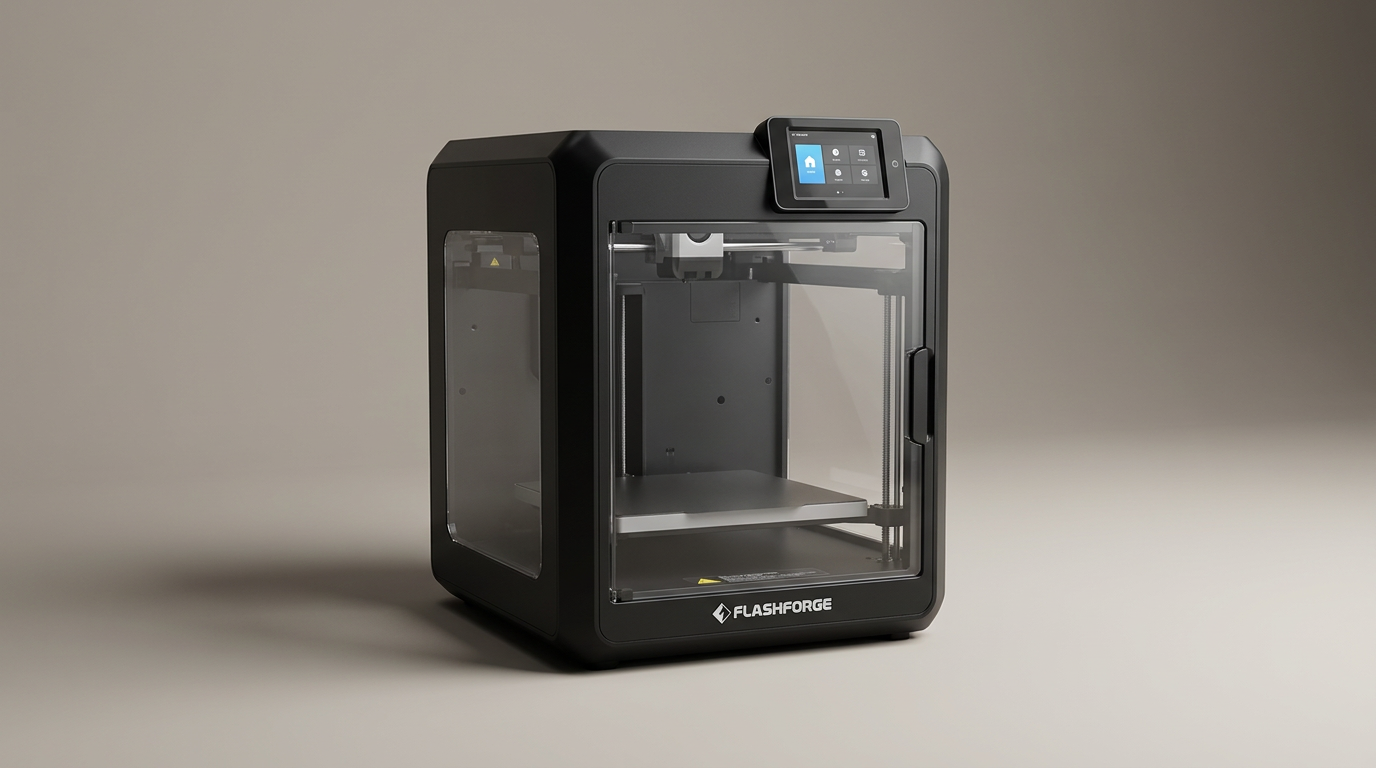
In a crowded 3D printer market increasingly defined by rapid prototyping and ease of use, the FLASHFORGE Adventurer 5M Pro positions itself as a contender for both beginner and experienced users seeking immediate results. The industry's race for speed has often introduced complexity, forcing buyers to choose between accessible operation and advanced capabilities. The 5M Pro attempts to bridge this gap, promising plug-and-play functionality alongside impressive print velocities.
However, the true measure of such a device lies not just in its out-of-box experience but in its sustained performance and the underlying support ecosystem. This review examines whether the Adventurer 5M Pro genuinely delivers on its promise of high-speed, high-quality prints without the usual tinkering, or if its apparent simplicity masks certain compromises that emerge with extended use. We evaluate its design, setup, daily operation, and long-term viability against the backdrop of real-world owner experiences, uncovering where this printer excels and where its ambitions might fall short.
What owners love
- + Delivers very high print speeds and quality right out of the box
- + Easy, quick setup with full auto-leveling simplifies initial use
- + Quiet operation suitable for shared living or working spaces
- + Enclosed design with dual air filtration reduces emissions
- + Robust build quality reported by many owners
- + Strong value proposition for its feature set
Common complaints
- − Proprietary software and networking can be restrictive
- − Camera quality is often reported as low resolution
- − Customer support response times and effectiveness are inconsistent
- − Build plate size is limiting for larger projects
- − Potential for critical failures after a few months of use
Design & Build
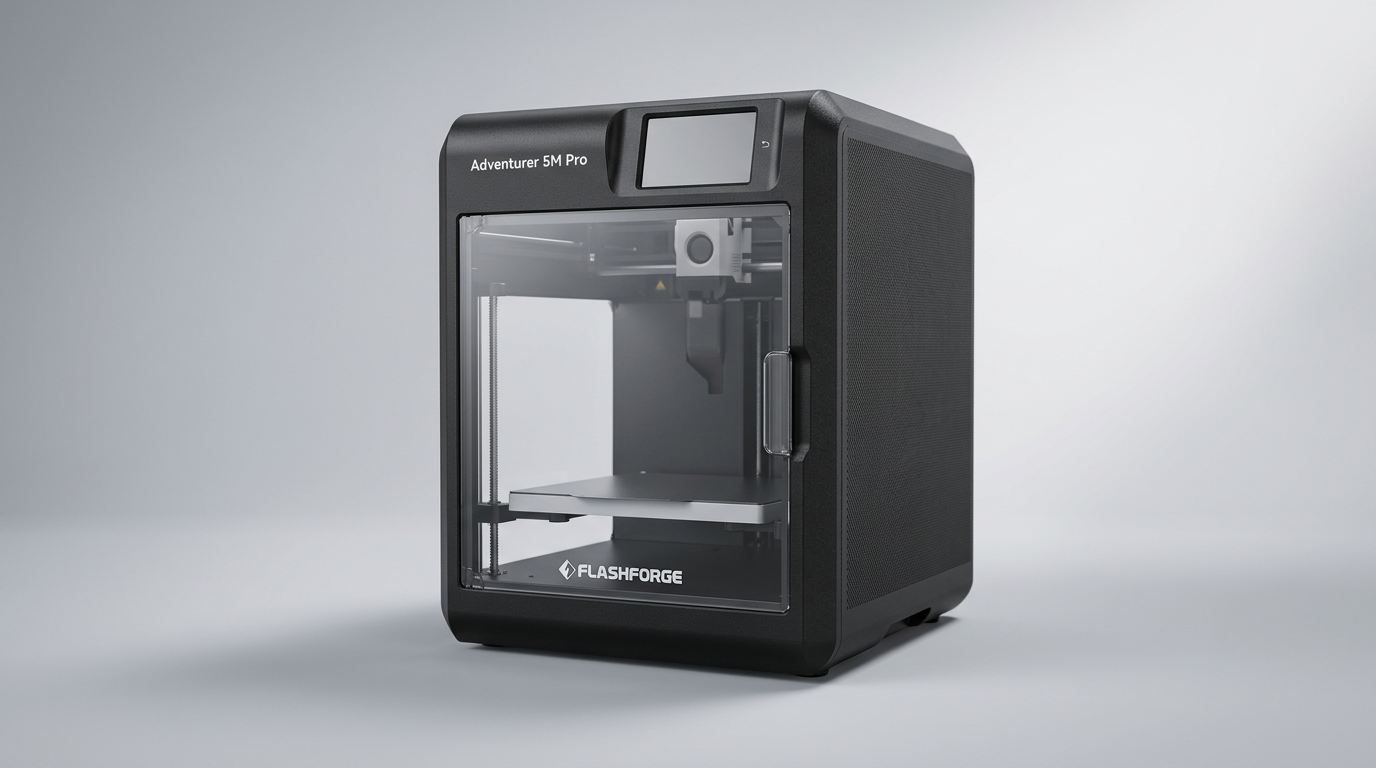
The Adventurer 5M Pro presents as a fully enclosed, compact 3D printer with a clean aesthetic. Owners frequently describe it as solid and well-built, suggesting a robust physical construction that withstands regular use. The enclosure, a key feature, contributes to thermal stability for printing advanced filaments like ABS and PC, while also integrating a dual air filtration system with HEPA13 and activated carbon filters. This design choice addresses a common concern in home 3D printing-VOCs and particle emissions-offering a 'quiet-hours tax' benefit where environmental controls allow for operation in shared or residential spaces. While some owners find the build volume restrictive for very large projects, the overall footprint suits many desktop environments. The quick-detachable 280°C direct extruder is also a design highlight, simplifying nozzle swaps and maintenance.
Setup & Ease of Use
A recurring theme among owners is the printer's straightforward setup process. Many report being able to unbox and initiate a first print within 10 to 20 minutes, a significant departure from the assembly-intensive printers of yesteryear. The "1 Click Fully Auto Printing System" with auto-leveling is frequently cited as a major advantage, making it a "hands-down the right intro to 3D printing solution" for many. This feature largely eliminates the bed-slinging alignment frustrations that plagued earlier generations of FDM printers, and helps ensure a successful first layer consistently. However, this initial simplicity does not always extend to the software experience, which can introduce friction later.
Performance in Real Use
The Adventurer 5M Pro delivers on its promise of speed and print quality. Owners frequently highlight its rapid printing capabilities, with benchmarks like a 13-14 minute Benchy print cited without extensive tuning. Print quality at these speeds is described as high, with precise and consistent extrusion contributing to smooth, blur-free results. The integrated vibration compensation effectively minimizes ghosting, even during fast movements. It handles a wide range of filaments including PLA, PETG, ABS, ASA, TPU, and PC, demonstrating its versatility. The printer also operates quietly, with reported noise levels around 50dB, which is a notable improvement over many competitors and contributes to its suitability for home or office use without significant disruption. This performance profile points to a well-calibrated motion system that directly benefits the end user's output quality.
Software & Ecosystem
While the hardware receives widespread praise, the software experience elicits mixed reactions. Flashforge's Flashprint software, though functional, is often described as mediocre or not overly functional compared to alternatives like OrcaSlicer, which many advanced users adopt for better control. A significant concern revolves around Flashforge's networking control, which some owners perceive as overly restrictive. The inability to directly connect via an onboard web interface and reliance on Flashforge servers for remote operations raises questions about long-term control and data privacy. Connectivity issues, particularly with Wi-Fi, are also reported, sometimes forcing users to resort to USB transfers. The mobile app is frequently advised against, creating a "first-layer cliff" where initial hardware ease doesn't translate to an equally polished software environment.
Value & Reliability
The Adventurer 5M Pro is widely considered a strong value proposition in its price band, especially when compared to printers with similar feature sets that cost significantly more. Many owners, including those with extensive experience, view it as one of the best value printers currently available. The inclusion of features like an enclosure, camera, and dual filtration system often makes the 'Pro' version a more cost-effective choice than adding these elements to the standard model. However, reliability is a mixed bag. While many report continuous, trouble-free operation for extended periods, a subset of owners experiences critical failures, such as extruder jams, broken nozzles, or complete unit breakdowns, sometimes within months of purchase. Customer support response times for these issues are inconsistent, impacting the overall long-term ownership experience. This creates a tension between the immediate value and the potential for a 'support lottery' later on.
Verdict
Buy - This printer offers exceptional speed, print quality, and ease of use for its price point.
This is an excellent option for beginners seeking a plug-and-play entry into 3D printing and experienced users looking for a reliable, enclosed workhorse under $500. Its auto-leveling, speed, and quiet operation make it suitable for home or office environments. Those who prioritize print quality and rapid iteration will find its performance compelling. However, individuals requiring a very large build volume or those averse to a somewhat restrictive software ecosystem should consider alternatives. Buyers sensitive to potential long-term reliability issues or who demand top-tier customer support might also want to proceed with caution.
The Adventurer 5M Pro exemplifies the current generation's pursuit of accessible performance, where hardware engineering outpaces software maturity. It serves as a "gateway workhorse" printer, enabling high-volume, high-quality output for a broad user base, provided one is willing to navigate its occasional software quirks and the latent "support lottery" aspect that remains a challenge for many manufacturers in this segment.
FAQ
More 3D Printers reviews
FLASHFORGE AD5X Review: Multi-Color Printing at Speed
FLASHFORGE Adventurer 5M Review: Speed and Simplicity for the Novice
Bambu Lab P1S Combo Review: The 3D Printer for the Making Generation
ANYCUBIC Wash and Cure 3.0 Review: A Post-Processing Necessity
FLASHFORGE Adventurer 5M Pro Review: The Enclosed Beginner 3D Printer
Sovol SV08 Max Review: A Colossal CoreXY Printer for the Committed
This review is based on real experiences shared by owners in online communities.