FLASHFORGE Adventurer 5M PEI Build Plate Review: A Core Upgrade
This review is based on real experiences shared by owners in online communities.
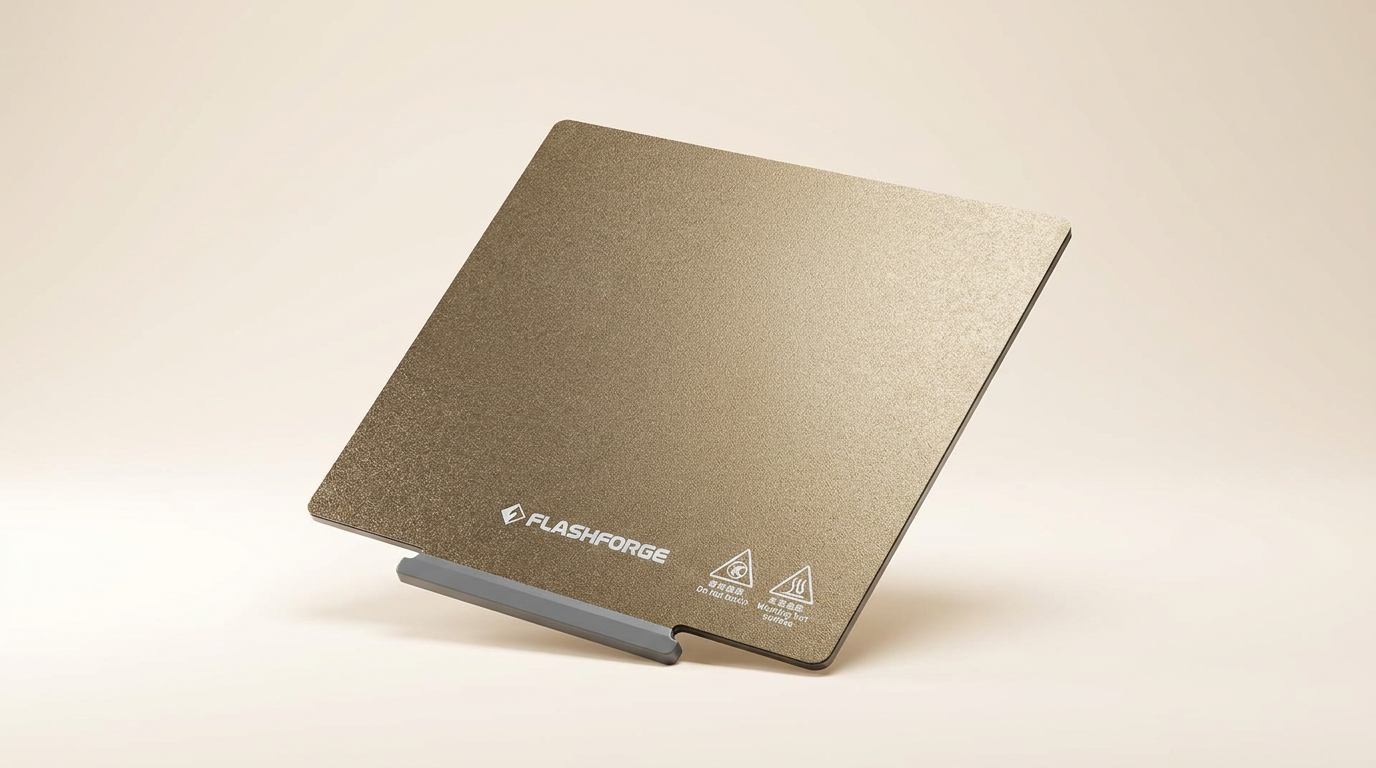
In the rapid iteration cycles of modern 3D printing, the build plate often becomes an overlooked workhorse, silently dictating print success or failure. While marketing tends to highlight extruder speeds or build volumes, the true bottleneck for many enthusiasts and small businesses alike remains the consistency of the first layer and the efficiency of print removal. This Flashforge Adventurer 5M series build plate accessory, available in multiple surface finishes, addresses this core need head-on, effectively serving as an insurance policy against common printing frustrations.
Rather than a mere consumable, this replacement plate embodies what we call the "Workflow Multiplier" concept. Its primary value isn't just in its material properties, but in enabling continuous operation. Swapping a plate means starting a new print immediately, rather than waiting for cooling or struggling with adhesion issues. This seemingly minor convenience compounds over time, significantly enhancing overall productivity for high-volume users or those frequently changing filament types.
Flashforge offers various options-textured PEI, smooth PEI, and smooth PC-each tailored for specific adhesion profiles and desired bottom finishes. This review focuses on how these plates integrate into the Adventurer 5M ecosystem, examining their practical benefits and identifying who stands to gain most from incorporating one, or several, into their 3D printing toolkit.
What owners love
- + Excellent adhesion across common filament types like PLA, PETG, and TPU
- + Effortless print removal, especially after cooling, often without adhesives
- + Direct OEM replacement ensures perfect fit and compatibility
- + Multiple surface options (textured PEI, smooth PEI, smooth PC) for varied finishes
- + Enables quicker print turnaround by allowing plate swaps
- + Reported durability, with plates maintaining performance over many prints
Common complaints
- − PC plate may require bending for print removal, unlike PEI options
- − Textured PEI might necessitate glue for certain advanced filaments
- − Availability of different surface types may vary by vendor
- − Some users reported etching or damage to original plates, indicating care is still needed
Design & Build
The Flashforge Adventurer 5M build plate series is designed as a direct replacement for the original equipment. It features a flexible steel base coated with one of three primary surfaces: textured PEI, smooth PEI, or smooth PC. Owners consistently report that these plates fit the Adventurer 5M, 5M Pro, and AD5X printers precisely, alleviating concerns about compatibility often associated with aftermarket components. The construction prioritizes a balance of flexibility for print removal and rigidity for maintaining a flat printing surface during operation. The PEI powder-coated option provides a distinct texture, while the smooth PEI and PC variants offer different aesthetics and adhesion characteristics. Several owners laud the quality as being indistinguishable from the factory-shipped plate, a testament to its OEM-level manufacturing.
Setup & Ease of Use
Integrating these build plates into the Adventurer 5M printer is straightforward, requiring no specialized tools or complex procedures. Owners describe the process as simple as sliding the old plate out and the new one in. The immediate benefit surfaces during print removal: for PEI plates, once the print bed cools, parts often 'pop' off automatically or with minimal flexing of the plate. This adherence to what we term the "Cold Release Advantage" significantly reduces post-processing time and minimizes the risk of damaging prints during extraction. While the PC plate may require a bend to release objects, this is a standard characteristic for that material type, which offers superior high-temperature stability for specific filaments. This plug-and-play simplicity aligns with the Adventurer 5M's user-friendly design philosophy.
Performance in Real Use
Across various filament types, the plates demonstrate strong and consistent adhesion. Owners report excellent success with common materials like PLA, PETG, and TPU on both PEI surfaces, frequently eliminating the need for auxiliary adhesives such as glue stick or spray. One recurring observation is the plates' ability to retain adhesion over numerous prints without significant degradation. The speed at which the plates heat up also receives positive mentions, contributing to faster print initiation. The smooth PEI surface is particularly praised for offering both strong grip and easy release once cooled, providing a 'best of both worlds' experience for many users. This consistent performance removes a major variable in print reliability, allowing users to focus on model design and slicing parameters rather than bed adhesion troubleshooting.
Software & Ecosystem
As a purely mechanical accessory, these build plates do not feature integrated software or digital components. Their functionality relies on the printer's existing firmware and slicer settings. Users who switch between smooth and textured PEI plates, especially those with auto-leveling systems, are reminded to re-level or adjust Z-offset if their printer's profile doesn't automatically account for minute differences in surface thickness or material. However, the lack of software complexity is a strength here; the plates function as robust, passive components within the Flashforge ecosystem, enhancing the printer's capabilities without introducing new points of failure or requiring additional software management. This "hardware-first reliability" is a core tenet for mission-critical accessories in 3D printing.
Value & Reliability
Priced in the tens of dollars range, these Flashforge build plates represent a high-value investment. Owners frequently purchase them as spares, citing the utility of having a second plate for continuous printing, one can be cooling or cleaned while the other is in use. This strategy, which we term "Operational Redundancy," is crucial for maximizing printer uptime, particularly for those using their machines for production or time-sensitive projects. The plates' reliability is a consistent theme, with users noting they perform comparably to, or even better than, the original. Durability also appears robust; several long-term users report no signs of wear after many prints. This combination of affordability, reliability, and functional utility makes them a highly recommended accessory for any Adventurer 5M owner.
Verdict
Buy - This build plate is an essential accessory for any Flashforge Adventurer 5M owner seeking consistent print success and improved workflow efficiency.
This product is ideal for any Adventurer 5M, 5M Pro, or AD5X owner. Specifically, high-volume users, those experimenting with diverse filament types, or individuals prone to accidentally damaging their original print surface will benefit most. The low cost, typically under $50, makes it an accessible upgrade or spare part. Those who print infrequently or exclusively with one filament and have experienced no bed adhesion issues with their original plate might find less immediate benefit, but even for them, a spare plate offers invaluable operational redundancy.
The real insight here is how such a simple, mechanical component profoundly shifts the interaction model with the printer. This isn't just a replacement part; it's a foundational component that underpins what we've called the "Cold Release Advantage" and "Workflow Multiplier" strategies. Its value transcends its material cost by directly attacking friction points in the 3D printing process, allowing users to move from print to print with a fluidity often overlooked in the pursuit of raw speed or exotic features.
FAQ
More 3D Printer Parts & Accessories reviews
YUNHAN Air Filter for Bambu Lab 3D Printers Review

HYHJMISTY 91PCS 3D Printer Tools Kit Review: A Focused Starter Set
Black Magic 3D Printer Adhesion Kit Review: The Applicator Advantage
Fuitnerd 184-Piece 3D Printer Tool Kit Review: Value-Focused Utility
CreatryLab A1/A1 Mini Hotend Review: Budget Reliability for Bambu Labs
Fuitnerd 142Pcs 3D Printer Tools Kit Review: A Maker's Essential?
This review is based on real experiences shared by owners in online communities.