
ELEGOO Saturn 4 Ultra 16K Review: The Speed-Focused Resin Printer
This review is based on real experiences shared by owners in online communities.
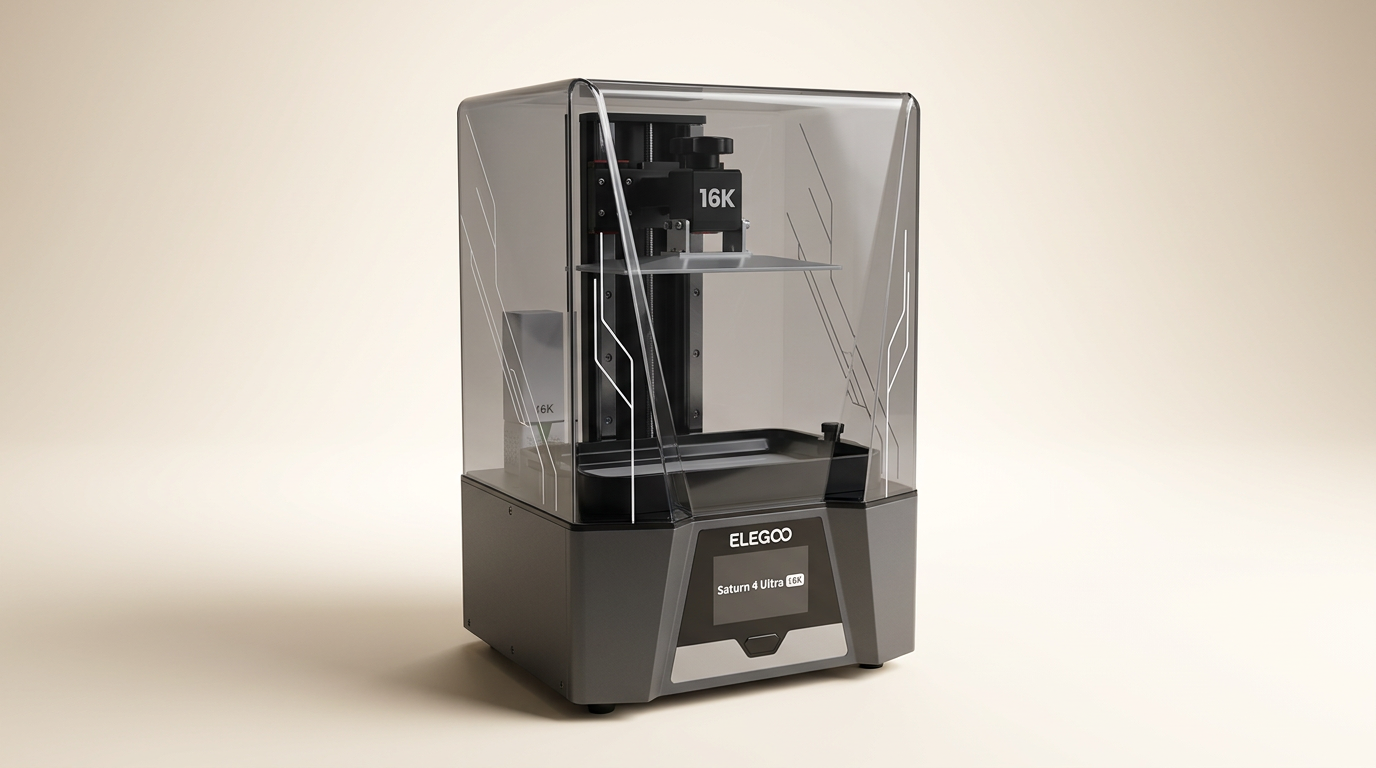
The resin 3D printing market often emphasizes detail above all else, pushing resolution boundaries with each new generation. The ELEGOO Saturn 4 Ultra 16K, however, attempts to bridge the gap between microscopic fidelity and practical throughput. While its 16K screen resolution is a prominent feature, the machine's true ambition lies in its design for accelerated printing, aiming to make resin printing a more time-efficient endeavor.
This printer arrives during a phase of maturity for resin technology, where iterative improvements often carry more weight than revolutionary leaps. The Saturn 4 Ultra 16K introduces a suite of features intended to streamline the entire printing workflow, from environmental controls to print monitoring, all while promising high resolution. However, the integration and execution of these features determine whether it truly elevates the user experience or simply adds complexity.
What owners love
- + Exceptional print quality and surface smoothness from 16K resolution
- + Significantly faster printing speeds with innovative peel mechanism
- + Valuable quality-of-life features like heated vat and wireless printing
- + Generally easy setup and operation for many users
- + Strong support experiences reported by some initial customers
Common complaints
- − Notable quality control issues leading to dead-on-arrival or early failures
- − Proprietary tilting mechanism can be a source of critical malfunctions
- − Some users report no discernible visual difference from 8K/12K prints
- − Requires careful setup and specific resin types for optimal performance
- − Inconsistent customer service experiences when issues arise
Design & Build
The Saturn 4 Ultra presents a robust physical design, incorporating several notable improvements over its predecessors. Owners frequently commend the build quality, noting a solid construction. The internal WiFi card, a departure from external antennas, and an integrated light within the build chamber are among the appreciated refinements. However, a significant number of reports highlight initial quality control deficiencies. Issues range from faulty power bricks, reported by some at unpackaging, to critical mechanical failures such as screws detaching internally or Z-axis motor errors occurring after the first print. These incidents introduce a concept we might call the 'first-print gauntlet,' where the initial success or failure dictates a user's early experience and reliance on customer support. The physical build is generally good, but inconsistent quality assurance introduces an early hurdle for a subset of users.
Setup & Ease of Use
A recurring theme among many owners is the printer's 'almost plug and play' nature. For first-time resin 3D printer users, the Saturn 4 Ultra 16K often proves surprisingly accessible, with reports of successful prints immediately after unboxing. Features like automatic leveling and power-on resume contribute to this streamlined experience. Veteran users upgrading from older models also highlight the significant quality-of-life improvements, reducing the common 'tinkering' associated with resin printing. However, this ease is not universal. Some users encountered significant setup challenges, spending days calibrating settings to achieve successful prints. The 'initial calibration tax' becomes apparent here; while many avoid it, a notable segment of the user base faces an uphill battle to achieve reliable operation, often due to underlying hardware issues rather than user error.
Performance in Real Use
The Saturn 4 Ultra 16K aims for a unique position in the market by prioritizing speed alongside resolution. The innovative tilted release technology and increased light energy genuinely reduce curing times, enabling print speeds up to 150mm/h without specialized resins. Owners confirm this, noting significantly faster print completion. The 16K resolution delivers exceptionally smooth prints, particularly for miniatures or highly detailed models. However, the perceived benefit of 16K over 8K or 12K is subjective; some long-term users report no dramatic visual difference, suggesting a point of diminishing returns for pixel density. The automatic heated resin tank is a critical feature, particularly in cooler environments, as it helps maintain optimal resin viscosity, improving print success rates by mitigating temperature-related failures. This addresses a common environmental variable that often frustrates resin printing. The integrated AI camera allows real-time monitoring and timelapse recording, offering both practical error detection and creative utility. The smart monitoring system, detecting resin levels and potential foreign objects, further enhances print reliability. These combined features aim to deliver a higher 'print certainty factor' than many competitors.
Software & Ecosystem
The printer operates within the broader ELEGOO software ecosystem. While specific details on the bundled slicer are limited, owners generally find the software straightforward to learn. Some users express a preference for third-party slicers like Lychee over the proprietary options, citing more features, though they appreciate the free nature of ELEGOO's solutions compared to subscription models. The inclusion of Wi-Fi transfer capabilities is a significant convenience, allowing for wireless file management and initiating prints without a USB drive, a common pain point in older machines. The cluster printing feature, while not broadly discussed, points to capabilities for multi-machine setups, potentially appealing to small print farms or advanced users. The ecosystem prioritizes functional utility, minimizing friction points in the print preparation and transfer stages.
Value & Reliability
The Saturn 4 Ultra 16K sits in the mid-to-high range for consumer resin printers, typically around $500. Its value proposition is strong for users prioritizing both speed and detail, coupled with a suite of advanced features. However, reliability emerges as a critical concern. A notable minority of owners experienced critical component failures shortly after purchase, including Z-axis motor issues, screen malfunctions, and problems with the proprietary tilt mechanism. These failures, sometimes attributed to poor quality control, significantly undermine the perceived value and user experience. Some owners reported positive interactions with ELEGOO customer support, receiving prompt replacements for faulty components. Others, however, faced prolonged communication issues and dissatisfaction with proposed solutions, such as being asked to self-repair new units. This divergence in support experiences, alongside the hardware issues, introduces what we call the 'customer service lottery,' where the post-purchase experience varies wildly. The long-term reliability of the complex tilt mechanism, in particular, remains an open question for some users, as failures in this component can render the machine inoperable.
Verdict
Consider - This printer offers a compelling blend of high resolution and high-speed features, but inconsistent quality control demands user vigilance.
This printer is an excellent choice for hobbyists and prosumers who are ready to invest around $500 to $600 in a resin printer, provided they prioritize advanced features like a heated vat, faster printing, and integrated monitoring. Those upgrading from older 8K machines will appreciate the quality-of-life improvements and speed gains. However, buyers should be prepared for the possibility of encountering initial hardware issues and understand that the customer support experience can be inconsistent. If you are a beginner seeking an absolutely foolproof experience, or if you cannot tolerate the risk of a faulty unit requiring troubleshooting or returns, you may want to hold off or consider models with a more established reliability track record.
The ELEGOO Saturn 4 Ultra 16K represents a crucial inflection point in resin printing: the move beyond raw resolution as the sole metric of progress. Its real innovation lies in the attempt to industrialize the desktop resin process with speed and integrated monitoring, yet its execution is hampered by the persistent 'quality control paradox' that affects many mass-produced consumer electronics. The machine embodies the tension between ambitious feature sets and the foundational reliability that underpins true user satisfaction.
FAQ
More 3D Printers reviews
Refresh Sports Boomerang for Kids Review: Fun Returns, But at What Cost?
ANYCUBIC Photon Mono 4 & Wash & Cure 3.0 Review

3D Central DNA Double Helix: A Desk Ornament with a Scale Problem
ELEGOO Centauri Carbon 2 Combo Review: Bridging the Speed Gap
Creality Ender 3 V3 SE Review: A Gateway to 3D Printing
Creality Ender 5 Max Review: A High-Volume CoreXY for Production
This review is based on real experiences shared by owners in online communities.