
EINSTAR Rockit Wireless 3D Scanner Review: Pro Performance on a Budget
This review is based on real experiences shared by owners in online communities.
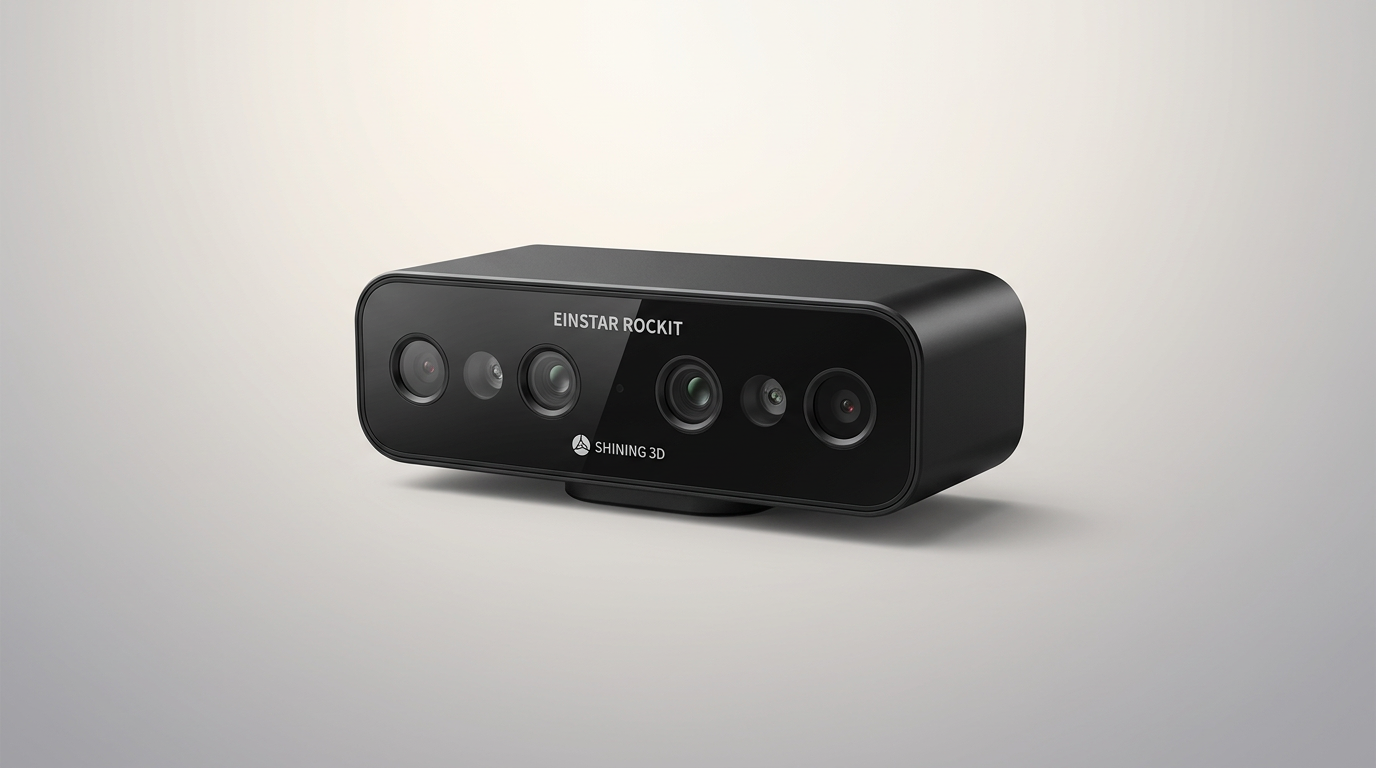
The professional 3D scanning market has long been bifurcated: high-end industrial systems offering precision at prohibitive costs, and entry-level devices struggling with fidelity and workflow integration. The EINSTAR Rockit Wireless 3D Scanner attempts to bridge this gap, promising industrial-grade features at a more accessible price point. It represents a critical tension in the market, aiming to democratize a capability traditionally reserved for specialized departments.
Most buyers seeking a professional-grade scanner anticipate a significant learning curve, often tied to complex calibration and software mastery. However, the Rockit subtly reconfigures this expectation, offering a user experience that prioritizes rapid deployment while still delivering on scan quality. This positions it not as a direct replacement for top-tier systems, but as a compelling option for those needing reliable results without the associated operational overhead.
Our assessment reveals that the Rockit's true innovation lies in its ability to streamline the professional scanning process. It provides a "Prosumer Precision" offering: enough accuracy for most engineering and design tasks, without demanding the dedicated technical support teams often required by its much more expensive counterparts. This makes it an interesting proposition for small to medium-sized enterprises and independent professionals.
What owners love
- + Delivers high-precision scans with fine detail capture
- + Excellent tracking stability, even without markers
- + Wireless operation with swappable batteries enhances flexibility
- + Handles challenging materials like dark or reflective surfaces
- + Strong manufacturer and reseller customer support
Common complaints
- − Initial learning curve requires user patience
- − Accuracy highly dependent on correct technique
- − Requires some troubleshooting knowledge for optimal results
Design & Build
The EINSTAR Rockit features a design optimized for handheld operation and portability. Its wireless connectivity, supported by built-in Wi-Fi and swappable batteries, emphasizes operational freedom, enabling users to move around objects without tethering. This wireless autonomy is a distinct advantage, positioning it for field use or dynamic workshop environments where cabling would impede workflow. A cable backup option maintains operational continuity should wireless conditions degrade or battery life become a concern. The integration of IR VCSEL technology for outdoor operation further extends its utility beyond controlled indoor settings, addressing a common limitation of many laser scanners. This considered design prioritizes practical application over purely aesthetic considerations.
Setup & Ease of Use
The initial setup of the Rockit can present a "First-Layer Cliff," where users accustomed to plug-and-play devices encounter a steeper learning curve. Owners consistently report that achieving optimal scan results requires understanding the device's nuances and refining scanning technique. This is not uncommon in precision instruments, but it does mean immediate success is not guaranteed without some effort. One owner experienced difficulties initially but found resolutions through direct technical engagement, highlighting that while the product is capable, it benefits from user dedication to mastering its operational methodology. The scanner's hybrid alignment system, combining markers, features, and texture tracking, aims to simplify the process across varied scenarios, yet user proficiency remains a factor in leveraging these capabilities effectively.
Performance in Real Use
In practical application, the Rockit demonstrates capable performance, particularly its tracking stability. An owner migrating from significantly more expensive industrial systems, including a $25,000 scanner, expressed surprise at the Rockit's tracking capabilities, often achieving reliable scans without the need for markers. This is a significant operational advantage, reducing pre-scan preparation time and increasing efficiency. When markers are employed, the scanning process becomes even more straightforward. The device captures intricate geometry with a reported resolution up to 0.05 mm, suitable for detailed automotive and firearm parts. The consistent point cloud accuracy, even on challenging dark or reflective surfaces, underscores its effectiveness across a diverse range of industrial materials. This consistent performance on difficult surfaces is often a differentiator for more expensive systems, and the Rockit largely delivers here.
Software & Ecosystem
While specific software details are less elaborated in direct owner feedback, the product emphasizes its compatibility with professional 3D workflows. The ability to export models ready for integration with design, engineering, and production pipelines is critical. This means the Rockit is designed to fit into existing CAD/CAM ecosystems, rather than demanding a proprietary, isolated workflow. This focus on compatibility reduces friction for professionals who already utilize industry-standard software. The recurring theme of rapid customer support and virtual meetings with product engineers suggests a direct channel exists for users to overcome software or operational hurdles, indicating a responsive support ecosystem that complements the hardware. This level of engagement can mitigate initial software learning challenges and enhance user confidence.
Value & Reliability
The EINSTAR Rockit positions itself as a compelling value proposition within the professional 3D scanning market, especially for users accustomed to much higher price points. An owner directly compared its performance favorably to systems costing well north of $20,000, noting the Rockit's ability to deliver comparable results for a fraction of the investment. This underscores its "Prosumer Precision" offering. While initial troubleshooting may be required, the manufacturer's rapid and engaged customer support, as noted by one owner, speaks to a commitment to user success and product reliability. This support structure effectively de-risks the investment, especially when compared to budget alternatives that may lack comparable after-sales assistance. The overall reliability appears solid, provided users invest time in mastering the device and leverage available support channels.
Verdict
Buy - The EINSTAR Rockit offers robust professional 3D scanning capabilities at a competitive price point, delivering reliable performance that challenges much more expensive systems.
This scanner is ideal for small to medium-sized engineering firms, product designers, and independent professionals who require high-precision 3D data for reverse engineering, quality control, or 3D printing workflows. It suits those who value wireless flexibility and strong tracking but are unwilling or unable to invest in systems well north of $20,000. Buyers should be prepared to dedicate time to mastering the device and leverage the strong customer support.
Conversely, those seeking a completely plug-and-play solution with zero learning curve or those who exclusively work with exceptionally large, complex, and high-tolerance industrial assemblies requiring specialized metrology-grade equipment might find its capabilities fall short of extreme demands. The Rockit embodies the "Operational Efficiency Dividend": it delivers not just on scan quality, but on reducing the total operational cost of professional 3D scanning by minimizing the need for extensive training and dedicated support staff, proving that advanced capability does not always demand an equally advanced price tag.
FAQ
More 3D Scanners reviews
Revopoint INSPIRE 2 3D Scanner Review: Unpacking the Accessory Echo Chamber

Creality 6mm 3D Scanning Markers Review: Essential Tracking Aid

TOSUKKI 6mm Positioning Targets Review: The Refined Generic Choice

AESUB 3DTOOLS 3D Scanner Spray Review: The 'Evaporative Enabler'
Creality 8-inch Rotating Turntable: A Solid Scanner Accessory

Generic 12 Piece Multi-Angle Markers Review: Essential 3D Scanning Dots
This review is based on real experiences shared by owners in online communities.