
Creality Wood Filament PLA: Beyond Novelty, A Refined Aesthetic
By AValidReview. An AI-assisted summary of customer feedback, not a hands-on test.
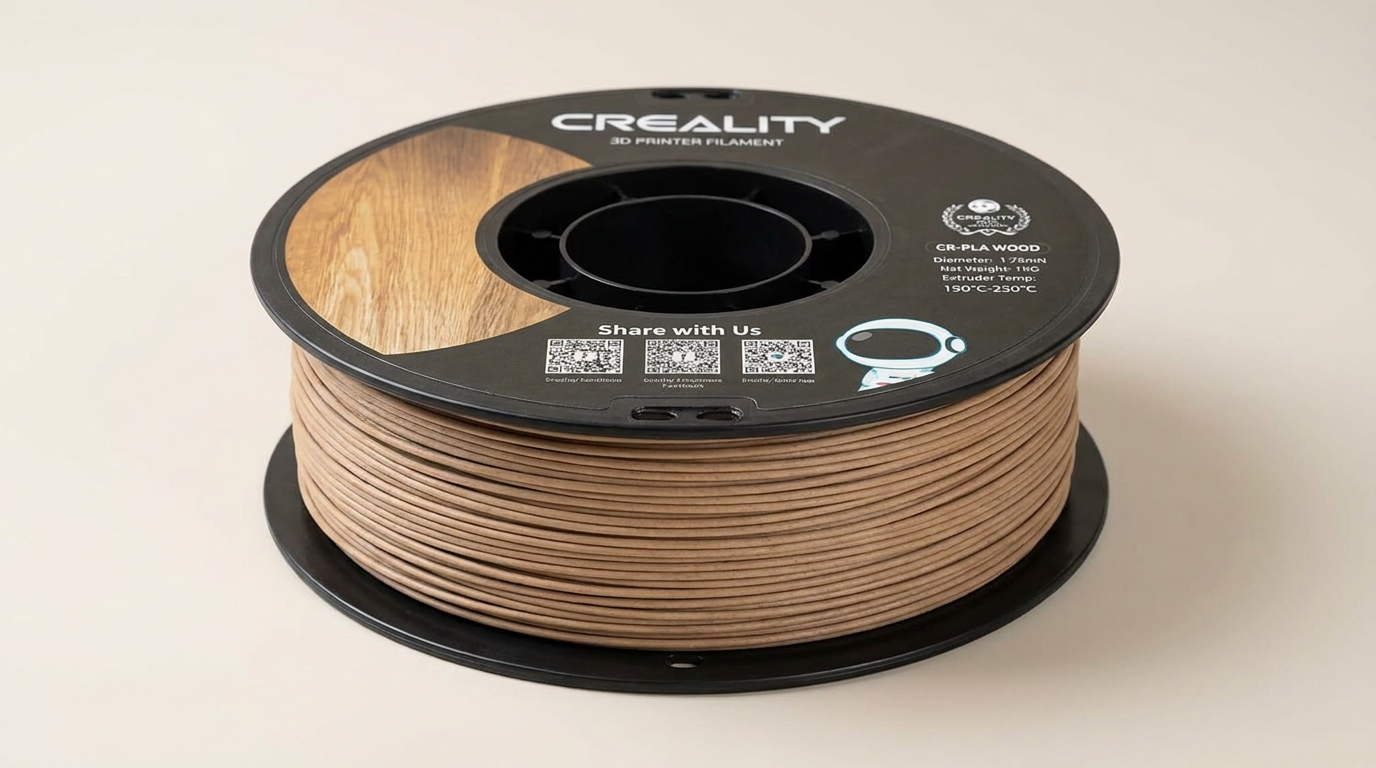
The proliferation of specialized filaments often presents a dilemma: are they genuinely useful tools for creators, or merely passing novelties? Wood-infused PLA, in particular, straddles this line, promising organic aesthetics from a synthetic process. Creality's Wood Filament PLA attempts to bridge this gap, aiming to deliver not just a wood-like appearance, but also a dependable printing experience. This review examines whether it achieves that balance, or if the wood effect comes with too many compromises.
Unlike many exotic filaments that introduce significant printing challenges, this Creality offering suggests a more user-friendly approach. It leverages the inherent advantages of PLA while integrating wood particles to achieve a distinct visual and tactile quality. Our analysis delves into its practical performance, its limitations, and who stands to benefit most from its unique characteristics in a crowded filament market.
What owners love
- + Delivers a convincing wood-like finish and texture
- + Prints reliably with minimal stringing or warping for many users
- + Layer lines are effectively hidden, enhancing visual appeal
- + Emits a pleasant, natural wood scent during printing
- + Adheres well to build plates, comparable to standard PLA
Common complaints
- − Requires a larger nozzle (0.6mm or 0.8mm) to prevent clogging
- − Can be brittle, reducing structural integrity compared to pure PLA
- − Inconsistent bed adhesion for some users
- − Does not produce actual wood grain patterns, color is uniform
- − Requires pre-drying for optimal results, similar to other hygroscopic filaments
Design & Build
The core proposition of Creality Wood Filament PLA is its aesthetic fidelity to wood. Owners consistently report that prints exhibit a matte finish, a distinct texture, and a light tan color that often feels and even smells like freshly cut wood. This is not merely a color imitation; the wood fibers embedded within the PLA impart a unique haptic quality. While marketing materials might imply a wood grain effect, the reality, as noted by several users, is a uniform color that more closely resembles MDF than solid timber. This distinction is crucial for managing expectations, as the product excels at producing a convincing 'wood look' rather than replicating the intricate patterns of natural wood grain. The filament itself is generally well-wound, contributing to smoother feeding, a critical factor for specialized materials.
Setup & Ease of Use
For many, this filament offers a surprisingly straightforward printing experience, often described as similar to standard PLA or PLA+. Owners using machines like the Creality K1 Max, K1C, Ender 3, Elegoo Neptune 3 Pro, and Bambu Lab P1S/X1C report good results with minimal profile adjustments. However, a significant caveat is the nozzle size. While some users have successfully printed with 0.4mm nozzles, Creality itself recommends 0.6mm, and recurring reports of clogging with smaller nozzles confirm this is not merely a suggestion but a practical necessity for consistent performance. The 'nozzle diameter tax' is a real consideration here; preparing for a larger nozzle is part of the setup for reliable use. Additionally, like many wood-filled filaments, it benefits from drying before use, a step some initially overlook, leading to stringing and suboptimal prints.
Performance in Real Use
When printed correctly, the performance of Creality Wood Filament is a notable highlight. It effectively hides layer lines, a common challenge with FDM printing, leading to smoother, more professional-looking finished objects. The absence of significant stringing, warping, or poor layer bonding is a recurring theme among satisfied users. Its ability to be sanded and stained, similar to real wood, extends its utility for post-processing and custom finishing, allowing users to further enhance its natural aesthetic. However, a trade-off for its aesthetic appeal is its mechanical properties. The wood fibers can reduce layer adhesion, making printed parts more susceptible to fracture than those made from pure PLA. This 'structural integrity dividend' means users should adjust infill and wall counts for functional prints requiring greater durability.
Software & Ecosystem
As a PLA-based filament, Creality Wood Filament integrates seamlessly into existing 3D printing workflows. It does not demand proprietary software or unique slicer features beyond standard temperature and retraction settings. Its compatibility with a wide range of popular FDM printers, including those from Creality, Bambu Lab, and Elegoo, underscores its accessibility. The primary software consideration involves adjusting print profiles for the necessary nozzle diameter and potentially increasing infill/wall settings to compensate for reduced layer adhesion. Owners printing on Bambu Lab machines, for example, found it performed well, often requiring only slight tweaks from their Hyper PLA profiles. This 'plug-and-play' aspect, aside from the nozzle change, lowers the barrier to entry for users wanting to experiment with wood aesthetics.
Value & Reliability
Priced in the budget to mid-range for specialized filaments, Creality Wood Filament offers compelling value, particularly given its consistent positive reception. While some users feel the amount of filament per spool is slightly low for the price, the overall sentiment points to high satisfaction. Its reliability, once the nozzle size and drying recommendations are addressed, stands out among wood-filled options. Many owners report fewer jams and better print quality compared to other brands they have tried. The long-term reliability is supported by consistent reports of clean feeding and stable printing. The 'cost of convenience' is low here, as the initial investment in a larger nozzle is a one-time factor that unlocks reliable performance for this and similar composite filaments.
Verdict
Buy - This filament consistently delivers a convincing wood aesthetic with reliable print performance, provided specific setup considerations are met.
This Creality Wood Filament is an excellent choice for hobbyists and makers focused on aesthetic prints, decorative items, or cosplay props where a natural, organic look is paramount. Users who already have or are willing to install a 0.6mm or 0.8mm nozzle, and who prioritize visual fidelity over extreme mechanical strength, will find this product highly rewarding. It is particularly well-suited for projects that benefit from post-processing like sanding and staining, transforming prints into genuine craft pieces.
Conversely, those requiring high structural integrity for functional parts, or users unwilling to switch to larger nozzles, should consider pure PLA or other composite filaments. If your primary goal is speed without any nozzle changes, or if you demand true wood grain variability, this might not be your ideal choice. However, for a filament that reliably brings a 'natural feel' to FDM printing at a modest cost, Creality has carved out a strong niche with this offering. It highlights a maturing segment where specialized aesthetics no longer necessitate significant printing compromises, offering an accessible entry point into sophisticated visual effects for 3D prints.
FAQ
More 3D Printer Parts & Accessories reviews
YOOPAI 2-Pack Cold Build Plate Review: Aggressive Bed Grip
Wefuit Bambu Lab Liquid Bed Adhesive Review
Miskis 46-Piece 3D Printer Tool Kit Review: Bench Essentials
Dynta Silk PLA Bundle Review: 6 Colors, 250g Spools
HysiPrui P1S/P1P Integrated Hotend Review: Cheap Spares, Real Trade-Offs
HP OfficeJet Pro 8135 Review: The Cloud-Tethered Workhorse
This review is based on real experiences shared by owners in online communities.