
Creality K2 Plus Combo Review: A Production Powerhouse
This review is based on real experiences shared by owners in online communities.
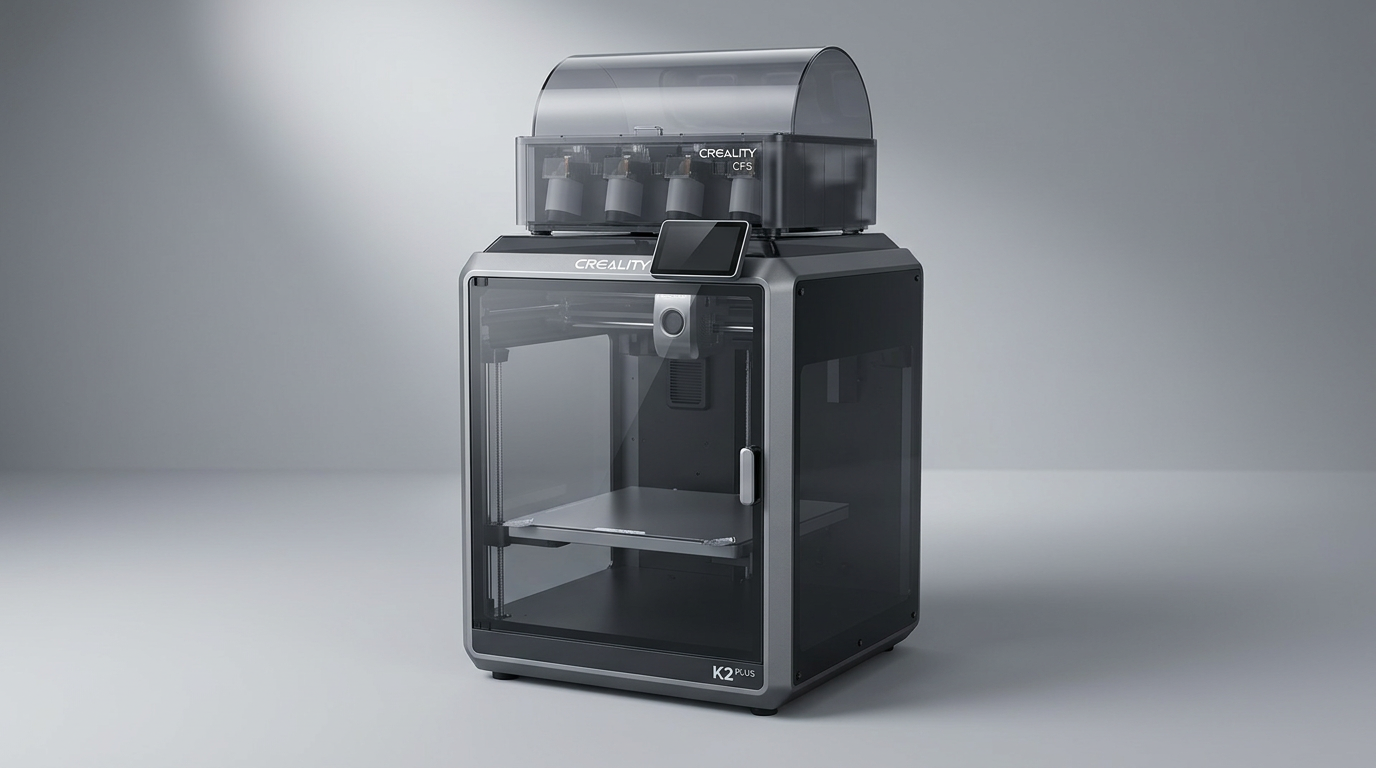
The Creality K2 Plus Combo enters a competitive segment, but it distinguishes itself by not just offering size, but integrating it into a production-oriented workflow. While many large-format printers introduce compromises in speed or reliability, the K2 Plus attempts to reconcile these trade-offs, aiming for industrial prototyping or small-batch manufacturing. It seeks to deliver what many hobbyists and professionals desire: consistent, large-scale output without constant intervention.
This printer represents Creality's move towards a more integrated, hands-off experience, particularly with its multi-color capabilities and advanced automation. It caters to users who have graduated from entry-level tinkering and now require a machine that can operate dependably for extended periods, producing substantial parts or larger print batches. The real test lies in whether its sophisticated features translate into genuine productivity gains for its target audience.
What owners love
- + Large build volume for substantial projects or batch printing
- + Effective multi-color printing with CFS system
- + High print speeds and rapid acceleration
- + Robust for engineering filaments like ABS, ASA, PPA
- + Advanced automation with AI cameras and auto-leveling
- + Reliable for continuous, long-duration printing
Common complaints
- − Software can be inconsistent or have recognition issues
- − Unit size is substantial, requiring significant space
- − Some mechanical components, like Y-axis, can require adjustment
- − Color changes generate filament waste (poop shoot needed)
- − Initial quality control on minor parts (e.g., door, power cord) reported
Design & Build
The K2 Plus Combo is a physically imposing machine, designed around its substantial 350x350x350mm build volume. Owners consistently note its size, emphasizing that it is not a compact desktop unit. The 'Matrix' frame structure, utilizing aerospace-grade aluminum alloy, contributes to its perceived stability. This design choice is critical for a printer operating at high speeds and with large build areas; it directly addresses the 'resonance burden' that often plagues larger, less rigid frames, where vibrations can degrade print quality. Some users reported minor initial build quality issues, such as a door detaching or overly tight eccentric nuts on axes, which required self-correction. However, the internal packaging generally protects the unit during transit, even if the exterior box sustains impacts.
Setup & Ease of Use
Setup for the K2 Plus is described as surprisingly straightforward, particularly for a machine of its complexity and size. Several owners, including those new to 3D printing, found it relatively plug-and-play, noting that assembly can be completed in minutes rather than hours. This 'first-print acceleration' is a significant draw, contrasting with older Creality models that often demanded extensive user assembly and calibration. The automated features, such as bed leveling and AI-assisted monitoring, contribute significantly to this ease of use, reducing the need for manual tinkering. The included documentation on a memory card and online resources further support the initial learning curve, making the large feature set less intimidating for beginners.
Performance in Real Use
Performance is a core strength, with owners praising the K2 Plus for its high-speed capabilities, often reaching 600mm/s, and rapid acceleration. The integration of FOC step-servo motors for XYZ axes and extrusion enhances print quality and smoothness, a direct benefit cited by users. The printer excels with engineering-grade filaments like ABS, ASA, and PPA, supported by its actively heated chamber and high-temperature nozzle, allowing for warp-resistant parts. The multi-color printing via the Creality Filament System (CFS) is a major selling point, described as a 'game changer' by many, enabling production of complex, multi-material objects without manual filament changes. This system offers a 'workflow multiplier' for creative and engineering applications, although it does generate some filament waste during color changes, a common characteristic of such systems.
Software & Ecosystem
The software experience presents a mixed picture. While the overall automated features and system integration are lauded, some owners report inconsistencies with the software and CFS filament recognition. Issues include fans being hard to control or the system randomly losing track of loaded filaments. This 'digital friction' can interrupt the otherwise smooth workflow. The printer also relies on Creality's own slicer and ecosystem, which requires some computer savvy for installation and updates. While thousands of models and resources are available through the Creality Cloud, the interface can sometimes be a hurdle. Connectivity options are standard, though one user noted a USB-C port did not offer direct printer control without specific software.
Value & Reliability
Owners generally perceive the K2 Plus Combo as excellent value, especially given its large build volume and advanced features compared to competitors in a similar price bracket (around $1000 to $1200). Reliability is consistently highlighted, with several users reporting hundreds or even thousands of hours of continuous, trouble-free operation. Long-term users praise its 'workhorse' nature, producing production-quality parts for rapid prototyping. Creality's customer service receives positive mentions for promptly resolving warranty claims or technical issues, contributing to overall user satisfaction. The availability of accessories and upgrades within the Creality ecosystem further enhances its long-term utility.
Verdict
Buy - This printer delivers reliable, large-volume, multi-color production for demanding users.
This is an excellent choice for experienced hobbyists, prosumers, and small businesses requiring a high-throughput machine for rapid prototyping or small-batch manufacturing. It particularly suits those who prioritize print volume and multi-material capabilities without constant supervision, and who are working with advanced engineering filaments. Users transitioning from smaller, entry-level machines will find the K2 Plus a substantial upgrade in speed, size, and automation. However, those with limited space or a strict budget (under $1000), or those who prefer an open-source, highly modifiable platform, might consider alternatives.
The Creality K2 Plus Combo defines the 'production-ready prosumer' segment, demonstrating that large format, multi-color 3D printing can achieve a level of out-of-the-box reliability once reserved for much pricier industrial systems. It signals a shift where sophisticated automation and build volume are no longer niche features but core expectations, even if it occasionally reminds users that a fully polished software experience remains the final frontier for these powerful machines.
FAQ
More 3D Printers reviews
3D Central DNA Double Helix: A Desk Ornament with a Scale Problem
ELEGOO Centauri Carbon 2 Combo Review: Bridging the Speed Gap
Creality Ender 3 V3 SE Review: A Gateway to 3D Printing
Creality Ender 5 Max Review: A High-Volume CoreXY for Production
MakerHawk Optical Endstops: Non-Contact Precision for 3D Printers
ELEGOO Saturn 4 Ultra 16K Review: The Silent Contender
This review is based on real experiences shared by owners in online communities.