
Comgrow SH02 Filament Dryer Box Review: Does it Improve 3D Prints?
This review is based on real experiences shared by owners in online communities.
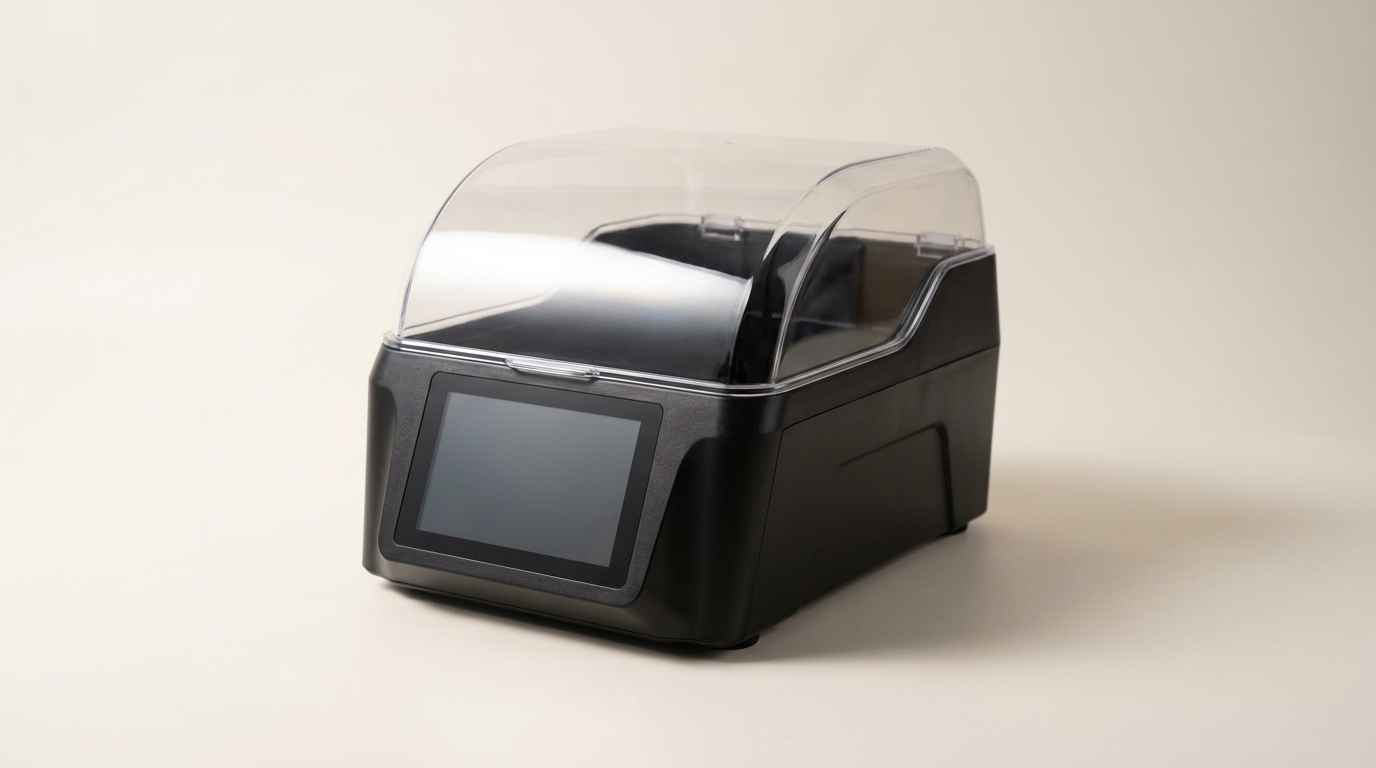
Moisture absorption is a persistent challenge in 3D printing. Filaments like PLA, PETG, and TPU readily draw humidity from the air, often leading to print failures, poor adhesion, and compromised part strength. A filament dryer box aims to mitigate these issues by maintaining a controlled, dry environment for spools.
The Comgrow SH02 represents an iteration in filament drying technology, offering features designed to quickly and efficiently dry up to two spools simultaneously. This review examines its effectiveness based on user experiences, focusing on its drying capabilities, operational nuances, and overall impact on print quality.
What owners love
- + Significantly improves print quality and bed adhesion
- + Effective at drying multiple filament types, including older spools
- + Capable of drying two spools simultaneously, saving time
- + Intuitive controls and pre-set filament profiles
- + Seems to work well while printing from the box
Common complaints
- − Fan noise is a recurring significant complaint
- − Filament discharge holes can be too tight, causing issues
- − Instructions for initial use or specific quirks are not always clear
- − Optimal drying may require the lid to be slightly ajar
- − Does not include desiccant for passive storage
Design & Build
The Comgrow SH02 is designed to accommodate two standard 1kg filament spools simultaneously, addressing a common need for users working with multiple materials or larger prints. The unit incorporates a PTC heater, which owners report heats quickly, reaching optimal drying temperatures in a short timeframe. Sealing is a primary focus of its design, with multiple sealing rings present at various points including the lid, base, and filament outlets. This structure is intended to maintain a low humidity environment. However, some users note the filament outlet holes can be excessively tight, creating resistance during printing and potentially leading to under-extrusion. A notable design aspect mentioned by some users is the lack of included desiccant, which must be purchased separately to enhance its passive storage capabilities.
Setup & Ease of Use
Setting up the Comgrow SH02 generally appears straightforward, with many owners reporting that it functions as expected upon first use. The device features pre-set temperature and time profiles for nine common filament types, accessible via a single-key interface. This feature simplifies material-specific drying, eliminating the need for manual parameter adjustments. However, some initial programming quirks have been noted where the unit seemed to default to an 'AUTO' mode, making manual override challenging for some users. The touch screen interface is generally considered functional, though one user described it as 'a little touchy.' The control panel is intuitive, making temperature and time adjustments relatively easy once users understand the system's logic.
Performance in Real Use
The primary objective of the Comgrow SH02 is to remove moisture from 3D printing filament, and users consistently report high effectiveness in this regard. Owners frequently highlight significant improvements in print quality, reduced stringing, and enhanced bed adhesion after using dried filament. The unit successfully revives old, moisture-laden spools, making them usable for prototyping or finished prints. While the heating element performs well, a dominant performance characteristic cited by multiple users is fan noise. Several accounts describe the fan as notably loud, producing a 'high pitched migraine maker' or an 'annoying drone,' sometimes louder than the 3D printer itself. This noise level can influence placement decisions, with some users suggesting it is unsuitable for environments where quiet operation is desired. Some users also independently discovered that leaving the lid slightly open or utilizing the moisture release valve at the top enhances drying efficiency, implying the sealed design might sometimes impede moisture expulsion.
Software & Ecosystem
The Comgrow SH02 operates with integrated firmware that manages its heating cycles and pre-programmed filament profiles. There are no external software components or a broader ecosystem to consider with this device. Its 'one-key set for 9 types of filaments' simplifies operation, providing default drying temperatures and times. The intelligent safety protection features, including automatic heating cut-off at high temperatures and a fan alarm, contribute to its reliability. The screen displays critical information like drying time remaining and temperature. While functional, there is no disclosed accuracy for the internal humidity sensor, leading some users to compare its readings against external hygrometers. The device's functionality is self-contained.
Value & Reliability
The Comgrow SH02 is generally regarded as a worthwhile investment for 3D printer owners, particularly given its price point, which typically falls under $100. Many users assert that the improvements in print quality and the ability to salvage old filament justify the cost. The unit's build quality is described as solid, and it performs its core function reliably. Longevity is not extensively commented upon, beyond initial positive experiences of working well. The most significant reliability caveat is the fan's noise level, which some users find intolerable, prompting returns. While the unit provides slots for desiccant, its absence in the package is a minor inconvenience that adds to the overall cost. Despite its limitations, the SH02 offers a compelling value proposition as an effective, dual-spool filament dryer.
Verdict
Buy - This filament dryer box consistently delivers tangible improvements in 3D print quality by effectively drying filament.
This unit is ideal for hobbyists and makers who frequently encounter moisture-related print issues or need to revive older filament spools. Its dual-spool capacity and pre-set profiles make it efficient for those printing with multiple materials or undertaking longer projects. Users operating in humid environments will find its drying capabilities particularly beneficial. However, individuals sensitive to noise, or those requiring exceptionally quiet operation near their workspace, should consider alternative options or plan to situate the dryer remotely. Those with larger, non-standard spools might also find its capacity restrictive. It represents a strong value for its performance at its price point, typically under $100.
Most buyers focus on the 'dryer' aspect of a filament box, but the SH02's consistent noise reports highlight a critical, often overlooked, aspect of 3D printing peripherals: integration into the living or working space. A truly successful accessory doesn't just perform its function; it does so without introducing new distractions or significant discomfort. The choice between a quiet, slower drying method and a fast, noisy one becomes a direct trade-off of print efficiency versus environmental comfort, a decision point often missing from product specifications.
FAQ
More 3D Printer Parts & Accessories reviews
YUNHAN Air Filter for Bambu Lab 3D Printers Review

HYHJMISTY 91PCS 3D Printer Tools Kit Review: A Focused Starter Set
Black Magic 3D Printer Adhesion Kit Review: The Applicator Advantage
Fuitnerd 184-Piece 3D Printer Tool Kit Review: Value-Focused Utility
CreatryLab A1/A1 Mini Hotend Review: Budget Reliability for Bambu Labs
Fuitnerd 142Pcs 3D Printer Tools Kit Review: A Maker's Essential?
This review is based on real experiences shared by owners in online communities.