
Comgrow Ender 3 V3 KE PEI Plate Review: An Essential Upgrade
By AValidReview. An AI-assisted summary of customer feedback, not a hands-on test.
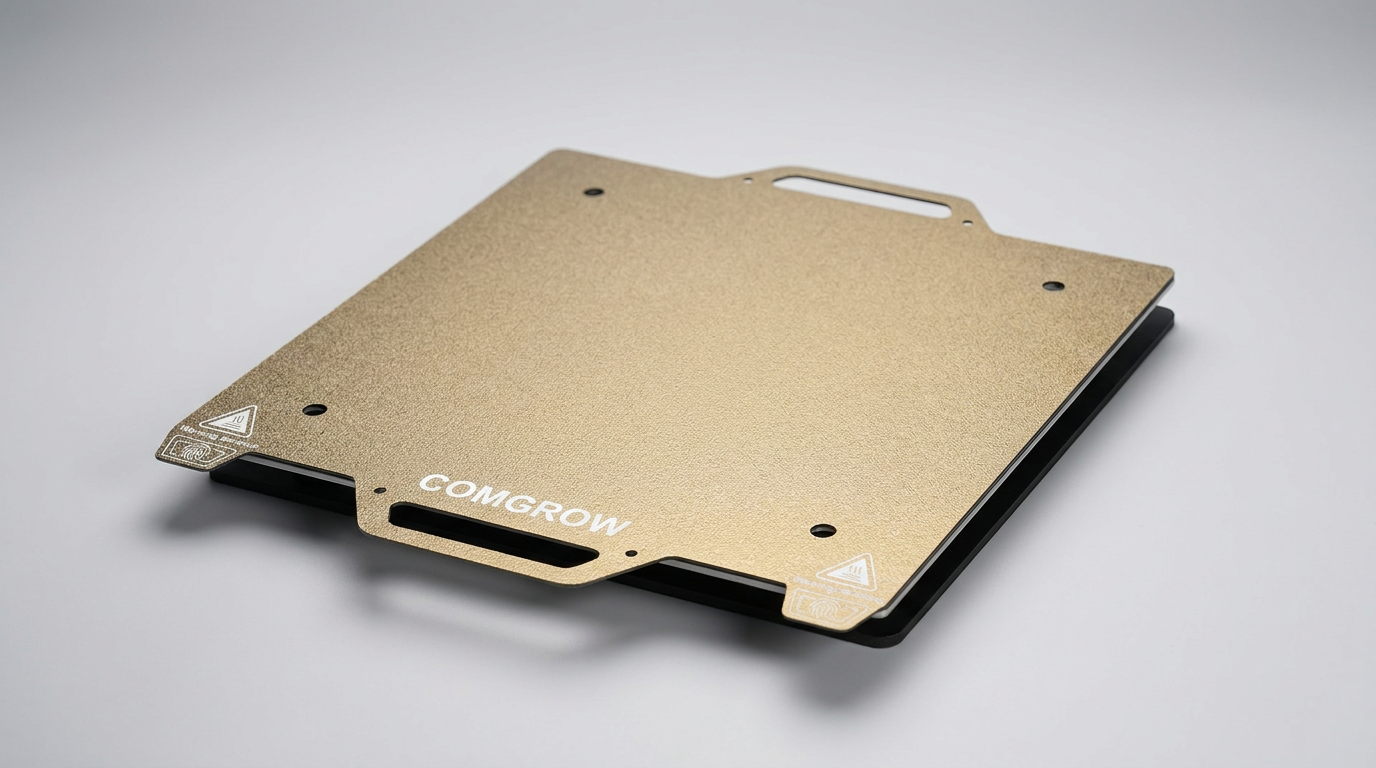
In the evolution of 3D printing, the build surface has moved from a mere platform to a critical component dictating print success and user experience. Early adopters wrestled with glue, tape, and specialized coatings, each adding friction to the process. The Comgrow Ender 3 V3 KE PEI Spring Steel build plate represents a maturation in this category, offering a solution designed to minimize intervention and maximize output, effectively transforming a common pain point into a point of reliability.
This accessory is not merely a replacement; it addresses a fundamental friction inherent in the printing workflow: achieving consistent first-layer adhesion while ensuring effortless part removal. The market is saturated with build plate options, but this Comgrow offering distinguishes itself by focusing on a specific blend of material properties and user-centric design choices, catering directly to the practical demands of hobbyists and small print farm operators.
Our assessment focuses on how this plate leverages its dual-sided PEI and PEO surfaces to simplify the printing process, reduce failed prints, and enhance overall efficiency. It stands out as a "convenience upgrade" in a segment often plagued by fiddly solutions, indicating a broader trend towards making 3D printing more accessible and less frustrating for a wider audience.
What owners love
- + Significantly improves first-layer adhesion for various filaments.
- + Parts release easily once the plate cools, eliminating prying.
- + Dual-sided design offers textured PEI and smoother PEO finishes.
- + Durable spring steel construction withstands repeated flexing.
- + Includes replacement magnetic base for damaged beds.
- + Broad compatibility with many 235x235mm beds, including Ender 3 series.
Common complaints
- − Requires thorough cleaning with dish soap before first use.
- − May require a slight bed temperature increase for optimal performance.
- − Textured finish may not be preferred for all print aesthetics.
- − Potential for minor damage to smooth side with certain filaments if adhesion is too strong.
Design & Build
The Comgrow PEI Spring Steel plate features a robust construction centered on a flexible spring steel sheet. This material choice is fundamental to its operation, allowing for easy print removal via flexing without permanent deformation. The plate is dual-sided, providing a textured PEI (Polyetherimide) surface on one side and a smoother PEO (Polyetherimide-like) surface on the other. Owners consistently report the quality of these coatings to be high, noting they are often superior to stock plates from other brands. The design includes positioning holes and dual handles, which are praised for simplifying alignment and handling, even for printers that do not utilize the alignment screws. This attention to tactile usability elevates the plate beyond a simple printing surface, acknowledging the frequent interaction users have with this component. The inclusion of an adhesive magnetic base, which allows for replacement of a printer's original magnetic layer, adds significant value and addresses a common failure point for long-term printer use.
Setup & Ease of Use
Installation of the Comgrow build plate is straightforward, primarily involving adhering the magnetic base to the printer's heated bed. Owners highlight the importance of careful alignment during this initial step. A crucial recurring theme in owner feedback is the necessity of a thorough cleaning protocol before first use. Users found that washing the plate with dish soap and warm water, followed by alcohol wipes, was essential to remove manufacturing residues and achieve optimal adhesion. Failure to do so often resulted in initial adhesion issues. Once cleaned and installed, the plate transforms the user experience. The 'post-print convenience' is a significant advantage; parts detach effortlessly upon cooling, often without needing to remove the plate from the printer itself. This contrasts sharply with the struggles many users experienced with original equipment manufacturer (OEM) plates, sometimes necessitating tools or excessive force to remove prints.
Performance in Real Use
In terms of adhesion, the Comgrow plate performs reliably across a range of common filaments, including PLA, PETG, ABS, ASA, and TPU. The textured PEI side is particularly lauded for providing strong adhesion during printing, which directly reduces failed first layers. This consistent adhesion allows for successful prints even with more challenging materials like PETG, where owners previously struggled with stock surfaces or relied on adhesives. The 'adhesion-release paradox' is elegantly solved: prints bond firmly during the thermal cycle, yet detach with a simple flex once cool. This is a critical functional improvement for any 3D printing workflow. While the textured finish is generally well-received for its professional appearance, some users note the need to adjust bed temperature slightly higher (e.g., +10°C) compared to other surfaces. The smooth PEO side offers an alternative finish, though some users reported issues with PETG adhering too strongly and causing minor surface damage, suggesting caution or specific release agents for that filament on the smooth side.
Software & Ecosystem
As a purely mechanical accessory, the Comgrow PEI plate does not directly interact with software or the broader 3D printing ecosystem in terms of digital integration. Its impact is entirely physical, influencing print quality and user workflow. However, its compatibility with a wide array of Creality Ender 3 and K1 series printers, along with other 235x235mm beds like the Elegoo Neptune series, highlights its role as a cross-platform upgrade. This broad compatibility means users do not need specific software profiles unique to this plate; standard filament profiles with minor bed temperature adjustments are usually sufficient. The plate acts as a foundational hardware improvement that enhances the reliability of existing slicing software and printer firmware settings, rather than requiring new ones. Its value proposition is in simplifying the physical interaction with the printer, allowing users to focus more on design and less on bed adhesion issues.
Value & Reliability
Owners consistently describe the Comgrow PEI plate as an exceptional value, often calling it the 'best $13 spent' on 3D printing. Its relatively low cost, typically well under $20, belies its significant impact on print reliability and user convenience. The inclusion of a spare magnetic adhesive sheet further enhances its value proposition, offering a complete solution for various bed conditions. Long-term reliability is frequently mentioned, with some owners reporting flawless performance over months or even years of continuous use in print farm setups. The spring steel maintains its flexibility and flatness, and the PEI coating resists wear well, provided it is properly cleaned and maintained. This product demonstrates a 'longevity dividend,' where its initial low cost is multiplied by its sustained performance and reduced frustration over time, making it a highly cost-effective upgrade.
Verdict
Strong Buy - This build plate offers a fundamental improvement in 3D print adhesion and release dynamics for a wide range of compatible printers.
This plate is ideal for any 3D printer owner struggling with bed adhesion or difficult print removal, especially those using Creality Ender 3 or K1 series machines. It provides a significant quality-of-life upgrade for hobbyists and print farm operators seeking consistent, reliable first layers and effortless part separation. Users who print frequently with materials like PETG will find its robust adhesion particularly beneficial. Those content with their current adhesion solution, or who prefer the specific finish of glass beds, may not find it as compelling, but its low cost makes it a low-risk experiment.
This product exemplifies the 'frictionless printing' ideal many manufacturers strive for but often miss. It's a pragmatic accessory that addresses a core mechanical challenge without adding digital complexity or demanding new workflows. Its success lies in simplifying a foundational aspect of 3D printing, subtly shifting the user's focus from troubleshooting to creation, a necessary evolution for broader adoption of additive manufacturing.
FAQ
More 3D Printer Parts & Accessories reviews
Hemulac Hardened Steel Extruder for Bambu P1P and P1S Review
Creality Star-Shaped PTFE Tube Review: Smart Design, Mixed Results
YOOPAI 2-Pack Cold Build Plate Review: Aggressive Bed Grip
Wefuit Bambu Lab Liquid Bed Adhesive Review
Miskis 46-Piece 3D Printer Tool Kit Review: Bench Essentials
Dynta Silk PLA Bundle Review: 6 Colors, 250g Spools
This review is based on real experiences shared by owners in online communities.