
BOXOB Silicone Socks for Bambu Lab Hotends Review
This review is based on real experiences shared by owners in online communities.
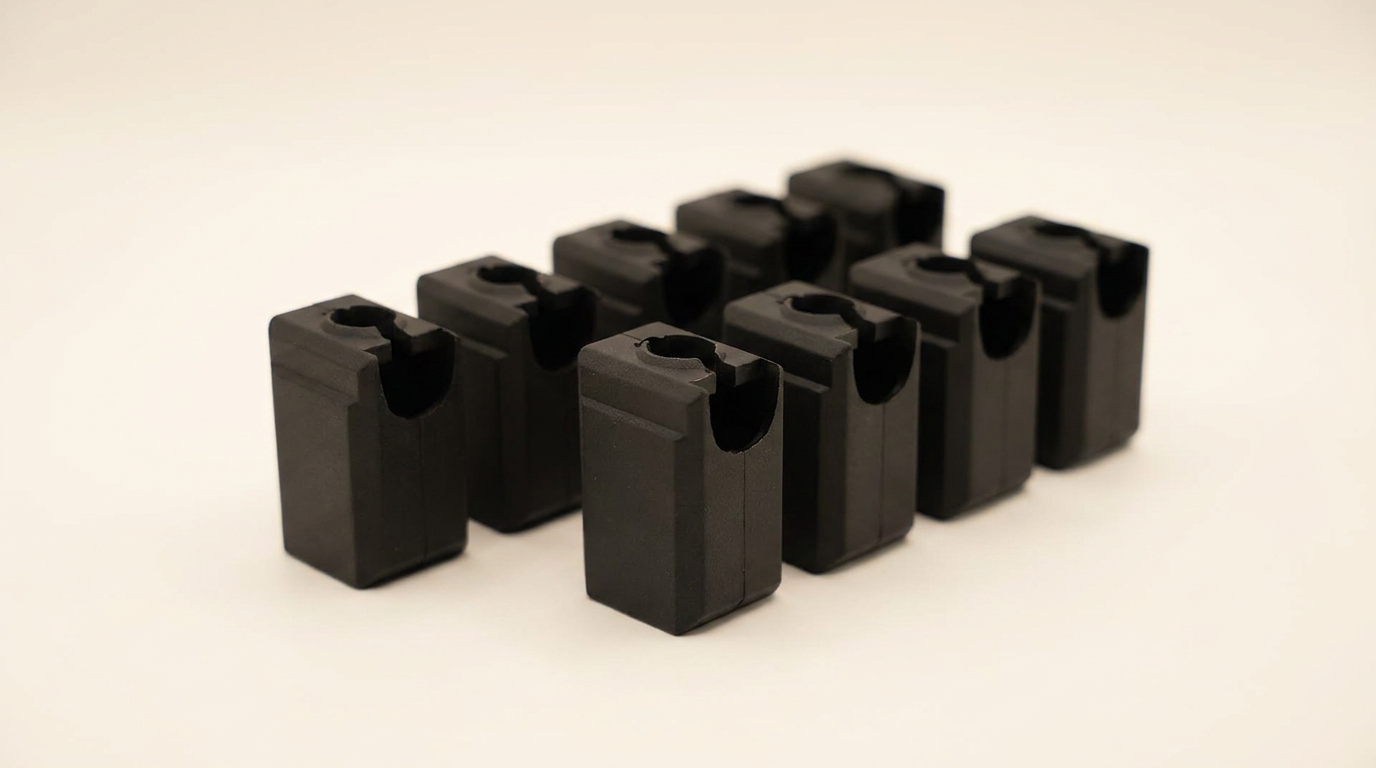
3D printer silicone socks, often viewed as simple consumables, play a crucial role in thermal stability and component protection. Many users overlook their specific material properties until a failure disrupts a print or damages the hotend. For Bambu Lab owners, finding reliable and cost-effective replacements for these critical, high-wear parts is a recurring challenge.
BOXOB's 10-pack of silicone socks enters a market where OEM parts are often inconveniently packaged or priced. This review examines whether these aftermarket accessories deliver the essential performance and protection expected, or if their affordability comes with an hidden 'material integrity tax' for discerning users. We assess their real-world application, considering their direct impact on print consistency and hotend longevity, rather than just their initial fit.
Our analysis reveals a product that largely meets expectations for a wear item, but with a notable caveat that highlights the importance of material quality in high-temperature 3D printing environments. The performance of these socks underscores the narrow margin for error in maintaining consistent thermal conditions within the print head.
What owners love
- + Identical fit to original Bambu Lab socks
- + Effective at preventing temperature drops
- + Provides a generous quantity of spares
- + Easy installation onto the hotend
- + More readily available than OEM individual socks
Common complaints
- − Some units report melting at standard PLA temperatures
- − Potential to smear melted material onto prints
- − Can fail during filament clogs or spaghetti events
Design & Build
The BOXOB silicone socks are designed as direct replicas of the original Bambu Lab components for X1, X1C, P1P, and P1S printers. Owners consistently report an identical fit, affirming the precise dimensions and form factor. The material itself is described as having the same 'squishiness' and thickness as OEM socks, suggesting a similar Shore hardness. While many users describe the overall quality as 'well made,' the recurring issue of melting during standard printing conditions points to inconsistencies in the actual silicone compound or its high-temperature resistance. This suggests a 'material variance lottery' where not all units perform identically under thermal stress, despite appearing similar on initial inspection.
Setup & Ease of Use
Installation is a straightforward process, requiring no tools beyond sliding the sock onto the hotend. Owners describe the fit as secure and quick. This ease of installation is a significant advantage, particularly for a component that users expect to replace periodically due to wear or accidental damage. The design adheres to the plug-and-play philosophy common in 3D printer maintenance, minimizing downtime. The simplicity of replacement, combined with the generous pack size, positions these socks as a practical solution for quick hotend maintenance during 'spaghetti incidents' or routine wear.
Performance in Real Use
When functional, these socks perform their primary role effectively: maintaining stable hotend temperatures and protecting the heating block from filament accumulation. Several owners specifically noted the cessation of 'temperature drop error messages' after installation. This thermal stability is critical for consistent print quality. However, a significant performance inconsistency emerges from reports of melting at temperatures used for standard PLA, which are typically well below the advertised 300 Celsius threshold. This 'thermal integrity failure' compromises print quality, leads to material smearing, and can necessitate hotend component replacement. This divergence between advertised capability and actual performance is a critical failure point for some users.
Software & Ecosystem
As a purely mechanical accessory, these silicone socks have no direct interaction with printer software or the Bambu Lab ecosystem. Their function is entirely physical-thermal. The value proposition here is providing an alternative supply chain for a consumable part that Bambu Lab does not always sell individually through its own channels. This aftermarket availability addresses a logistical gap, allowing users to stock up on necessary spares without relying solely on the OEM's inventory practices. The absence of brand logos also allows for a focus on utility over brand identity, which aligns with the needs of a practical 3D printing enthusiast.
Value & Reliability
At their typical price point, these socks offer significant value per unit, especially when compared to the cost or availability of individual OEM replacements. The 10-pack provides a substantial reserve for a component prone to wear. This abundance is a key benefit, allowing users to maintain a ready supply for inevitable replacements. However, the reliability is inconsistent. While many units perform as expected for months, a non-trivial number exhibit the 'early-melt phenomenon.' This variability introduces a 'reliability lottery,' where the value proposition is high for functional units but drops precipitously if one encounters a defective batch, potentially leading to more costly hotend repairs. The cost savings are clear, but the risk of thermal failure must be considered.
Verdict
Consider - These silicone socks offer a budget-friendly alternative for Bambu Lab hotends, but their reliability can be inconsistent.
They are an appropriate purchase for users who value quantity and cost savings over absolute material consistency, especially if they are prepared to replace a faulty sock quickly. The generous pack size in the under $10 range makes them ideal for proactive stocking against wear and accidental damage. Those who demand uncompromised thermal integrity for critical prints, or who wish to avoid any risk of hotend contamination, should weigh the potential for melting against the cost savings.
This product embodies the 'consumable conundrum' in 3D printing: essential parts that are expected to wear, yet their failure can be catastrophic. The BOXOB socks highlight the hidden tension between aftermarket cost efficiency and guaranteed material performance, illustrating that not all silicone is created equal, particularly when operating at the thermal edge of extrusion. The underlying theme is that a small material defect in a low-cost part can introduce significant workflow disruption.
FAQ
More 3D Printer Parts & Accessories reviews
YUNHAN Air Filter for Bambu Lab 3D Printers Review

HYHJMISTY 91PCS 3D Printer Tools Kit Review: A Focused Starter Set
Black Magic 3D Printer Adhesion Kit Review: The Applicator Advantage
Fuitnerd 184-Piece 3D Printer Tool Kit Review: Value-Focused Utility
CreatryLab A1/A1 Mini Hotend Review: Budget Reliability for Bambu Labs
Fuitnerd 142Pcs 3D Printer Tools Kit Review: A Maker's Essential?
This review is based on real experiences shared by owners in online communities.