
BIQU CryoGrip Pro Glacier: The Unassuming Workhorse Build Plate
This review is based on real experiences shared by owners in online communities.
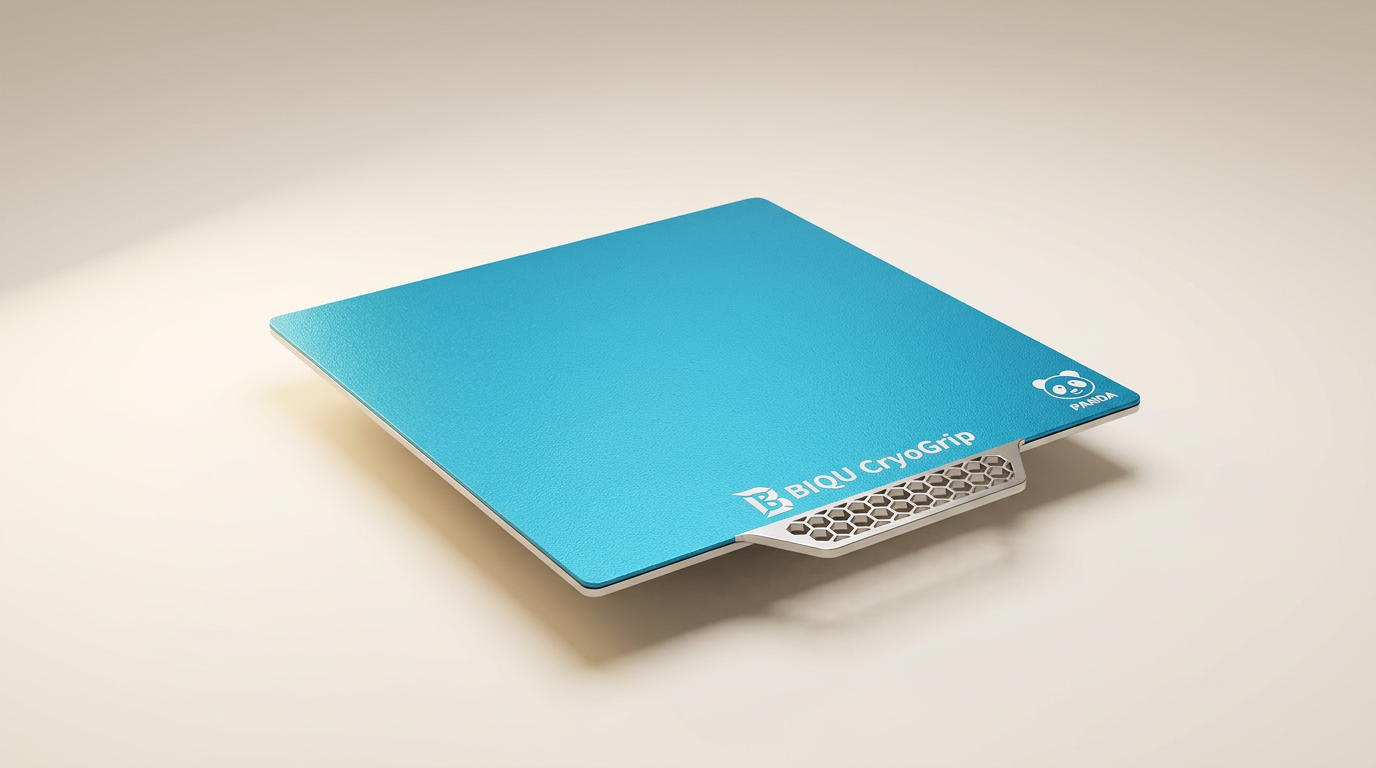
In the evolving landscape of 3D printing, the build plate often remains an overlooked component, yet it dictates the success of every first layer. While many manufacturers focus on intricate textures or advanced materials, the BIQU CryoGrip Pro Glacier approaches a core problem with understated efficacy: consistent adhesion across a range of filaments, particularly at lower bed temperatures. This plate doesn't chase every trend; instead, it refines the fundamental act of securing a print.
The Glacier plate arrives promising robust adhesion for common filaments like PLA and PETG, while also accommodating more demanding materials such as ABS and ASA without the customary reliance on adhesives. Its "CryoGrip" designation hints at a design philosophy that prioritizes thermal efficiency and part release, aiming to streamline workflow for high-volume users. However, beneath the marketing, the real test lies in its daily performance across diverse printing scenarios and user expectations.
This review delves into whether the BIQU CryoGrip Pro Glacier genuinely delivers on its core promise, examining its build, ease of integration, and long-term reliability. It assesses if this plate offers a substantial upgrade over stock alternatives, particularly for users seeking a durable, low-maintenance solution that consistently nails the first layer.
What owners love
- + Exceptional first-layer adhesion across various filament types, including PLA, PETG, ABS, and ASA
- + Eliminates the need for glue sticks or other adhesives for most materials
- + Prints release easily once the plate cools, preventing damage
- + Provides a smooth, consistent finish to the bottom of prints
- + Compatible with Bambu Lab printers, including X1C/P1S, with QR code stickers for recognition
- + Durable surface coating resists peeling and wear from frequent use
Common complaints
- − Not ideal for prints with extensive brims or delicate supports due to strong adhesion
- − Specific texture may not be desired for all print aesthetics
- − Some owners report peeling issues with recent batches, indicating potential quality control variance
- − May require manual bed type selection on some Bambu Lab printers despite QR code support
- − TPU adhesion is excessively strong, making removal difficult and risky for the plate
Design & Build
The BIQU CryoGrip Pro Glacier plate features a multi-layered construction, incorporating a cobalt oxide coating over a base plate. This design aims for durability, impact resistance, and corrosion resistance, intended to prevent peeling even with repeated flexing. Owners consistently report a robust, high-quality feel to the plate, with many noting its substantial build. The surface itself provides a delicate texture, resulting in a smoother bottom finish on prints compared to typical textured PEI plates. A notable design element is the hollowed-out handle, which some users appreciate for easier handling when the plate is warm. This thoughtful detail supports a faster workflow, addressing the practical reality of continuous printing operations.
Setup & Ease of Use
Integrating the CryoGrip Pro Glacier into Bambu Lab printers, such as the P1S, X1C, and A1, is generally straightforward. The plate is designed for direct compatibility, matching the dimensions and magnetic properties of original equipment. For printer recognition, the plate includes QR-style stickers that can be applied to align with existing Bambu plate profiles. While many owners find this feature works seamlessly, some report that their printers, particularly the P2S, occasionally require manual selection of the plate type or an instruction to ignore detection errors. Cleaning is simple; warm water with dish soap is typically sufficient to restore adhesion, with some users opting for IPA wipes. The plate's "no glue" ethos significantly reduces pre-print preparation, embodying a minimalist approach to bed adhesion.
Performance in Real Use
The primary draw of the CryoGrip Pro Glacier is its exceptional first-layer adhesion, a characteristic frequently highlighted by owners. Filaments like PLA, PETG, ABS, and ASA adhere consistently and strongly, often without the need for adhesives, even for large, prone-to-warping prints. This "adhesive liberation" is a recurring theme, allowing for cleaner prints and less post-processing. The plate's design supports lower bed temperatures compared to some alternatives, contributing to what can be termed the "cold-bed advantage" for energy efficiency and reduced part stress. While adhesion during printing is robust, prints release easily once the plate cools, typically with a gentle flex. However, this strong grip can present challenges with very delicate support structures or extensive brims, where removal might prove difficult. Notably, TPU is reported to adhere so aggressively that removal becomes problematic and risks damage to the plate, suggesting a clear material limitation.
Software & Ecosystem
The CryoGrip Pro Glacier integrates into the Bambu Lab ecosystem primarily through its physical compatibility and the provided QR code stickers. These stickers aim to allow the printer's LIDAR or camera system to identify the plate type, preventing error messages and simplifying print profiles. For many users, this integration is successful, enabling a plug-and-play experience. However, a segment of the user base reports that their printers still require manual override or specific slicer settings, such as selecting a generic smooth PEI plate profile, to avoid detection issues. This indicates that while BIQU has attempted full compatibility, the system's reliance on specific QR codes can introduce a minor friction point for some configurations. The value here lies in its near-native integration, which largely avoids the "third-party friction tax" often associated with aftermarket accessories, despite occasional hiccups.
Value & Reliability
Priced in the realm of premium aftermarket build plates, typically around $25 to $30, the CryoGrip Pro Glacier offers significant value through its consistent performance and reduced reliance on consumables like glue sticks. The durability claims, including resistance to peeling and impact, are largely supported by owners who report extensive print hours without degradation. Many consider it a long-term investment that minimizes print failures and maintenance time. However, a few recent reports of plates peeling after initial prints introduce a concern about manufacturing consistency. This suggests a potential "batch lottery" where most users receive a high-quality product, but a small percentage may encounter early defects. For the majority, the plate's reliability and enhanced adhesion justify its cost, positioning it as a top contender for those seeking consistent, hassle-free first layers.
Verdict
Strong Buy - This build plate offers unparalleled adhesion and easy release for a wide range of common 3D printing filaments, significantly reducing print failures.
This plate is ideal for anyone with a Bambu Lab P1S, X1C, or A1 printer who frequently encounters first-layer adhesion issues or wishes to eliminate the use of glue sticks and other adhesives. It performs exceptionally well with PLA, PETG, ABS, and ASA, making it a versatile upgrade for general-purpose printing and engineering materials. Users focused on high print success rates and a smooth bottom finish will find it particularly beneficial. Those frequently printing intricate miniatures with extensive supports or using TPU should exercise caution, as its grip can be too aggressive in those specific scenarios.
The CryoGrip Pro Glacier doesn't revolutionize 3D printing, but it quietly perfects its most critical aspect: the first layer. In an ecosystem increasingly prone to software complexities and material-specific compromises, this plate embodies the principle of "adhesion by design." It frees users from the repetitive cycle of adhesion troubleshooting, allowing them to focus on design and production rather than bed preparation. This product subtly shifts the user experience from managing print failures to anticipating consistent success, a form of quiet innovation that elevates the entire printing process.
FAQ
More 3D Printer Parts & Accessories reviews
ELEGOO 3D Printer Adhesive Glue Review: Reliable Bed Adhesion
SAHVAIM AMS Lite Filament Hub Review: Quick Fix for Bambu A1
IdeaFormer-3D Bambu Lab Textured PEI Plate Review
Wefuit 0.2mm Hardened Steel Hotend Review: Budget Precision
HzdaDeve P1S/P1P Hotend Assembly Review: Cheap Downtime Insurance
3DZWMAN RGB LED Lamp Kit 001 Review: Better Than OEM
This review is based on real experiences shared by owners in online communities.