
BIQU CryoGrip Pro Frostbite Review: Mastering Cold Printing Adhesion
This review is based on real experiences shared by owners in online communities.
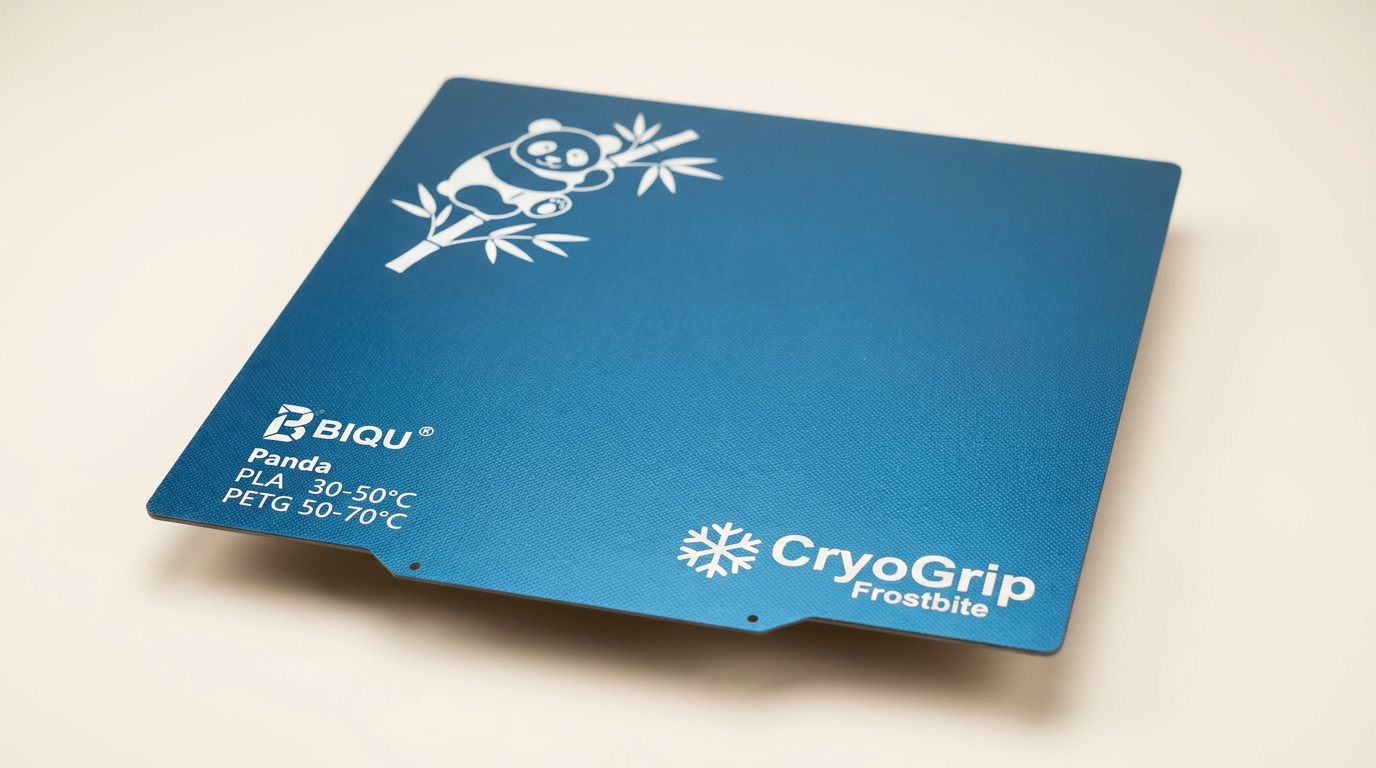
The modern 3D printing landscape is increasingly defined by speed and reliability, yet foundational challenges like first-layer adhesion persist across all segments. While heated beds are the conventional solution, the BIQU CryoGrip Pro Frostbite cold build plate presents a compelling alternative, challenging the assumption that elevated temperatures are universally necessary for successful initial layer bonding. Designed specifically for Bambu Lab machines, this plate champions a unique polymer-based surface for room-temperature printing.
This review evaluates the CryoGrip Pro Frostbite's performance, examining whether its cold printing promise translates to consistent, user-friendly results or introduces new complexities. Owners frequently highlight its exceptional grip for common filaments, suggesting a potential shift in how some users approach print bed management. We investigate if this plate truly delivers on its advertised benefits, particularly its energy efficiency and warp prevention, within the context of daily 3D printing operations.
What owners love
- + Superior first-layer adhesion for PLA and PETG
- + Effective cold release of prints after cooling
- + Reduces or eliminates need for bed heating, saving energy
- + Helps prevent warping, even with auxiliary fans on
- + Easy maintenance, typically requiring only soap and water for cleaning
- + Leaves a desirable mild texture/smooth glossy finish on prints
Common complaints
- − Adhesion can be excessively strong, making removal difficult at times
- − Limited compatibility with other filament types like TPU
- − Bambu Lab printers may not recognize the plate, requiring software workarounds
- − Requires specific cleaning regimen; solvents cause damage
- − Slightly thinner than some stock Bambu Lab plates
Design & Build
The BIQU CryoGrip Pro Frostbite build plate features a seven-layer design utilizing a proprietary polymer material. Its construction prioritizes robust adhesion at ambient temperatures, aiming to decouple first-layer success from bed heat. Several owners commend the plate's physical quality, describing it as solid and flat, contributing to consistent print surfaces. The surface itself provides a distinct texture, often described as mildly textured or leaving a glossy finish on prints, which many users prefer over the rougher PEI alternatives. However, some owners note that the plate is marginally thinner than stock Bambu Lab options, a detail that has not impacted performance for most, but is a notable difference.
Setup & Ease of Use
Initial setup involves simple placement, as the plate is designed for direct compatibility with Bambu Lab X1C, P1P, P1S, P1S, X1E, and A1 printers. A recurring theme in owner feedback is the need to adjust software settings. While an AR code is provided for X1C recognition, users of other models, particularly the P2S, must disable "Build Plate Detection" in their slicer software to bypass error messages. This constitutes a minor configuration step, but an essential one for seamless operation. Cleaning is straightforward; owners consistently report success with only soap and water, specifically mentioning Dawn dish soap. Crucially, the manufacturer and users strictly advise against alcohol or other solvents, as these can permanently damage the surface and compromise its self-recovering coating. This creates what we call the 'Cleaning Compliance Cost' - the simple instruction belies the importance of strict adherence to prevent premature wear.
Performance in Real Use
The CryoGrip Pro Frostbite delivers on its core promise of exceptional cold adhesion for PLA and PETG. Owners universally praise its ability to secure prints firmly, even at bed temperatures as low as 30-50°C for PLA and 50-70°C for PETG. This 'Cryo-Adhesion Advantage' translates directly into fewer failed prints due to lifting or warping, a common frustration on other surfaces. The cold release mechanism also functions as advertised; prints detach cleanly as the plate cools, often with a simple bend, eliminating the need for scraping tools. This cold printing capability not only reduces energy consumption but also mitigates issues like filament softening in the extruder due to high chamber temperatures, a particular benefit for printers with enclosed build volumes. While its primary strength lies with PLA and PETG, some users report limited success with TPU, cautioning that it can adhere too strongly, making removal difficult. The plate's textured surface also influences the final print appearance, often yielding a smoother, slightly glossy underside compared to highly textured PEI plates.
Software & Ecosystem
The plate's primary integration challenge lies with the Bambu Lab ecosystem's plate detection system. While an AR code exists for X1C recognition, owners of other Bambu Lab models frequently report that their printers do not read the bar code, triggering error messages. This necessitates manual override by disabling the 'Build Plate Detection' feature in the slicing software, a minor inconvenience for most but a point of friction that breaks the otherwise automated workflow of Bambu Lab printers. This highlights the 'Vendor Lock-in Vexation,' where specialized third-party accessories must navigate proprietary hardware and software checks. However, owners generally view this as a manageable trade-off for the performance gains. For users with printers other than Bambu Lab models, such as a Flashforge AD5X or K1 Max mentioned by owners, the plate performs without these specific detection conflicts, often requiring only minor temperature adjustments during calibration.
Value & Reliability
Owners consistently endorse the CryoGrip Pro Frostbite as a worthwhile investment, especially given its price point, which typically falls under $30. Its ability to drastically reduce print failures, particularly those related to first-layer adhesion and warping, directly translates into saved filament, time, and frustration. This generates a 'Reliability Dividend' where initial expenditure is quickly recouped through consistent success. The plate demonstrates robust longevity; many users report hundreds of hours of printing without significant degradation in adhesion or surface quality, provided the strict cleaning instructions are followed. Its design also offers an energy-saving benefit by allowing lower bed temperatures, which, while perhaps not a dramatic immediate cost saving, contributes to reduced operational expenses over time. For dedicated PLA and PETG users, the long-term reliability and performance represent strong value.
Verdict
Strong Buy - This build plate decisively solves common first-layer adhesion and warping issues for PLA and PETG with innovative cold printing.
This plate is an excellent purchase for any Bambu Lab owner frequently printing PLA or PETG who struggles with first-layer adhesion, warping, or desires reduced energy consumption. Users operating in environments with fluctuating temperatures or drafts will particularly benefit from its consistent grip. Those seeking a smoother, slightly glossy finish on their print's base surface will also find this plate aligns with their aesthetic preferences. For its price, typically under $30, it delivers substantial practical improvements.
However, users who primarily print with other exotic filaments, especially TPU, should exercise caution or look elsewhere, as the adhesion can become problematic. Individuals unwilling to disable plate detection warnings or commit to a strict soap-and-water cleaning regimen might also find it less ideal. The CryoGrip Pro Frostbite excels as a specialist tool. Its true value lies not in universal filament compatibility, but in its 'Precision Problem Solving' for the pervasive challenges of PLA and PETG adhesion, effectively offloading a persistent headache from the user's workflow and allowing them to focus on design and function rather than print bed babysitting.
FAQ
More 3D Printer Parts & Accessories reviews
YUNHAN Air Filter for Bambu Lab 3D Printers Review

HYHJMISTY 91PCS 3D Printer Tools Kit Review: A Focused Starter Set
Black Magic 3D Printer Adhesion Kit Review: The Applicator Advantage
Fuitnerd 184-Piece 3D Printer Tool Kit Review: Value-Focused Utility
CreatryLab A1/A1 Mini Hotend Review: Budget Reliability for Bambu Labs
Fuitnerd 142Pcs 3D Printer Tools Kit Review: A Maker's Essential?
This review is based on real experiences shared by owners in online communities.