
AOSEED AI 3D Printer for Kids Review: Capable Fun
By AValidReview. An AI-assisted summary of customer feedback, not a hands-on test.
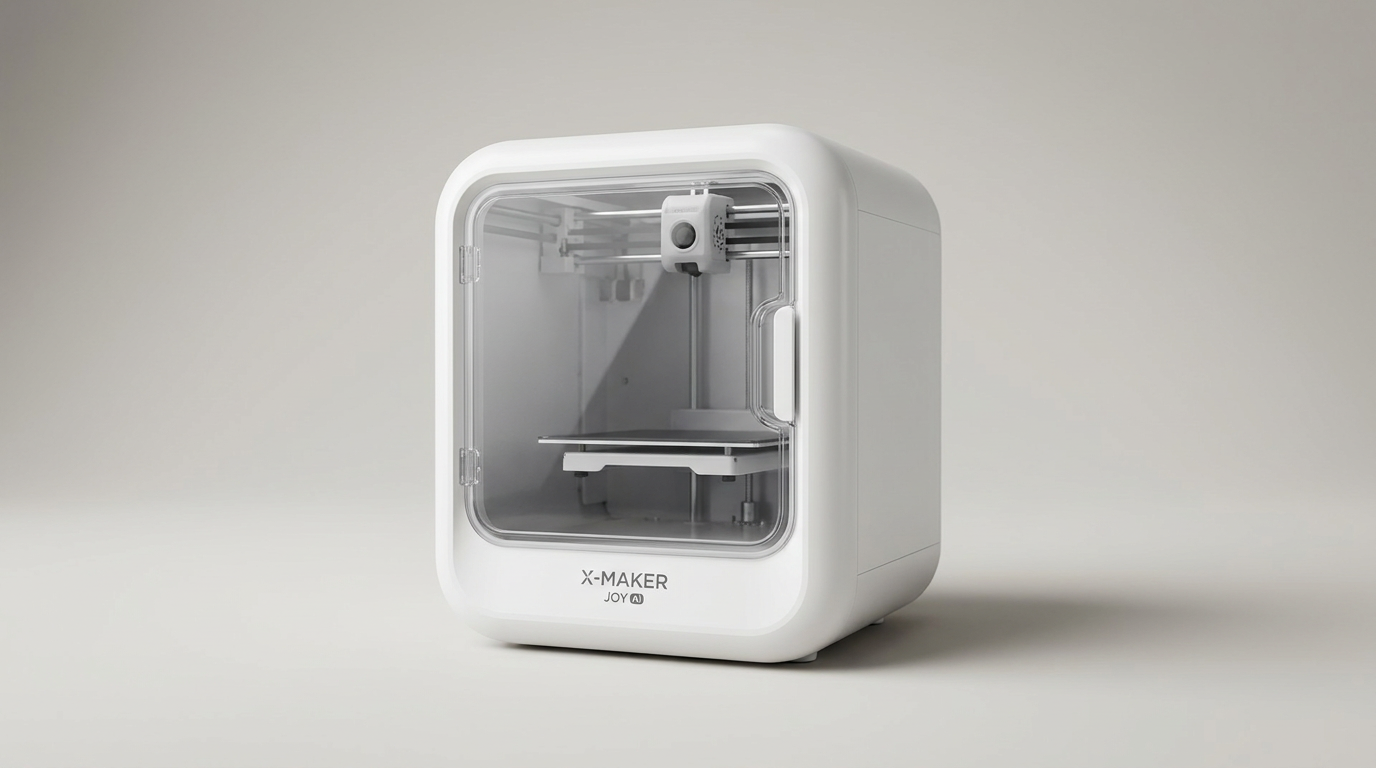
Consumer 3D printing has long suffered from what might be called the calibration tax: the steep penalty of manual leveling, slicing software quirks, and mechanical fiddling required before producing a single usable plastic part. For children, that tax usually turns an educational gift into closet clutter within a week. The AOSEED AI 3D Printer approaches the problem from the opposite direction, treating additive manufacturing not as an engineering apprenticeship, but as a household appliance.
Marketed directly to families, the AOSEED machine packages an enclosed chassis, factory-calibrated build plate, and an app-driven ecosystem designed around tap-to-print simplicity. The marketing leans heavily into novelty features like artificial intelligence avatar generation and voice prompting, yet the machine's real value lies in how quietly it removes friction from the physical printing process.
What emerges from real-world use is an unexpected dynamic we call the parent-hijack factor. While pitched as a child-centric toy factory, the unit's reliable out-of-the-box operation and surprisingly capable tolerances frequently turn it into a shared household tool. It is not an industrial powerhouse, but it represents a smart recalculation of what an entry-level printer ought to deliver.
What owners love
- + Fully enclosed chassis shields hot components and moving parts
- + Zero bed-leveling requirement allows immediate printing out of the box
- + Generous starter package includes eight PLA filament spools and tools
- + Integrated chamber camera enables live monitoring and time-lapse capture
- + Companion app makes model selection straightforward for young children
Common complaints
- − Filament feeding mechanism can be finicky during manual color changes
- − Strictly single-color extrusion per print run
- − App interface experiences intermittent lag and slow loading times
- − Compact build volume limits larger functional household prints
Design & Build
The AOSEED printer adopts a fully enclosed, appliance-like aesthetic rather than the exposed aluminum extrusion frame typical of hobbyist budget machines. Transparent side panels provide 360-degree visibility while keeping curious fingers away from the hotend and motion system. This design choice carries tangible practical weight in a home setting: it traps stray fumes, muffles stepper motor noise, and maintains ambient temperature control across the build area. The footprint is remarkably small, sitting comfortably on a standard homework desk or kitchen counter without dominating the room. Inside, the platform uses a flexible magnetic plate that simplifies model removal, eliminating the need for sharp scrapers that pose an obvious hazard to younger operators. Build materials feel rigid and purpose-built, trading modular upgradeability for structural durability.
Setup & Ease of Use
Setup represents the strongest pillar of the AOSEED experience. Most entry-level machines require half an hour of bolt tightening and tedious paper-sliding bed calibration. AOSEED bypasses this entirely with an automated, factory-leveled platform that owners report running within minutes of unboxing. Operating the machine relies on the companion mobile and tablet app, which serves as a curated control center. Children as young as seven navigate the interface independently, selecting items and launching prints with minimal adult intervention. The primary physical hurdle occurs during filament changes. The spring-loaded manual feed mechanism can require finesse; several owners note that filament occasionally catches or routes incorrectly if not pushed straight through the guide. This filament reload choke-point remains the one area where younger kids still depend on parent assistance.
Performance in Real Use
Print execution is fast and remarkably consistent for a machine in this class. While peak speed ratings reach 400 mm/s, everyday output reliably completes small fidget toys, figurines, and household brackets in 20 to 45 minutes. That speed curve is critical for maintaining a child's attention span between ideation and physical reward. Output quality consistently exceeds expectations for a youth-branded device, producing clean layer lines, crisp text embossing on custom signs, and strong overhangs on articulated dragon models. Print failures are low, aided by automatic runout detection that pauses the cycle if a spool runs dry. Potential buyers should note that the extruder is strictly single-color; multi-tone creations require printing individual components separately and snapping or gluing them together.
Software & Ecosystem
AOSEED structures its software as a walled garden onramp, packaging over 12,000 ready-to-print models alongside basic generative creation tools. Features like photo-to-cartoon conversion and custom avatar generation give younger users a sense of authorship without requiring them to master complex CAD environments. That said, the ecosystem does not trap intermediate users. The software accepts standard STL files imported from third-party repositories and modeling platforms like Tinkercad, allowing the machine to grow with the user's technical skills. The software is not entirely flawless: users report occasional sluggishness within the app, intermittent cloud connectivity pauses, and a user interface that can feel cluttered on smaller smartphone screens compared to an iPad.
Value & Reliability
Occupying the $300 to $350 range, the AOSEED AI printer demands a higher initial investment than barebones open-frame starter kits. However, the out-of-the-box bundle offsets the price difference by including eight rolls of PLA filament, maintenance tools, and stickers. Replacement filament costs remain reasonable because the machine accepts standard, widely available PLA spools rather than expensive proprietary cartridges. Long-term reliability feedback points to stable mechanical parts and durable print bed adhesion. The built-in monitoring camera adds substantial ownership value, providing remote job verification on a phone while generating downloadable time-lapse recordings of finished builds without third-party add-ons.
Verdict
Buy - The most accessible, low-friction gateway into 3D printing for families and beginners.
FAQ
More 3D Printers reviews
Bambu Lab AMS lite Review: The Multi-Color Upgrade Dilemma
Anycubic Kobra S1 ACE 2 Pro Combo Review: Enclosed Multicolor Value
FLASHFORGE AD5M Pro Review: High Speed Enclosure on a Budget
FLASHFORGE Creator 5 Pro Review: Multi-Toolhead Utility
QIDI Q2 3D Printer Review: High-Temp Power at a Consumer Price
Flashforge Adventurer 5M Smooth PC Plate Review
This review is based on real experiences shared by owners in online communities.