
AESUB Blue 3D Scanning Spray Review: Essential Tool for Difficult Surfaces
This review is based on real experiences shared by owners in online communities.
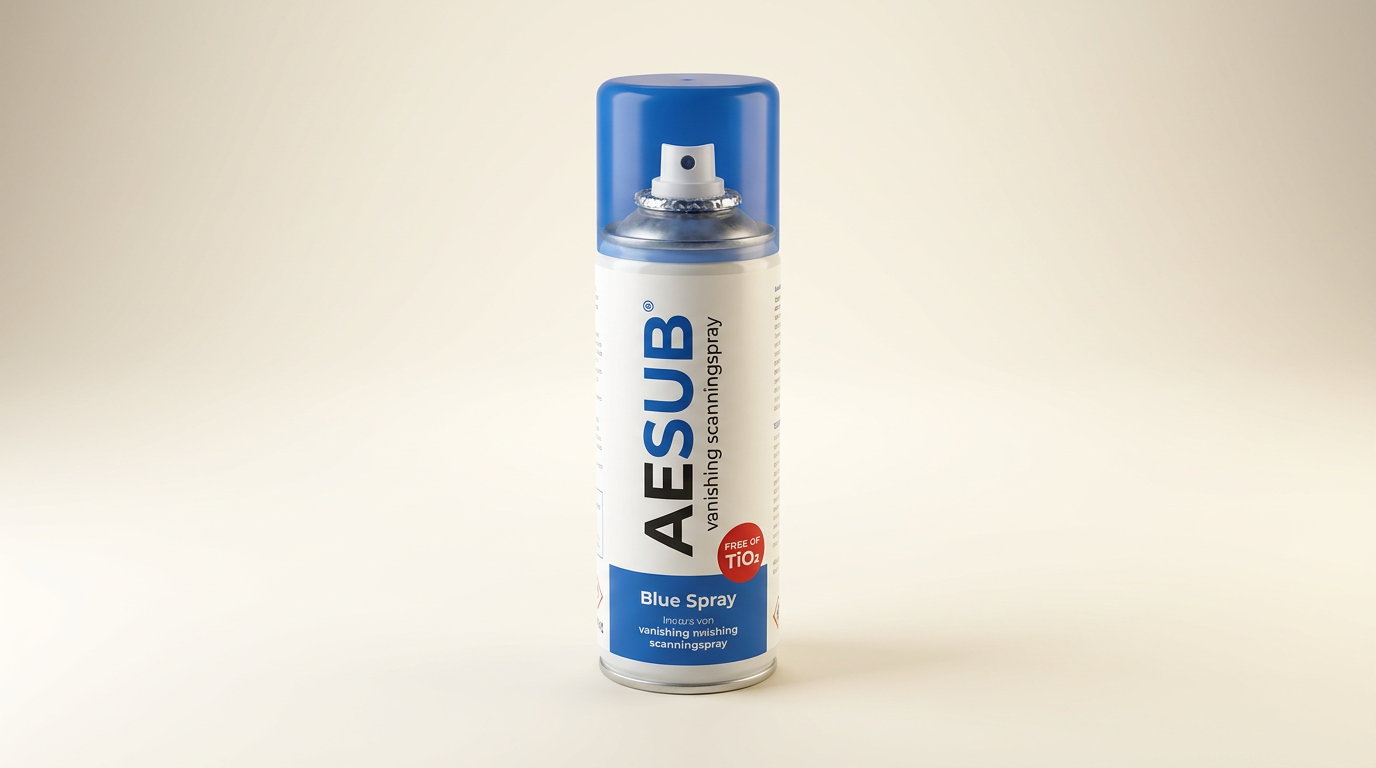
In the specialized world of 3D scanning, a silent workflow inefficiency often plagues even advanced setups: the scanner's inability to register details on reflective, transparent, or dark surfaces. This is not a scanner limitation as much as a fundamental physics challenge, and it creates a significant 'scan-ability gap' that forces users into time-consuming software patching or compromised data. The AESUB Blue scanning spray directly addresses this challenge, promising to transform problematic objects into scan-ready assets with a temporary, matte white coating. For many, its function is not merely supplemental but foundational to unlocking a scanner's full potential.
While the concept of a temporary coating for 3D scanning is not new, AESUB Blue differentiates itself with its evaporative formula. This 'self-cleaning' property aims to eliminate post-scan cleanup, a common pain point with traditional scanning sprays. The product positions itself not just as a solution for difficult surfaces, but as a workflow accelerator, reducing the overhead associated with preparing and finishing scanning tasks. This commitment to efficiency is central to its appeal among professionals and hobbyists alike.
Our examination distills the experiences of owners who have integrated AESUB Blue into their scanning workflows, evaluating whether its performance lives up to its promise of seamless, high-quality data capture without residual hassle. The insights gathered reflect its role as a specialized but often indispensable accessory in the modern 3D scanning toolkit.
What owners love
- + Reliably creates scan-ready matte white surface on challenging objects
- + Evaporates completely within hours, eliminating post-scan cleanup
- + Effective on reflective, transparent, and dark materials
- + Thin coating maintains dimensional accuracy for fine details
- + Boosts scanning efficiency and reduces software patch-up work
Common complaints
- − Strong odor requires adequate ventilation during application
- − Higher cost compared to non-evaporative scanning sprays
- − Application technique needs practice for even coating
- − Less effective on extremely slick surfaces without preparation
- − Working time before evaporation can be limiting for complex setups
Design & Build
The AESUB Blue spray comes in a standard aerosol can format, familiar to anyone who has used spray paints or lubricants. Owners consistently report the can and nozzle design are functional, though some note the nozzle delivers a robust, almost 'turbo' stream. This can make precise, light applications challenging for new users, often leading to uneven initial coats. The product's fundamental design objective is its evaporative nature; it contains no pigments, distinguishing it from traditional coatings. This design choice underpins its core value proposition: leaving no residue. The formulation's primary innovation is in its ability to sublimate, transitioning directly from solid to gas, which is the mechanism behind its self-cleaning claim. While the aerosol delivery system is conventional, the contained chemistry represents a focused engineering effort to solve a specific industry problem without introducing new material challenges.
Setup & Ease of Use
Using AESUB Blue involves a straightforward spray application, yet achieving optimal results requires technique. Owners advise applying from a distance of 15-20 cm with even, sweeping motions to avoid over-coating. A common learning curve involves understanding that 'a little goes a long way,' with many initially applying too much. The product’s evaporative nature means a visible dry time is necessary to assess coverage. A recurring theme in feedback highlights the importance of adequate ventilation, as the spray emits a strong, distinct odor. While the instructions are simple, the practical execution demands a degree of finesse to ensure a uniform, thin layer. This 'skill ceiling' for application is a subtle barrier to entry, but not an insurmountable one; practice quickly yields proficiency.
Performance in Real Use
In day-to-day scanning, AESUB Blue largely delivers on its promise. Owners confirm its effectiveness on typically problematic surfaces such as black, transparent, or highly reflective materials. The spray creates a fine, matte white layer that scanners easily track, significantly reducing 'holes' or data dropout. This dramatically improves scan fidelity and reduces the need for extensive post-processing in software. The most celebrated feature is its complete sublimation within a few hours, leaving no residue behind. This self-cleaning aspect is repeatedly highlighted as a major time-saver, particularly for delicate parts or complex assemblies where manual cleaning would be impractical or risky. Some users note that extremely slick surfaces might require multiple light coats or minor preparation, as the initial bond can be less robust, leading to faster local evaporation. This implies a subtle 'surface adherence tax' for certain material types, requiring minor adjustment to application strategy.
Software & Ecosystem
AESUB Blue functions as a preparatory tool for the physical object, rather than integrating with software directly. Its primary impact on the 3D scanning ecosystem is indirect, enhancing the quality of data fed into existing scanning and modeling software. By providing cleaner, more complete scan data, it reduces the workload for downstream applications like meshing, patching, and surfacing. This product effectively addresses a hardware-level limitation (scanner's optical perception) that, if unaddressed, would manifest as significant software-level post-processing. Its widespread use among professionals, often paired with high-end scanners, indicates its status as a de-facto 'pre-processing standard' for challenging geometry, demonstrating its deep functional integration into the broader workflow despite lacking digital connectivity.
Value & Reliability
The consistent performance of AESUB Blue in enabling successful scans on difficult surfaces is a testament to its reliability. Users frequently describe it as the 'gold standard' in scanning sprays, noting that its performance surpasses other brands in consistency and residue-free evaporation. However, its value proposition is tempered by its price point, which is typically in the around $40 range for a 400ml can. Some owners acknowledge the cost but deem it justified by the time savings and improved scan quality, preventing costly re-scans or extensive manual data repair. For others, particularly those with less frequent or critical needs, the cost is a deterrent, prompting searches for cheaper alternatives that might involve more cleanup. This highlights a 'cost-of-convenience' calculation that buyers must make, weighing direct material cost against labor savings and data integrity.
Verdict
Buy - AESUB Blue consistently delivers on its promise of enabling high-quality 3D scans on challenging surfaces with a convenient, self-evaporating formula.
This product is ideal for professional 3D scanning technicians, engineers, and serious hobbyists who frequently encounter reflective, transparent, or dark objects. If your workflow demands high-fidelity scans and you value time savings on post-processing and cleanup, the approximately $40 cost is a sound investment. Those on a very tight budget or with only occasional, non-critical scanning needs might find cheaper, non-evaporating alternatives more suitable, provided they are willing to undertake manual cleanup.
AESUB Blue represents a crucial bridge in the 3D scanning process, silently solving a core physical limitation of optical sensors. It embodies the principle of 'invisible infrastructure' - a product so effective at its job that its presence is only truly noted when absent. This spray doesn't just improve scans; it redefines the practical limits of what can be scanned, making previously impossible or impractical projects feasible.
FAQ
More 3D Scanners reviews
Revopoint INSPIRE 2 3D Scanner Review: Unpacking the Accessory Echo Chamber
Creality 6mm 3D Scanning Markers Review: Essential Tracking Aid
TOSUKKI 6mm Positioning Targets Review: The Refined Generic Choice
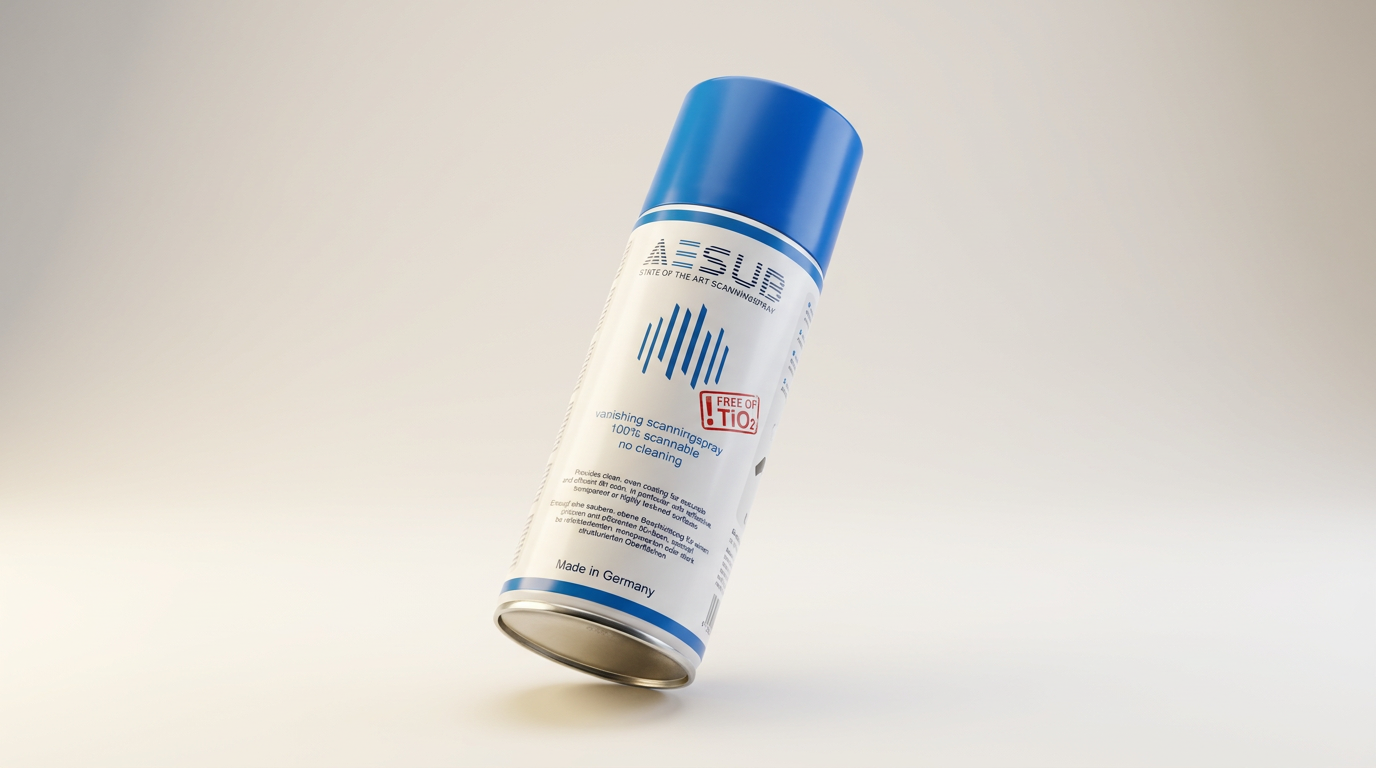
AESUB 3DTOOLS 3D Scanner Spray Review: The 'Evaporative Enabler'
Creality 8-inch Rotating Turntable: A Solid Scanner Accessory
Generic 12 Piece Multi-Angle Markers Review: Essential 3D Scanning Dots
This review is based on real experiences shared by owners in online communities.