
3DMakerpro Seal Lite Review: Precision on a Budget for Small Scans
This review is based on real experiences shared by owners in online communities.
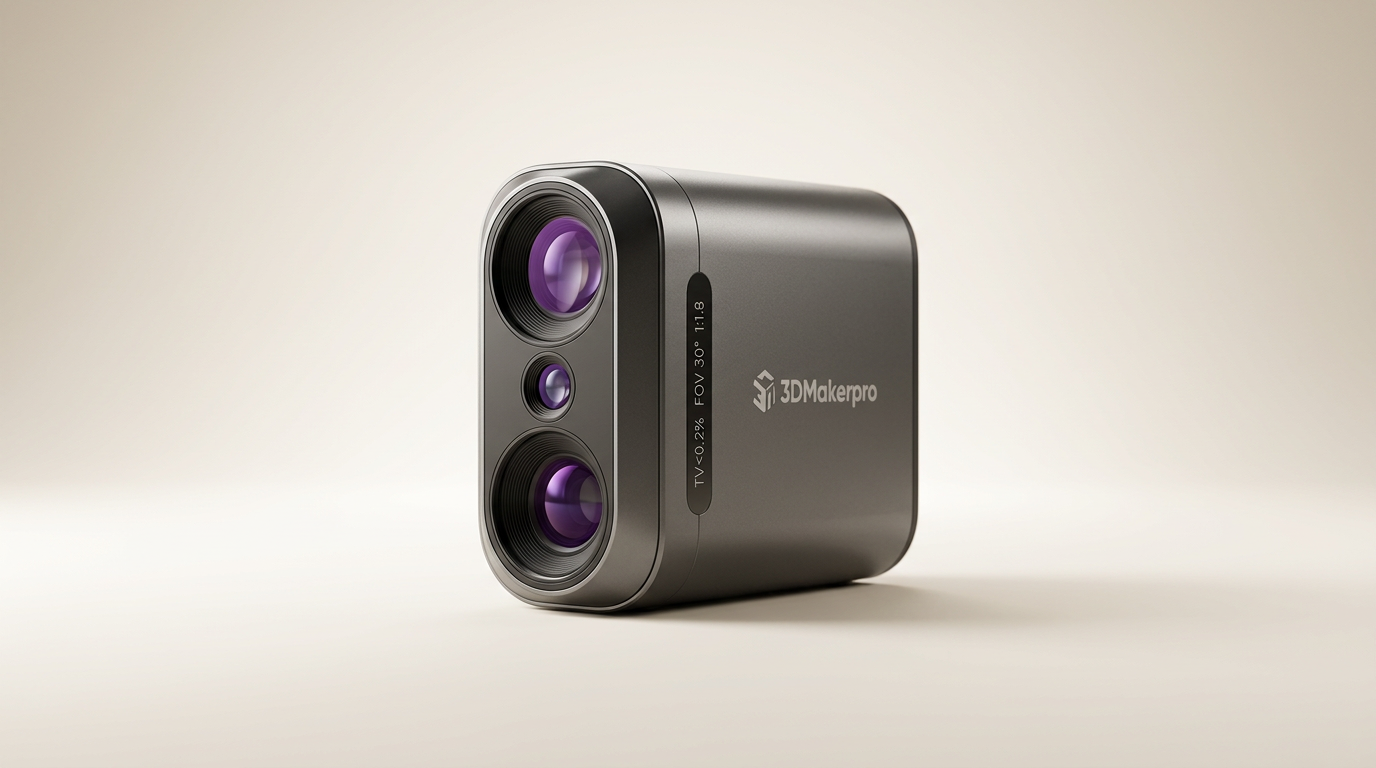
The consumer 3D scanning market often presents a false binary: either exorbitant professional tools or frustrating, imprecise budget devices. The 3DMakerpro Seal Lite challenges this by positioning itself as a capable, high-accuracy scanner for specific use cases, priced to attract serious hobbyists and small workshop owners. While it promises precision, its true value lies in how it navigates the inherent complexities of 3D scanning, carving out a niche where patience and a powerful computer unlock considerable potential.
Most buyers approach 3D scanners with the expectation of a 'point-and-shoot' experience. The Seal Lite, however, operates under what we term the 'Skill-Power Nexus'-a fundamental requirement for optimal results that pairs operator proficiency with robust computational hardware. This isn't a casual peripheral; it is a tool that requires investment not just in its purchase, but in mastering its workflow and ensuring your system can keep pace with its data demands. Understanding this nexus is crucial to assessing its fit within your creative or engineering pipeline.
This device isn't designed for broad, general-purpose scanning. Its blue LED technology and small-format focus define its operational envelope, making it a specialist rather than a generalist. For those whose projects align with its strengths and who are prepared for the learning curve, the Seal Lite offers a compelling entry point into detailed 3D capture without the typical financial barrier of professional-grade equipment.
What owners love
- + Delivers high accuracy (0.02mm reported) for capturing fine details on small objects.
- + Compact and lightweight design enhances portability and ease of handling.
- + Software is generally considered user-friendly and straightforward for basic operation.
- + Produces clean point clouds and robust meshes, suitable for hobby CAD and 3D printing.
- + Strong value proposition for its accuracy at an accessible price point.
Common complaints
- − Requires a high-powered computer for smooth operation; lower-end PCs experience performance issues.
- − Significant learning curve demands user patience and practice for consistent, quality results.
- − Struggles with scanning black, reflective, or very small objects, limiting versatility.
- − Documentation is often insufficient, forcing users to self-discover optimal scanning techniques.
- − Lacks an included turntable, which many owners find essential for easier scanning.
Design & Build
The 3DMakerpro Seal Lite features a compact and lightweight design, which owners frequently highlight as beneficial for handling and portability. Constructed primarily from plastic, its build quality is functional, consistent with its price point. The small form factor makes it easy to maneuver around objects, an advantage for detailed scans. The blue LED light source is a core component, praised by owners for its effectiveness in projecting structured light to achieve its claimed 0.02mm accuracy. This specific light wavelength is instrumental in capturing the minute surface details on small objects, which aligns with its primary use case.
Setup & Ease of Use
Initial setup of the Seal Lite generally proceeds without major hurdles, with owners reporting a relatively smooth process for software installation and device recognition. However, its ease of use quickly encounters the 'Learning Curve Cliff.' While the physical device is simple to hold, achieving consistently high-quality scans demands considerable practice and an understanding of 3D scanning principles. Owners frequently report frustration with documentation that lacks crucial details on optimal object positioning, lighting, and scanning technique. This necessitates a trial-and-error approach, converting a seemingly 'beginner-friendly' tool into one that requires a self-taught, expert approach to master. The absence of an included turntable is a notable omission here, as many users find it essential for simplifying the scanning process and achieving better results.
Performance in Real Use
When operated correctly, the Seal Lite demonstrates impressive performance for its target applications. Owners consistently report that it produces clean point clouds and accurate meshes, suitable for hobby CAD, miniatures, and 3D printing. Its strength lies in scanning small to medium-sized objects (10-300mm), where its 0.02mm accuracy comes into play, capturing fine surface details effectively. However, this performance is highly contingent on ideal conditions. The device struggles significantly with objects that are black, highly reflective, or exceptionally small, a common limitation for structured light scanners. The requirement for tethering to a high-powered computer is not merely a recommendation but a necessity; users with less powerful machines experience sluggishness and performance issues. This forms a hidden cost, as the scanner's true operational cost includes robust PC hardware.
Software & Ecosystem
The accompanying JMStudio software is described as generally user-friendly, offering features like visual tracking, error correction, and auto-alignment. It supports standard export formats (OBJ, STL, PLY, ASC), making it compatible with various 3D printing and CAD workflows. Owners appreciate the free software updates, indicating ongoing support. However, the software's performance is intrinsically linked to the host computer's power. Scan processing, especially for complex models, can be very demanding, leading to slow operations on under-spec'd machines. While the interface is approachable for basic tasks, the advanced options and optimization techniques are often poorly documented, contributing to the overall learning curve. The ecosystem also includes optional accessories like a turntable and Smart Grip, which are almost universally recommended by experienced users to enhance scanning stability and ease.
Value & Reliability
Priced in the mid-hundreds, the 3DMakerpro Seal Lite offers a compelling value proposition for its stated accuracy. For users willing to invest the time in mastering its operation and possessing suitable computing hardware, it delivers precision typically found in significantly more expensive devices. The consistent ability to produce usable, accurate scans for specific applications makes it a 'strong value for makers stepping up their game,' as one owner notes. Reliability is tied closely to user skill and system compatibility; when these factors align, the scanner performs consistently. The primary reliability concern stems not from device malfunction, but from the high demands it places on the user and their computing environment, leading to frustration and perceived 'failure' if expectations are not managed properly based on the 'Skill-Power Nexus' principle.
Verdict
Consider - This scanner delivers remarkable precision for small objects, but only to those who invest in a powerful computer and master its significant learning curve.
The 3DMakerpro Seal Lite is a strong candidate for hobbyists, educators, or small businesses focused on precise scanning of small to medium-sized objects, particularly for reverse engineering, rapid prototyping, or miniature design. If you have a robust gaming or workstation-class PC and are prepared to dedicate time to learning and practice, its sub-millimeter accuracy and accessible price point represent significant value. Those needing a scanner for black, highly reflective, or extremely tiny objects, or who lack a powerful computer and patience for a steep learning curve, should look elsewhere. It is not a casual plug-and-play device.
Ultimately, the Seal Lite exemplifies the 'precision on probation' model within consumer 3D scanning. It dangles the promise of high-resolution capture, but demands significant user commitment to unlock. Its success isn't about its inherent specifications, but about how well a buyer aligns with its unstated requirements: a powerful rig, a patient mind, and a specific use case that respects its limitations. It pushes the boundaries of affordability for accuracy, but makes no apologies for the effort required to wield it effectively.
FAQ
More 3D Scanners reviews
Revopoint INSPIRE 2 3D Scanner Review: Unpacking the Accessory Echo Chamber
Creality 6mm 3D Scanning Markers Review: Essential Tracking Aid
TOSUKKI 6mm Positioning Targets Review: The Refined Generic Choice

AESUB 3DTOOLS 3D Scanner Spray Review: The 'Evaporative Enabler'
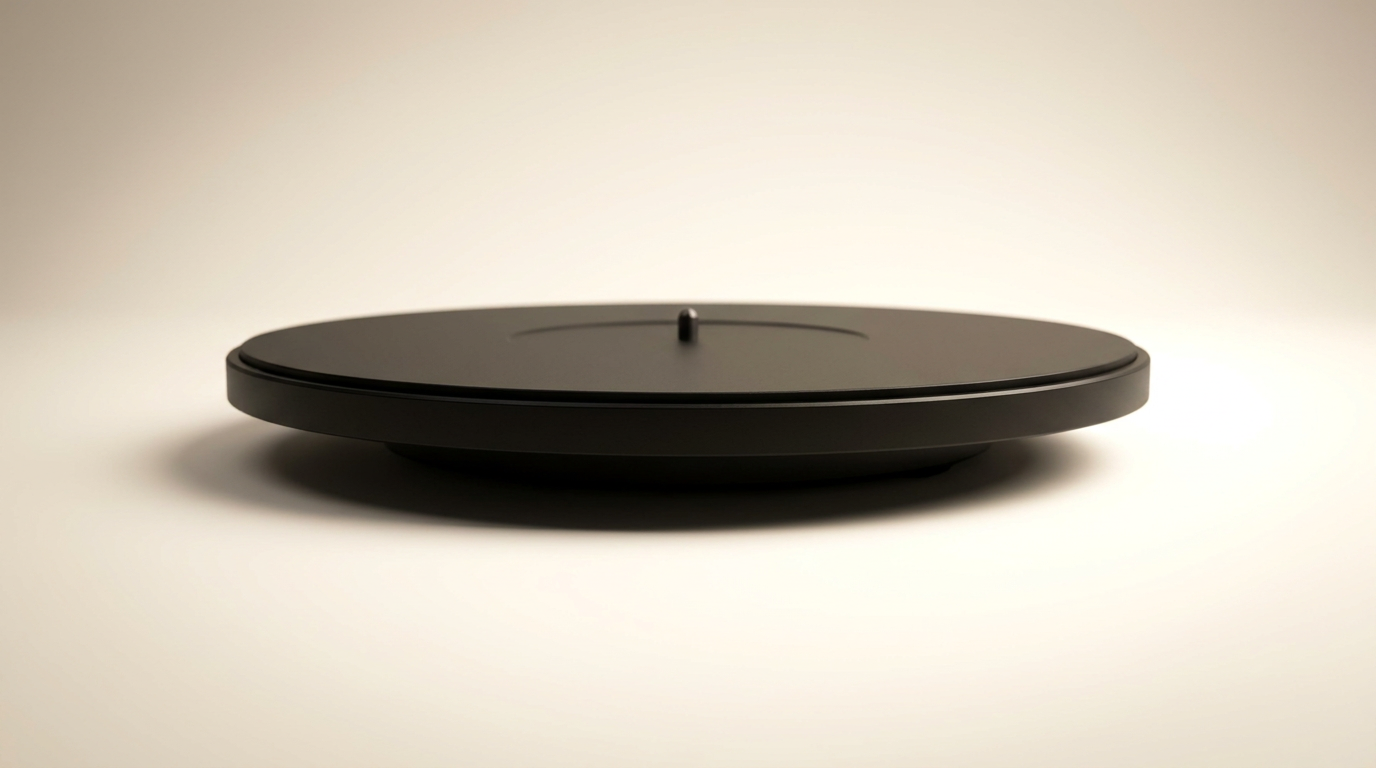
Creality 8-inch Rotating Turntable: A Solid Scanner Accessory

Generic 12 Piece Multi-Angle Markers Review: Essential 3D Scanning Dots
This review is based on real experiences shared by owners in online communities.