
3D Central DNA Double Helix: A Desk Ornament with a Scale Problem
This review is based on real experiences shared by owners in online communities.
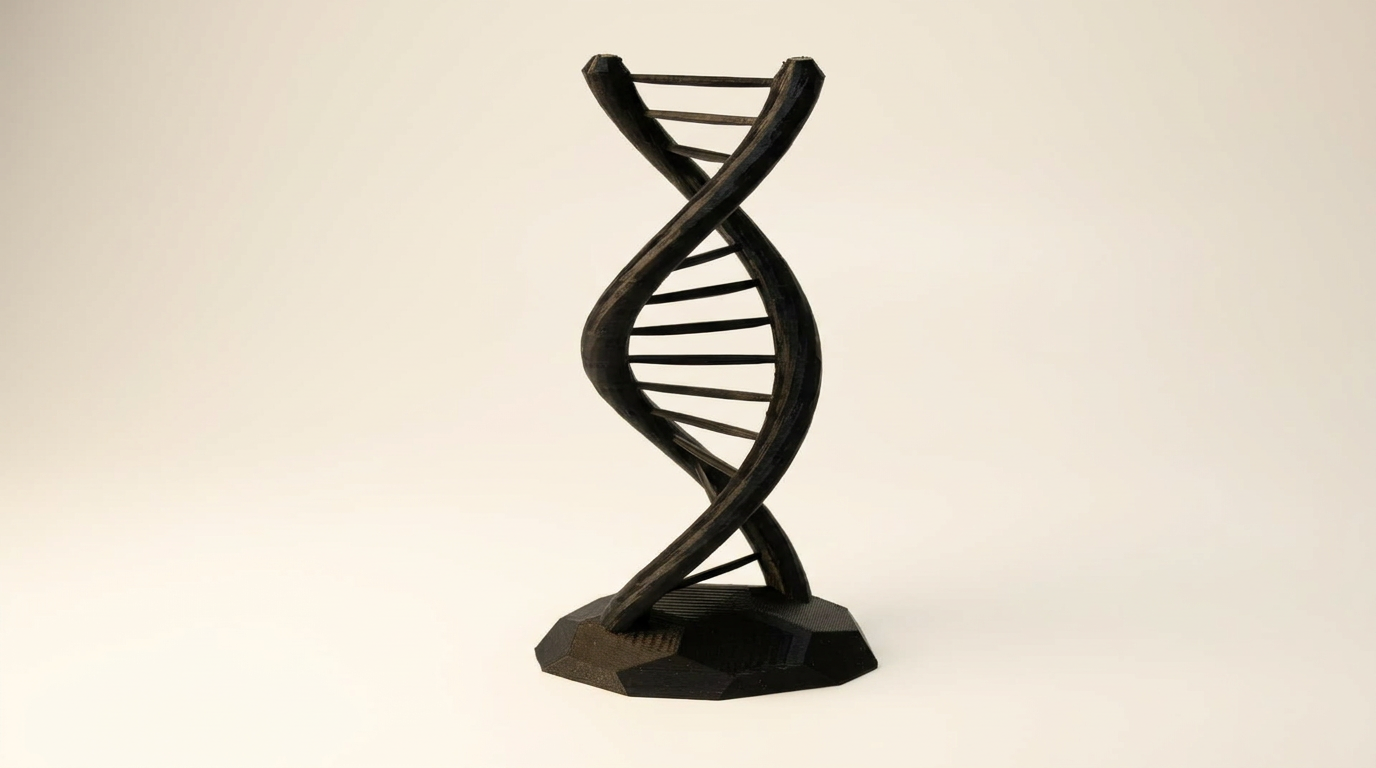
The 3D-printed DNA Double Helix from 3D Central enters a niche market of decorative science pieces, often purchased as gifts for professionals in genetics or biology. However, its primary challenge, and indeed its defining characteristic, is not its scientific accuracy or material quality, but its scale. The product consistently battles what can be termed the 'expectation-reality gap,' where marketing imagery often leads to a mental model of an object far grander than its actual dimensions.
This discrepancy between perceived and actual size becomes the central axis around which most owner feedback revolves. While the product accurately adheres to its stated measurements, the visual representation often fails to convey the physical presence of a five-inch item, particularly one intended as a desk accent. This creates a recurring friction point, transforming what should be a straightforward purchase into a negotiation of perceived value.
Understanding this 'scale surprise' is crucial for potential buyers. It's not merely a matter of checking dimensions, but recognizing how a small, lightweight 3D-printed object translates from a digital image to a physical space, influencing both aesthetic impact and perceived material quality.
What owners love
- + Design accurately represents a DNA double helix structure
- + Appreciated as a thematic gift for science enthusiasts
- + Stated dimensions are accurate to the physical product
- + Some owners find it suitable for desk display
- + Made from durable PLA plastic
Common complaints
- − Significantly smaller than many buyers expect
- − Perceived as expensive relative to its size and material
- − Fragile connections susceptible to damage during shipping
- − Material often feels cheap to the touch
- − Packaging frequently insufficient to prevent transit breakage
Design & Build
The 3D Central DNA Double Helix is a faithful recreation of the molecular structure, printed in black PLA plastic. Owners consistently report that the design itself is accurate and visually appealing, living up to the 'double helixy goodness' advertised. However, the compact size, approximately five inches tall, is a recurring point of contention. While the dimensions are stated, many buyers report surprise at the object's small physical footprint upon arrival. This highlights a common issue in online purchasing: the difficulty of intuiting scale from static images. The product exhibits the inherent characteristics of FDM 3D printing; while durable enough for static display, the fine strands and connections forming the helix are inherently delicate, creating what could be called the 'filament fragility' factor, which plays into durability concerns.
Setup & Ease of Use
As a purely decorative item, setup is non-existent. The DNA model arrives ready for display. Owners describe it as a straightforward piece intended for placement on a desk or shelf. There are no moving parts, electronics, or complex assembly required. The primary 'ease of use' challenge arises from its transit. Many reports indicate that despite its simple nature, the item is prone to damage during shipping due to inadequate packaging. This means the immediate 'use' experience for a notable percentage of buyers involves discovering a broken product, necessitating returns or repairs. This indicates a disconnect between product fragility and packaging robustness, creating an unnecessary barrier to a positive first impression.
Performance in Real Use
Once placed, the 3D Central DNA Double Helix serves its intended purpose as a static decorative item. It functions as a conversation starter or a thematic accessory for a science-themed space. Users who appreciate its small scale and thematic relevance report satisfaction. For instance, owners purchasing it for a spouse working in genetics find it suitable for a desk ornament. However, the 'performance' is largely dictated by whether the initial size expectation is met. Those expecting a more substantial, heavier item are often disappointed by its lightweight plastic feel, perceiving it as 'cheap.' Its small scale also means it functions more as an intimate desk trinket rather than a prominent display piece, a distinction that isn't always clear from product imagery alone.
Software & Ecosystem
This product operates entirely outside the realm of software or connected ecosystems. It is a standalone physical object without any digital components, companion apps, or firmware. Its value proposition is solely in its physical form and symbolic representation. Consequently, there are no software updates, compatibility issues, or ecosystem lock-ins to consider. The absence of these elements simplifies the ownership experience but also means the product cannot evolve or offer additional utility beyond its initial physical presence. This underscores its classification as a decorative item, where its 'performance' is purely aesthetic and structural.
Value & Reliability
The value proposition of the 3D Central DNA Double Helix is a major point of contention. Priced at under $20, many owners find this too expensive for a five-inch 3D-printed plastic item, particularly given its perceived 'cheap' feel. Recurring complaints suggest buyers would expect to pay under $5 for a product of this size and material. This indicates a significant 'pricing perception gap,' where the manufacturing cost of a 3D-printed item does not always align with consumer expectations for a finished good of similar dimensions. Reliability is also a concern, primarily due to fragility during shipping. Numerous reports of items arriving broken, often attributed to minimal packaging, suggest a vulnerability that impacts the product's overall integrity and user satisfaction from the outset. This lack of robust packaging incurs a 'shipping damage tax' on the product's perceived reliability.
Verdict
Hold Off - The inconsistent value and high risk of shipping damage make this purchase unreliable.
This item is best suited for a very specific type of buyer: someone who precisely understands the five-inch scale, explicitly desires a lightweight PLA plastic ornament, and prioritizes thematic representation over material heft or perceived value. It might also suit those willing to potentially repair transit damage. If the idea is to provide a small, symbolic gesture for a science enthusiast, and the budget is under $20, it could fit.
Conversely, those seeking a substantial desk accessory, a weighty paperweight, or a high-end decorative item should skip this product. Buyers expecting a larger presence, a more premium feel, or who are sensitive to paying around $15 for a small plastic item will likely be disappointed.
The 3D Central DNA Double Helix serves as a stark illustration of the 'digital-to-physical scale illusion' in e-commerce. Despite accurate specifications, the common buyer's mental model consistently overestimates its physical presence, leading to disappointment that transcends mere dimension-checking. It quietly highlights the hidden cost of inadequate packaging on fragile 3D-printed items, making what should be a simple gift a gamble in transit.
FAQ
More 3D Printers reviews
ELEGOO Centauri Carbon 2 Combo Review: Bridging the Speed Gap
Creality Ender 3 V3 SE Review: A Gateway to 3D Printing
Creality Ender 5 Max Review: A High-Volume CoreXY for Production
MakerHawk Optical Endstops: Non-Contact Precision for 3D Printers
ELEGOO Saturn 4 Ultra 16K Review: The Silent Contender
Odilona 3D Printer Filament Storage Bags Review: A Gamble on Quality
This review is based on real experiences shared by owners in online communities.