
TOSUKKI 6mm Positioning Targets Review: The Refined Generic Choice
This review is based on real experiences shared by owners in online communities.
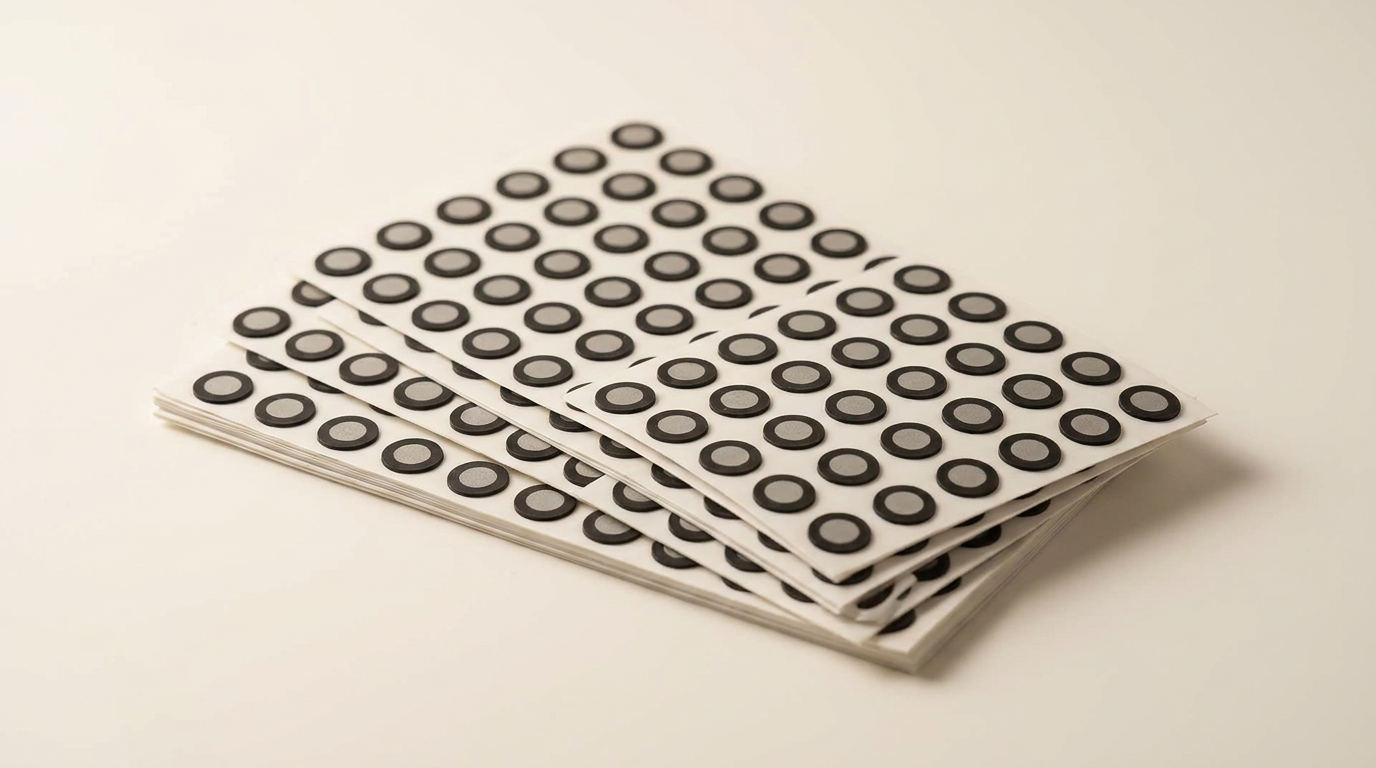
The 3D scanning ecosystem often presents a hidden cost in consumables, particularly positioning targets. While scanner manufacturers frequently bundle proprietary markers, the TOSUKKI 6mm Positioning Targets represent a significant push-back against this proprietary premium, offering a direct alternative. These adhesive, reflective dots are designed for broad compatibility, touting support for major brands from Creaform and ZEISS to Revopoint and Shining 3D. The core proposition is simple: deliver functional, cost-effective reference points without the brand tax.
However, the market for 3D scanning targets is not as commodified as it appears. Subtle differences in reflectivity, adhesive quality, and manufacturing consistency can profoundly impact scan reliability and user workflow. This review examines whether the TOSUKKI targets successfully navigate the tight tolerances demanded by high-precision scanning, or if their affordability introduces hidden compromises that outweigh the initial savings. Owners consistently praise their value proposition, but recurring issues suggest a nuanced assessment is required to identify their ideal user.
Our analysis reveals these targets occupy a specific niche, best understood through the lens of the "Value Tier Paradox": where a lower upfront cost can either unlock broader accessibility or introduce workflow frictions that erode efficiency over time. Understanding this dynamic is crucial for buyers evaluating whether the TOSUKKI targets are a true long-term saving or a false economy.
What owners love
- + Significantly more affordable than proprietary branded targets.
- + Works effectively with a wide range of professional 3D scanners.
- + Reflectivity is often comparable to or better than premium options.
- + Supplied on flat sheets, preventing curling issues seen with rolls.
- + Adhesive quality is sufficient for many common applications.
Common complaints
- − Inconsistent adhesive quality on some batches, leading to detachment.
- − Difficulty removing targets cleanly from backing in certain cases.
- − Reflectivity issues reported with specific scanner models.
- − Peeling issues where the plastic layer separates from the adhesive.
- − Some batches exhibit poor quality control in the cutting process.
Design & Build
The TOSUKKI 6mm Positioning Targets adhere to a standard design, featuring a reflective central circle with a black contour, optimized for optical tracking systems. Owners generally find the physical characteristics adequate, noting the reflective quality is often strong and the 6mm diameter is compatible with a broad range of scanners. A notable design choice, frequently cited as a positive, is the packaging on flat sheets rather than rolls. This avoids the common issue of targets curling, which can complicate application and potentially affect tracking stability. However, manufacturing consistency emerges as a key variable. Several users report issues with the target material separating from its adhesive backing, or the plastic layer detaching from the adhesive when removed from an object. This points to a "Last Mile Fragility" in production, where the final lamination or die-cutting steps exhibit variability, undermining an otherwise solid design concept.
Setup & Ease of Use
Applying these targets is generally straightforward, consistent with other adhesive markers. The flat sheet presentation streamlines the process compared to rolled alternatives, as users can quickly peel and place targets without battling curl. However, owner feedback highlights a recurring challenge: inconsistencies in the cutting process. Some batches feature targets that are difficult to cleanly remove from the backing sheet, requiring extra effort and potentially leading to wastage. A small percentage of targets are reported as unusable due to these removal issues. While many find the adhesive strength adequate for temporary placement, others note it can be weak on certain surfaces, necessitating supplemental solutions like magnets for reuse. The initial ease of application is occasionally compromised by these manufacturing inconsistencies, introducing an element of unpredictability into the workflow.
Performance in Real Use
When functioning as intended, the TOSUKKI targets perform commendably. Owners using scanners from Creaform, Revopoint, and Creality consistently report successful tracking and accurate data acquisition. Several long-term users specifically mention that these targets meet or exceed the performance of their scanner manufacturer's proprietary markers, particularly in terms of reflectivity. This indicates that for many setups, the core reflective properties are well within operational parameters. However, performance is not universal. A minority of users, particularly those with certain Revopoint and Einstar models, experience difficulties with targets not showing up reliably or losing tracking more frequently than with original markers. This suggests a "Reflectance Profile Mismatch" for some scanner-target combinations, where the specific light absorption and reflection characteristics of the TOSUKKI targets do not align optimally with the scanner's sensor array, leading to reduced robustness in scanning environments.
Software & Ecosystem
As passive reference points, these targets do not feature software or integrate into a digital ecosystem directly. Their compatibility is purely optical and mechanical. The manufacturer claims broad compatibility with numerous handheld and fixed 3D scanners, including those employing red/blue laser and white LED technologies. Owner reports largely corroborate this, with successful use across brands like Creaform, ZEISS, Shining 3D, Revopoint, and Creality. This wide compatibility is a significant advantage, freeing users from proprietary target dependencies. The utility of the TOSUKKI targets is derived from their ability to be recognized by diverse scanning software, relying on a standardized detection mechanism. Their primary ecosystem contribution is enabling cross-platform utility, allowing users to consolidate consumable purchases across different scanner brands rather than needing separate, often more expensive, brand-specific markers.
Value & Reliability
The primary appeal of TOSUKKI targets lies in their aggressive pricing, offering a substantial cost saving over branded alternatives. Many owners explicitly highlight this value proposition, noting that these targets deliver comparable performance at a fraction of the cost. The sheer volume provided 1200 per box further enhances this value, addressing the reality that 3D scanning often consumes targets rapidly. However, the reliability aspect presents a mixed picture. While many units perform flawlessly, a segment of users encounters batches with manufacturing defects, such as poor adhesive separation or targets detaching from their backing. This introduces an element of risk, where cost savings can be offset by increased waste or workflow interruptions. The value proposition is strong when consistency is present, but the recurring reports of quality control issues suggest a "Batch Lottery" for reliability, where the user's experience can vary significantly based on manufacturing consistency at the time of purchase.
Verdict
Buy - These targets offer substantial cost savings without significant performance compromises for most 3D scanning applications.
These TOSUKKI 6mm Positioning Targets are a strong recommendation for professional users and hobbyists who manage multiple 3D scanners or frequently consume large quantities of targets. They deliver reliable tracking performance for a wide array of systems, particularly from brands like Creaform and Creality, at a price point well under the premium alternatives. Buyers looking to reduce operational expenses on consumables will find significant benefit. However, those with highly sensitive Revopoint or Einstar scanners, or who prioritize absolute consistency above all else, might find the occasional manufacturing inconsistencies a deterrent. Consider the modest investment for a large quantity of targets; for many, it's a justifiable risk.
Ultimately, these targets reveal the "Consumable Horizon" of 3D scanning: as hardware becomes more accessible, the real friction shifts to the recurring cost and consistent quality of essential expendables. The TOSUKKI targets are not just cheaper dots; they represent a critical inflection point, challenging the entrenched economics of proprietary scanning ecosystems and democratizing access to professional-grade scanning by making its everyday operation more sustainable. They are a clear signal that the market for 3D scanning accessories is maturing beyond brand lock-in.
FAQ
More 3D Scanners reviews
Creality 6mm 3D Scanning Markers Review: Essential Tracking Aid

AESUB 3DTOOLS 3D Scanner Spray Review: The 'Evaporative Enabler'

Creality 8-inch Rotating Turntable: A Solid Scanner Accessory

Generic 12 Piece Multi-Angle Markers Review: Essential 3D Scanning Dots
3DMakerpro Moose Standard Review: High Detail for the Serious Hobbyist
EinScan SE V2 Review: Precision for Dedicated 3D Modelers
This review is based on real experiences shared by owners in online communities.