
SUNLU TPU 95A Filament Review: Fast, Flexible, and Forgiving
This review is based on real experiences shared by owners in online communities.
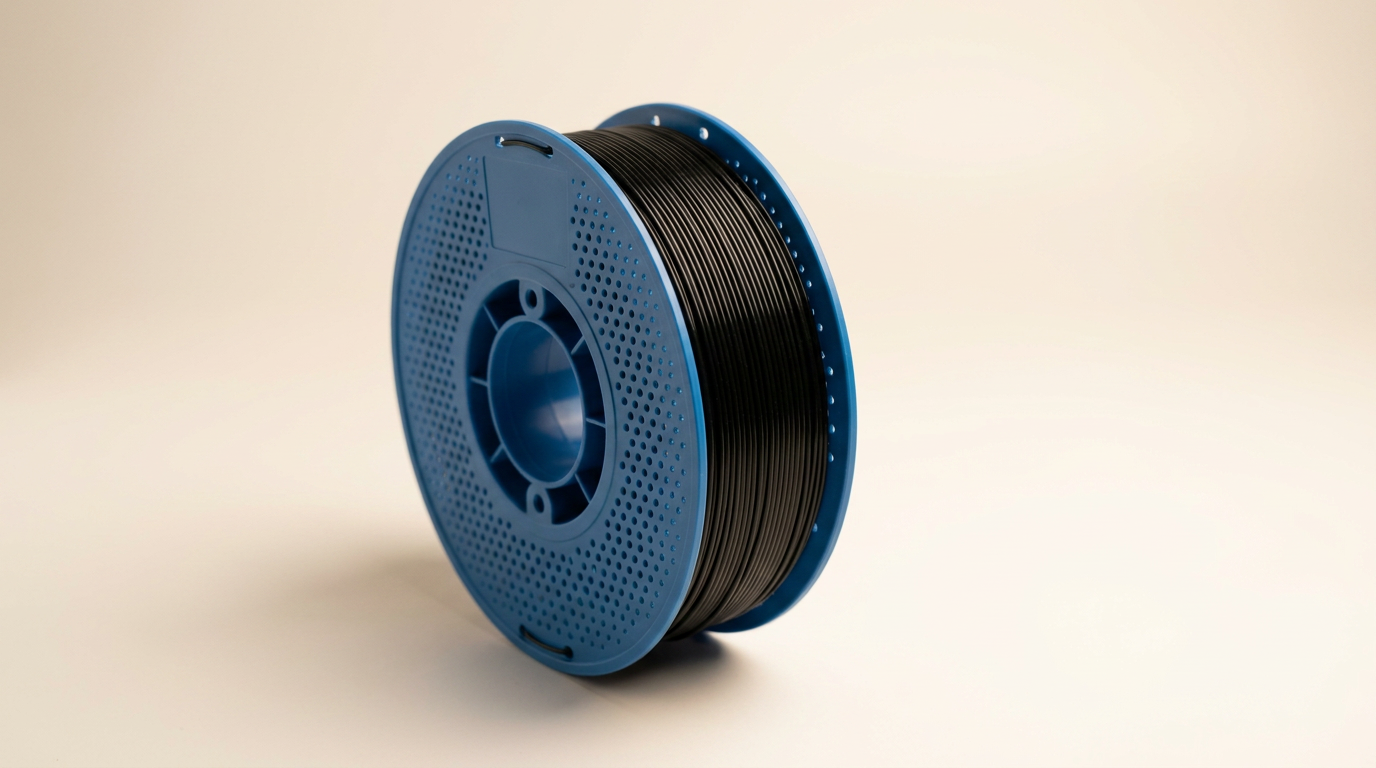
In a 3D printing landscape increasingly dominated by speed, flexible filaments often present a 'velocity tax': their inherent properties typically demand slower print speeds to achieve reliable results. This trade-off between flexibility and efficiency has long segmented the market, pushing users towards specialized equipment or patient workflows. The SUNLU 95A TPU filament challenges this notion, positioning itself as a flexible material designed for the fast-printing era.
This review examines whether the SUNLU 95A TPU truly lives up to its claim of high-speed printability without compromising the critical characteristics of flexible materials: elasticity, durability, and consistent output. We evaluate its performance through the lens of user experience, focusing on how it integrates into modern rapid-printing setups and its suitability for various functional applications. The goal is to determine if this filament offers a genuine step forward for flexible printing or if it merely repackages existing compromises.
What owners love
- + Prints consistently well, even at faster speeds on modern printers
- + Offers strong layer adhesion for durable, functional parts
- + Good balance of flexibility and firmness (95A Shore hardness)
- + Cost-effective compared to some premium brands
- + Relatively easy to print for a TPU, even for first-time users
- + Comes neatly wound and vacuum-sealed, indicating care in packaging
Common complaints
- − Requires thorough drying for optimal, string-free results
- − Can be difficult to remove from textured print beds when cold
- − Print appearance may be less glossy than anticipated by some
- − Some users report a 'vinyl' rather than 'rubber' feel to finished prints
Design & Build
The SUNLU 95A TPU filament exhibits a Shore hardness of 95A, which places it firmly in the category of robust yet flexible materials. Owners describe the material as offering good 'squish' without being overly soft, suitable for applications requiring both impact absorption and structural integrity. This specific durometer rating appears to strike a functional balance, allowing for items like gaskets, protective bumpers, and shoe heel caps. The filament is consistently noted for its neat winding on the spool, a small but significant detail that prevents tangles and feeding issues during long prints. The dimensional accuracy of +/- 0.03mm is an industry-standard claim, and user reports of consistent extrusion without clogging suggest it holds true in practice. This consistency contributes directly to the 'first-layer certainty' many users experience, where initial layers adhere reliably, reducing early print failures that often plague flexible filaments.
Setup & Ease of Use
Flexible filaments like TPU are notorious for presenting setup challenges, yet the SUNLU 95A TPU largely defies this reputation. Many users, including first-time TPU printers, report successful prints with minimal calibration, often using standard or slightly adjusted settings on a range of FDM printers, including Bambu Lab P1S/A1, Ender 3, Prusa MK3, and Flashforge models. This suggests a lower 'friction cost' to adoption than many other TPUs. A critical, recurring piece of advice, however, is the necessity of thoroughly drying the filament. While some achieve good results straight out of the vacuum-sealed package, drying consistently improves print quality, eliminating stringing and aiding in smooth extrusion. This highlights a common paradox in filament preparation: even well-packaged materials benefit from active drying, especially hygroscopic ones like TPU, to achieve peak performance. The filament's compatibility with AMS systems, as reported by some, further simplifies multi-material or high-speed setups.
Performance in Real Use
The core promise of this SUNLU TPU is its 'high speed' capability, and owner feedback largely supports this. Users consistently report printing at higher speeds than typically expected for TPU, even on fast modern machines. This is a significant factor in addressing the aforementioned 'velocity tax' of flexible materials. Layer adhesion is repeatedly praised, contributing to strong, durable parts suitable for functional applications such as waterproof gaskets, drone parts, and protective cases. The elasticity is evident in uses like fixing shoes or creating flexible components. While some report a 'vinyl feel' rather than a soft 'rubber' texture, the material still offers significant flexibility. The most common minor performance issue is occasional difficulty in removing prints from textured build plates when cool, a common characteristic of TPU and easily mitigated by chilling the plate or part before removal. This points to a material that is performant where it counts, trading a minor release challenge for overall print reliability.
Software & Ecosystem
As a filament, the SUNLU 95A TPU does not inherently include a software ecosystem. Its integration into various 3D printing workflows relies on compatibility with existing slicing software and printer firmware. Owners frequently mention using Bambu Lab settings or standard profiles for their respective machines, indicating that specific, proprietary software adjustments are not mandatory for successful printing. This broad compatibility means users are not locked into a particular brand's software or hardware ecosystem, offering flexibility in printer choice. The filament's performance often benefits from being paired with accessory hardware, particularly filament dryers. Several users explicitly state printing directly from a dryer box, underscoring the critical role of moisture control in achieving the best results with this TPU. This indirect ecosystem, where the filament performs optimally within a well-managed environmental setup, highlights the importance of good print hygiene beyond just the material itself.
Value & Reliability
Considering its price point, which generally falls in the sub-$30 range, the SUNLU 95A TPU offers strong value. Users frequently compare it favorably to more expensive brands, sometimes even equating its performance to premium offerings. The consistent positive feedback regarding print quality, reliability, and the ability to print at higher speeds positions it as a cost-effective choice for those needing functional flexible parts. Its reliability is a recurring theme: owners use it for critical applications like gaskets that require consistent sealing and parts that endure daily wear. The vacuum packaging, while not a guarantee against all moisture, is a good first step in preserving quality from the factory. The overall sentiment suggests a product that consistently delivers on its promises without demanding a premium, making it a reliable workhorse for a wide range of flexible printing tasks. This 'daily driver' quality is a testament to its consistent performance and accessible price point.
Verdict
Buy - This SUNLU 95A TPU filament delivers reliable, high-speed flexible printing without significant compromise.
This filament is an excellent choice for 3D printer users who need durable, flexible parts and operate modern, faster machines. It suits makers creating functional prototypes, end-use parts like gaskets, protective covers, or anything requiring impact absorption and elasticity. Those upgrading from slower TPU options will particularly appreciate the reduced print times. Buyers new to flexible filaments will find this an accessible entry point due to its forgiving nature.
Conversely, those seeking an extremely soft, jelly-like TPU might find the 95A Shore hardness firmer than desired. Users unwilling to manage filament drying will face potential stringing and extrusion issues, detracting from the overall experience. Individuals whose print quality hinges on a highly glossy finish may also find the output less reflective than expected.
The SUNLU 95A TPU represents a crucial evolution in flexible filament: it minimizes the historical 'patience premium' often associated with printing flexibles. By enabling higher print speeds without sacrificing key material properties, it democratizes access to functional TPU applications, making flexible 3D printing a more integrated and less specialized part of the average maker's toolkit.
FAQ
More 3D Printing Supplies reviews
ANYCUBIC PLA Filament Refill Review: Smart Spooling
ALECPEA 3D Print Glue Review: Precision Bonding for Makers
EONO3D Matte 95A TPU Review: The Layer-Hiding Flexible
SUNLU Matte Bone White PLA Filament Review: A Budget Workhorse
Fuitnerd Filament Storage Box: An Accessible Dry Storage Solution
SUNLU PLA+2.0 Filament Refill: An Unspooled Advantage for 3D Printing
This review is based on real experiences shared by owners in online communities.