
SUNLU Silk PLA Filament Review: The Aesthetic Play in 3D Printing
This review is based on real experiences shared by owners in online communities.
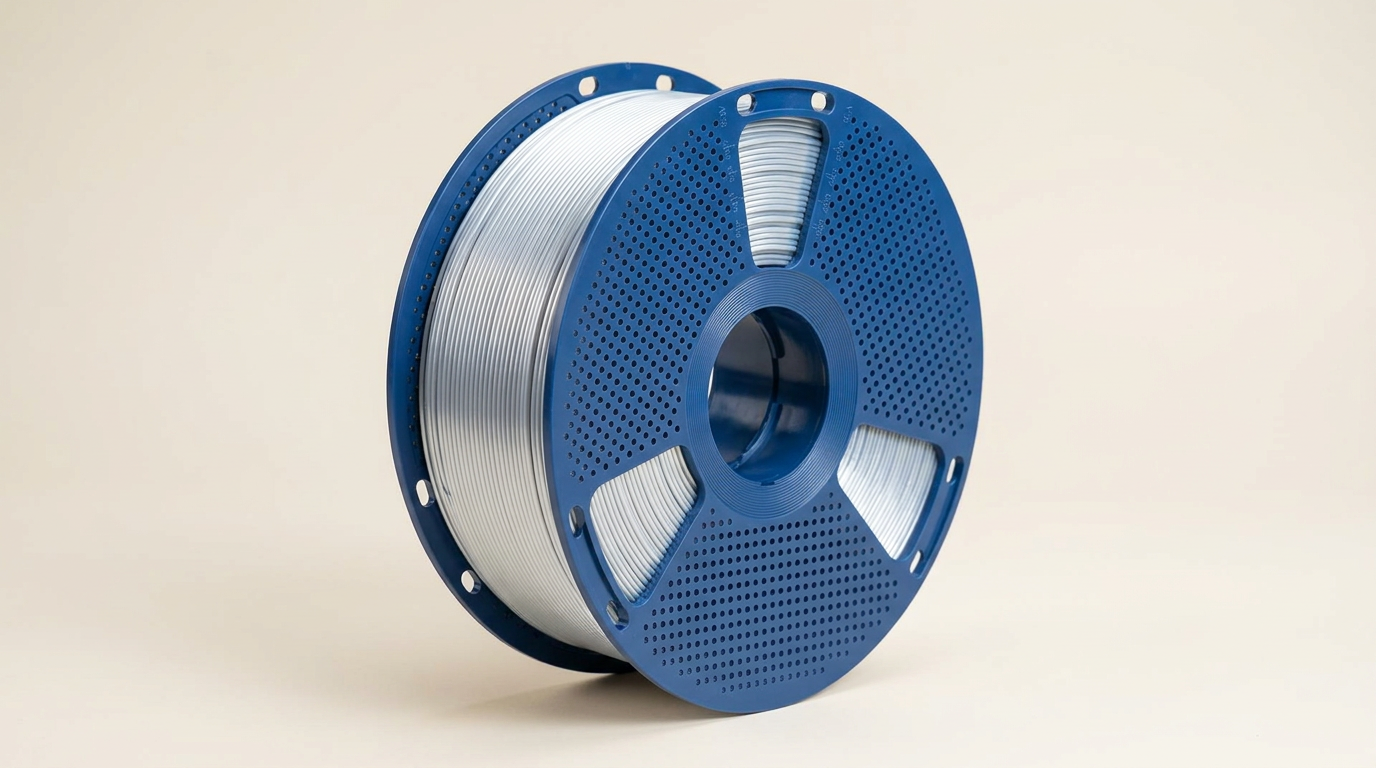
In a 3D printing landscape increasingly focused on speed and industrial-grade strength, specialty filaments like SUNLU's Silk PLA offer a compelling counterpoint: pure aesthetic appeal. While many manufacturers chase functional superiority, this product leans into the visual, promising a glossy, reflective finish that elevates decorative prints. The core tension for such materials lies in balancing visual flair with practical printability; a filament can be beautiful, but if it clogs nozzles or delaminates, its utility diminishes.
The SUNLU Silk PLA positions itself squarely in this aesthetic-first category. It targets creators prioritizing the final object's surface quality and visual impact over raw mechanical properties. Owners frequently highlight its smooth, shiny appearance and vibrant colors, suggesting it effectively delivers on its primary promise. However, achieving this finish consistently often requires an understanding of its unique printing characteristics, marking it as a deliberate choice for specific project types.
What owners love
- + Delivers a consistent, eye-catching silk finish
- + Provides vibrant and distinct color options
- + Maintains reliable print consistency with minimal clogging
- + Offers good value, especially in multi-packs
- + Demonstrates strong layer adhesion in most applications
Common complaints
- − Color representation in product photos can be inaccurate
- − Requires careful tuning of print settings for optimal results
- − Spool winding can be problematic on some side-fed setups
- − Can be prone to 'blobbing' without precise calibration
- − Packaging quality occasionally raises concerns during transit
Design & Build
The SUNLU Silk PLA filament distinguishes itself primarily through its visual design: a smooth, glossy, and reflective surface that requires no post-processing for shine. This 'silk finish' is a deliberate additive in the PLA formulation, designed to mimic a polished, almost metallic look. Owners consistently praise this aesthetic, noting the filament’s ability to transform ordinary prints into visually striking objects. Colors are described as vibrant and rich, with multi-color and dual-tone options receiving particular acclaim for their dynamic transitions and ability to highlight detail. The material's design intent is clearly decorative, prioritizing visual impact over mechanical properties inherent in standard PLA or PLA+.
The physical construction of the filament itself adheres to standard specifications, with a 1.75mm diameter and a stated tolerance of +/- 0.02mm. Owners report this accuracy contributes to smooth feeding. SUNLU emphasizes a “neatly wound” spool to prevent tangles. While many users confirm tangle-free experiences, a recurring observation from those with specific printer configurations, particularly side-fed setups, suggests that physical spool placement can still introduce feeding issues, hinting at a potential mismatch between the spool's inherent tension and certain printer geometries. This introduces the concept of the 'feed path tax' a subtle but real consideration for certain setups where the filament's intrinsic characteristics, combined with specific printer designs, demand extra attention to prevent winding-related print failures.
Setup & Ease of Use
SUNLU promotes this filament as “easy to print,” and for many users, this holds true, especially when compared to more finicky specialty materials. Recommended settings for nozzle temperature (205-215℃) and bed temperature (60-80℃) are within typical PLA ranges, making initial setup straightforward for experienced users. Adhesion to print beds receives positive remarks, with owners reporting minimal issues. However, the filament’s unique composition for its silk finish introduces a nuance: optimal results often necessitate fine-tuning. Several users highlight the need to experiment with slicer settings to prevent issues like 'blobbing,' a common characteristic of glossy filaments if extrusion and retraction are not precisely calibrated. This suggests that while basic printability is high, achieving the advertised 'breathtaking metallic reflectivity' requires a small investment in calibration. This positions the filament slightly beyond a true 'set and forget' material for those seeking perfection, creating what one might call the 'sheen optimization curve' where visual quality scales with tuning effort.
Performance in Real Use
In day-to-day operation, the SUNLU Silk PLA generally performs as advertised, excelling in its primary function: producing prints with an exceptional aesthetic. Owners consistently report clean, detailed results with a high-gloss, reflective surface. The material’s ability to avoid clogging is a significant advantage, frequently cited as a reason for repeat purchases, even on demanding multi-material print systems. Interlayer adhesion is strong, contributing to the overall integrity of printed objects like vases and decorative models. Print consistency is a recurring theme, with many users noting reliable output across various models and durations.
However, the user experience is not entirely uniform. While most report minimal issues, some users, particularly those accustomed to standard PLA+, find that achieving the absolute best finish requires attention to detail. This includes managing print speed and specific retraction settings to mitigate minor surface imperfections. The filament’s performance can be sensitive to environmental factors and specific printer setups, as exemplified by observations about managing filament twist on certain spool holders. This subtle variability in optimal performance, despite strong overall printability, defines the 'aesthetic sensitivity window' of this filament, where minor adjustments can yield disproportionately better visual results.
Software & Ecosystem
As a filament manufacturer, SUNLU operates within the broader 3D printing ecosystem, meaning its products are largely hardware-agnostic and rely on standard slicer software. The brand does not offer a proprietary software suite, nor is it tightly integrated into a specific printer ecosystem. Owners report successful use across a wide array of FDM printers, including popular models from Creality, Bambu Lab, and Anycubic. This broad compatibility is a significant advantage, allowing users to integrate the filament into their existing workflows without needing specialized drivers or profiles beyond the standard PLA settings.
While SUNLU provides recommended print settings, users typically adapt these within their preferred slicer software, such as PrusaSlicer or Ultimaker Cura, to suit their specific printer and desired print quality. The community-driven nature of 3D printing means users often share optimized profiles for silk PLA, further enhancing its accessibility. The 'universal compatibility dividend' is clear here: the filament's adherence to standard PLA characteristics allows it to benefit from the extensive knowledge base and flexible toolchains of the wider 3D printing hobbyist and professional communities.
Value & Reliability
The SUNLU Silk PLA consistently receives high marks for its overall value, particularly given its specialized aesthetic qualities. Owners frequently highlight its competitive pricing, especially when purchased in multi-packs or during promotional events. This affordability, combined with its generally reliable performance, establishes a strong value proposition for hobbyists and professionals producing visually driven prints. Many users consider it a staple, opting to purchase it repeatedly due to its consistent quality and price point.
Reliability is generally robust, with multiple long-term users reporting consistent results over extended periods. The vacuum-sealed packaging with desiccant is noted for preserving filament quality over time, contributing to its shelf stability. While occasional concerns arise regarding external packaging integrity during shipping, the internal product usually remains unaffected. This balance of cost-effectiveness and dependable print quality positions SUNLU Silk PLA as a 'decorative workhorse' within its category, a filament that delivers its specialized function reliably without demanding a premium price.
Verdict
Buy - This filament consistently delivers a beautiful, glossy finish with reliable printability at a competitive price.
This is a strong recommendation for anyone prioritizing the aesthetic appeal of their 3D prints, whether for artistic models, display pieces, or custom awards. It provides excellent visual impact without the typical headaches of many specialty filaments. Users with Creality, Bambu Lab, or similar FDM printers who are willing to spend a short time dialing in settings will find this an indispensable material. Those on a budget, looking for striking results without spending well north of $20 per spool, will appreciate its value. However, if your primary need is for high mechanical strength, functional prototypes, or if you demand absolute zero calibration effort from your filament, you might consider alternatives.
SUNLU's Silk PLA embodies the concept of 'accessible artistry' in 3D printing. It reframes the filament not merely as a raw material, but as a direct medium for visual expression, offering a vibrant, polished aesthetic that transcends the utilitarian. This product illustrates how the future of consumer 3D printing isn't just about printing faster or stronger, but also about making specialized, high-impact finishes broadly attainable, inviting more users to explore the decorative potential of additive manufacturing.
FAQ
More 3D Printing Supplies reviews
ELEGOO PLA Filament Bundle Review: The Daily Driver Standard
eSUN PLA Basic Filament Review: A High-Speed Performer
ELEGOO Rapid PETG Filament Review: High-Speed Printing Achieved
ARKA 3D Printing Super Glue Gel Review: Bonds PLA, ABS, PETG, TPU
ELEGOO Rapid PLA Plus Filament Review: Speed Without Compromise
DIYSELF 16-Piece Exacto Knife Set Review: Precision for the Practical Crafter
This review is based on real experiences shared by owners in online communities.