
SUNLU PETG Filament Review: The Functional Printer's Workhorse
This review is based on real experiences shared by owners in online communities.
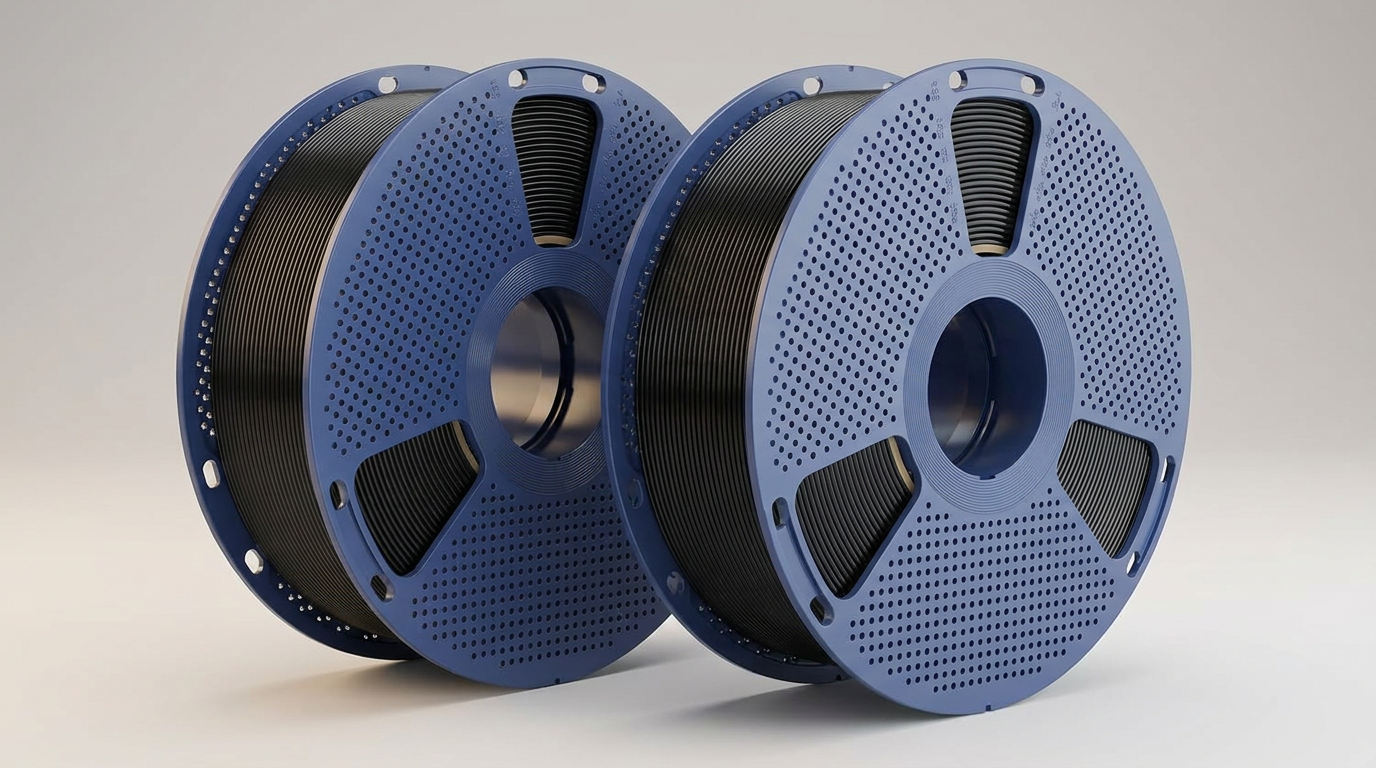
The 3D printing filament market today often bifurcates into aesthetic materials and engineering-grade composites, leaving a subtle gap for robust, everyday functional plastics. SUNLU's PETG filament aims to occupy this middle ground, offering a blend of PLA's printability with ABS's strength without the typical toxicity and warping challenges. This blend makes PETG a critical material for users moving beyond decorative prints into more demanding applications, a shift many desktop 3D printer owners are now navigating.
However, PETG presents its own set of printing nuances, often leading to stringing or adhesion issues if not properly managed. SUNLU's latest iteration, particularly with its updated reusable spools, attempts to address these common hurdles, positioning itself as a reliable option for both new and experienced users. The core inquiry is whether this filament successfully delivers on its promise of consistent, hassle-free performance for the diverse range of functional prints it’s typically applied to.
Our evaluation consolidates widespread user experiences, focusing on the practical implications of its dimensional accuracy, spool design, and print consistency. We examine how it performs across various printer ecosystems, particularly in advanced setups like Bambu Lab's AMS, and whether its value proposition holds up against its performance claims. This review uncovers if SUNLU PETG offers a true workhorse material or merely another option in a crowded field.
What owners love
- + Consistent print quality with strong layer adhesion
- + Minimal stringing reported for a PETG formulation
- + New reusable spool design compatible with Bambu Lab AMS and refills
- + Good dimensional accuracy, reducing print issues
- + Excellent value, especially in multi-roll bundles
- + Suitable for functional parts requiring durability and heat resistance
Common complaints
- − Some spools may still require an adapter for older AMS units
- − Finish can be notably glossy, which may not suit all aesthetic preferences
- − Occasional reports of not-quite-perfect sealed packages affecting dryness
- − Specific colors may deviate from expectations; "Space Gray" example cited
Design & Build
SUNLU's PETG filament arrives with an emphasis on its updated spool design, a strategic move to address common user frustrations and align with current industry trends. Owners frequently highlight the new reusable spool, which has garnered significant praise for its compatibility with Bambu Lab's AMS systems, often bypassing the need for third-party adapters. This integration signals SUNLU's understanding that the physical presentation and printer interaction are as critical as the material itself.
From a material perspective, the filament consistently receives commendation for its neat winding. Tangles and jams, often a persistent issue with lower-quality filaments, are rarely reported, suggesting careful manufacturing processes. However, while packaging is generally good, a few owners note seals that were not as taut as preferred, raising minor concerns about filament dryness upon arrival. This issue is not widespread but points to an occasional inconsistency in the overall packaging execution. The core material itself presents a "glossy gloss finish" according to some users, with colors occasionally differing slightly from their descriptive names. This aesthetic characteristic is a deliberate trade-off; it offers specific visual advantages for some, but others seeking a true matte or specific shade might find the reality deviates from their expectation. This 'packaging paradox' between material quality and presentation is a subtle but recurring theme.
Setup & Ease of Use
A pervasive theme among owners is the relative ease of integration and printing with SUNLU PETG. Many users report that the filament handles standard printing profiles, particularly on Bambu Lab machines, with minimal adjustment. Phrases like "just use your default settings" and "prints perfect... with standard bambulabs profiles" are common. This suggests the filament adheres closely to expected PETG behaviors, reducing the learning curve for those transitioning from other brands or materials.
While recommended nozzle temperatures typically fall between 220-250°C and bed temperatures between 65-75°C, owners often find success within these ranges without extensive tuning. The material's ability to 'dial in easily' contributes significantly to its user-friendliness. The new spool design plays a critical role here, eliminating the friction and feeding issues that often plague filament changes, particularly in automated material handling systems like the AMS. The recurring advice to dry filament before use, though standard for PETG, is often noted, reinforcing the fact that even well-packaged PETG benefits from this preparation. This preparation is part of the 'silent expectation' of PETG printing, often assumed rather than explicitly stated by less experienced users.
Performance in Real Use
SUNLU PETG distinguishes itself through its consistent performance, especially in crucial areas like layer adhesion and print strength. Owners routinely praise the material for producing robust, impact-resistant parts with minimal warping, underscoring its suitability for functional applications. Prints are described as "strong with a resin-like gloss," and achieving "phenomenal mechanical toughness" suitable for brackets, housings, and custom tool storage.
Despite PETG's inherent tendency for stringing, owners report notably low levels with this filament, describing it as printing "amazingly smooth with little to no stringing." This characteristic positions it favorably against other PETG offerings. The material's claimed dimensional accuracy of +/- 0.02mm appears well-supported by user experiences, contributing to reliable extrusion and print fidelity across various printers. Some users even assert it prints better than proprietary filament on their machines. The 'durability dividend' offered by this filament makes it a strong contender for users prioritizing part integrity over purely aesthetic concerns.
Software & Ecosystem
The seamless integration of SUNLU PETG with leading 3D printer ecosystems, particularly Bambu Lab's AMS, represents a significant advantage. Owners repeatedly confirm that the filament works "perfect on my Bambulabs P1S with standard bambulabs profiles" and inside the AMS unit without issues. This compatibility extends to other popular printers like the Elegoo Neptune series and various Centuri Carbon models.
SUNLU's strategic decision to redesign its spool for AMS compatibility has clearly resonated. While some mention needing an adapter for older or specific AMS units, the predominant feedback indicates a direct fit for newer models and AMS Lite, enhancing the automated printing experience. This focus on cross-compatibility, especially with a dominant player like Bambu Lab, expands its market appeal and reduces the 'tech friction' for users who value uninterrupted, multi-material printing. The ability to use "generic PETG profiles" further streamlines the workflow, making it less dependent on specific vendor software tunings.
Value & Reliability
The value proposition of SUNLU PETG is a strong recurring theme in owner feedback. Many categorize it as an excellent choice at its price point, particularly when purchased in bulk 2kg bundles. The inclusion of reusable spools, described as being cheaper than buying empty spools from some printer manufacturers, enhances its overall economic appeal. This combination of consistent performance and affordability represents a strong 'cost-per-print' advantage.
Regarding reliability, the filament consistently earns high marks. Users report going through multiple rolls without print issues, citing consistent thickness and an absence of tangles. The material's ability to maintain print quality even after sitting in an AMS for a month or more without drying out is notable, adding to its practical reliability for less frequent users. This blend of economic efficiency and dependable performance establishes SUNLU PETG as a trustworthy option for both hobbyists and those running high-volume functional print operations.
Verdict
Buy - This PETG filament offers an exceptional balance of print quality, functional strength, and value, particularly for Bambu Lab users.
This is an ideal purchase for users who prioritize strong, functional prints and appreciate hassle-free operation within popular 3D printer ecosystems. Those printing prototypes, enclosures, or mechanical parts will find its layer adhesion and impact resistance highly beneficial. Users already invested in the Bambu Lab AMS system will especially benefit from the new spool design and broad compatibility. It also represents excellent value for those seeking reliable PETG at a price well below premium-branded alternatives, especially when bought in larger bundles.
However, users prioritizing highly specific aesthetic finishes, particularly a true matte appearance, might need to manage expectations regarding its inherent glossiness. Individuals who find their printer sensitive to any moisture might also consider other brands more explicitly focused on extreme dry-packaging. This filament embodies the 'utility-first' philosophy, leaning into robust performance and material value over niche aesthetic perfection. It serves as a strong signal that high-utility filaments are evolving to meet the demands of advanced consumer machines, bridging the gap between hobbyist-grade PLA and industrial composites.
FAQ
More 3D Printing Supplies reviews
Kretrum Silk Dual Color PLA Filament Review: Vibrant Aesthetics for 3D Printing
eSUN High Speed PLA+ Filament Review: The Workhorse for Fast Printers
SUNLU PETG Filament 4kg Review: The Bulk Workhorse for High-Volume Prints
Deeplee PLA+ 2.0 Filament Review: A Workhorse Material for 3D Printing
FLASHFORGE Rapid PLA: The 'Stealth Performance' Filament
RAMBERY Silk Dual Color PLA Filament Review: Aesthetic Impact for Small Prints
This review is based on real experiences shared by owners in online communities.