
SUNLU PETG Filament 4kg Review: The Bulk Workhorse for High-Volume Prints
This review is based on real experiences shared by owners in online communities.
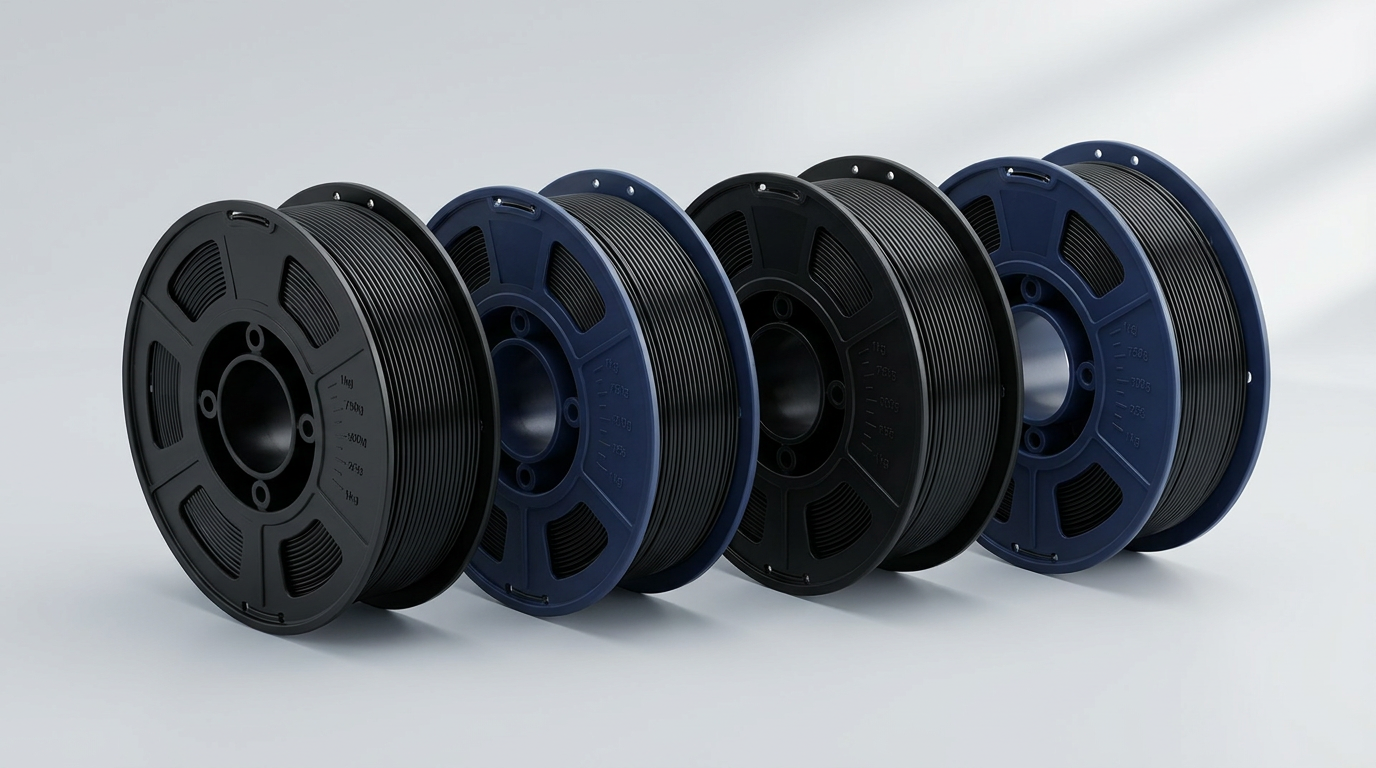
The consumer 3D printing market has rapidly matured, yet the fundamental demand for reliable, cost-effective filament remains. While many brands emphasize exotic blends or niche applications, SUNLU's 4kg PETG filament bundle quietly targets a distinct segment: the high-volume maker for whom consistent performance and price per kilogram are paramount. This is not about boutique aesthetics; it is about keeping machines fed and projects moving.
Most buyers encounter PETG as a step up from PLA, seeking increased durability and temperature resistance without the printing challenges of ABS. SUNLU positions its PETG as an accessible entry into this material, blending the advantages of both. However, the true test lies in its ability to perform under sustained demand, particularly when purchased in bulk. This review assesses whether SUNLU's offering delivers on that core promise, providing a workhorse material rather than a specialty item.
What sets this specific bundle apart, beyond the sheer volume, is its implicit challenge to the notion that budget filament necessitates significant compromises. For many, the cost of material rapidly eclipses the initial printer investment. SUNLU attempts to bridge this gap, offering a solution for those whose printing appetite demands a more economical, yet still dependable, supply chain.
What owners love
- + Delivers consistent, reliable print quality across various printers.
- + Excellent layer adhesion and structural integrity for functional parts.
- + Significantly lower cost per kilogram compared to premium brands.
- + Compatible with Bambu Lab AMS systems with few reported issues.
- + Maintains structural and color integrity, suitable for outdoor use.
Common complaints
- − Moisture absorption is common, requiring pre-drying for optimal results.
- − Occasional stringing, though often mitigated with proper drying and settings.
- − Availability of specific colors can be inconsistent across retailers.
Design & Build
SUNLU's PETG filament arrives on standard spools, an important consideration for users of advanced systems like Bambu Lab's AMS Lite, which often require specific spool geometries. Owners consistently report that these spools integrate well, avoiding the tangling or feeding problems sometimes associated with budget filaments or proprietary spool designs. The filament itself maintains a reported dimensional accuracy of +/- 0.02mm, a critical specification for reliable extrusion. While some manufacturers boast tighter tolerances, this range is generally sufficient to prevent common printing failures like under-extrusion or nozzle clogs. The choice of packaging, vacuum-sealed with desiccants, acknowledges PETG's hygroscopic nature, though real-world experience often necessitates additional user intervention.
The emphasis here is on functional utility rather than elaborate presentation. The filament's consistent diameter and winding prevent the 'filament snag tax' that can derail long prints or damage direct drive systems. For users who prioritize material throughput and print consistency over aesthetic flourishes in their filament delivery, the design proves highly effective.
Setup & Ease of Use
PETG is inherently more demanding to print than PLA, requiring precise temperature control and careful bed adhesion management. SUNLU recommends a nozzle temperature of 240-260°C and a bed temperature of 60-70°C, with printing speeds between 50-200mm/s. Owners confirm that these parameters serve as a reliable starting point. A recurring theme in user feedback, however, is the necessity of pre-drying the filament. Despite being vacuum-sealed, several users note that rolls often contain residual moisture, leading to stringing, popping, and diminished print quality until dried. This 'pre-flight ritual' of drying is common with PETG but is particularly critical for consistent results with this specific product.
Once dried and dialed in, owners report a straightforward printing experience. The filament exhibits good layer adhesion, a hallmark of well-formulated PETG, and minimal stringing when print profiles are optimized. The transition from other brands, including pricier options, is frequently described as seamless, suggesting that the underlying material properties and manufacturing consistency are sound, even if initial preparation is key. This ease of integration, particularly into established workflows, makes it a strong contender for those scaling their production.
Performance in Real Use
The performance of SUNLU PETG is consistently described as reliable and robust, especially for functional parts. Owners frequently highlight its excellent layer adhesion and high impact and mechanical strength, surpassing PLA in durability. This makes it suitable for applications ranging from robotics components to outdoor fixtures and household tools, where resilience against stress and environmental factors is essential. The weather-resistant properties, including UV and moisture resistance, are corroborated by users who have deployed prints in outdoor settings.
Despite the general positive consensus on print quality, some users experience stringing. This is not uncommon for PETG but underscores the importance of proper print settings and moisture control. However, once dialed in, the filament delivers smooth, consistent prints with a good surface finish. For power users and robotics teams who consume filament rapidly, the material’s dependable feeding and consistent output directly translate to higher productivity and reduced project delays, forming the foundation of a 'no-surprises' material experience that is highly valued in demanding environments. This predictability is arguably its greatest asset.
Software & Ecosystem
As a filament manufacturer, SUNLU's direct engagement with software and ecosystems is limited, primarily focusing on providing material profiles for common slicing software. However, its broad compatibility with various 3D printers, including popular models like the Bambu Lab A1 and P1S, is a significant advantage. Some users explicitly mention the availability of dedicated SUNLU PETG filament presets within Bambu Lab's software, which streamlines the setup process and often yields superior results compared to generic PETG profiles. This illustrates the benefit of brands actively collaborating with printer manufacturers or having a sufficient user base to generate optimized community profiles.
The 'ecosystem fit' of this filament is strong. Its standard spool dimensions and consistent properties mean users can integrate it into multi-material printing systems, such as the AMS, without significant modifications or workarounds. This avoids the 'proprietary trap' where specific hardware demands equally specific, often more expensive, consumables. The lack of proprietary requirements enhances its utility as a bulk material, allowing users to leverage its cost-effectiveness across a diverse range of hardware setups.
Value & Reliability
The SUNLU PETG 4kg bundle represents a compelling value proposition, particularly for those with high material consumption. Owners consistently laud its affordability, especially when compared to premium-branded filaments, while still delivering performance on par with more expensive alternatives. The ability to purchase in bulk significantly reduces the cost per kilogram, making it an economical choice for hobbyists and professionals alike. This high volume, low-cost model cultivates what we term 'the industrial hobbyist mindset,' where efficiency and material cost management become central to project planning.
Reliability is a cornerstone of its appeal. Multiple long-term users, some having consumed dozens of kilograms, report consistent diameter, color, and print behavior across numerous spools. This consistency is critical for large projects or batch production where variations can lead to costly failures. While the need for pre-drying is a consistent point, it is framed as a minor, predictable preparation step rather than a fundamental flaw. The overall sentiment is that this filament offers a dependable, cost-effective solution, enabling extensive printing without the 'premium material tax' that often limits ambitious projects.
Verdict
Buy - This filament provides exceptional value and consistent performance for high-volume PETG printing.
This SUNLU PETG bundle is ideal for anyone who prints frequently, especially functional parts that demand durability and reliability without the prohibitive cost of premium filaments. Robotics teams, hobbyists with large projects, and those who run multiple machines will find its bulk pricing and consistent output highly advantageous. Users of Bambu Lab printers, particularly those utilizing AMS systems, will also appreciate its compatibility and the availability of optimized profiles.
However, users seeking the absolute highest surface finish for aesthetic prints or those unwilling to incorporate a filament drying step into their workflow might consider other options. This is not a 'magic' filament that prints perfectly without any preparation; rather, it is a robust and reliable material for the discerning, volume-focused user. The SUNLU PETG 4kg bundle excels by embracing the 'hidden cost of convenience' that often afflicts 3D printing; by requiring a small, predictable pre-processing step (drying), it unlocks significant savings and consistent results, proving that high output does not require a high premium.
FAQ
More 3D Printing Supplies reviews
Deeplee PLA+ 2.0 Filament Review: A Workhorse Material for 3D Printing
FLASHFORGE Rapid PLA: The 'Stealth Performance' Filament
RAMBERY Silk Dual Color PLA Filament Review: Aesthetic Impact for Small Prints
eSUN PLA+ Filament: The Go-To Choice for High-Speed 3D Printers
SUNLU High Speed PETG Filament Review: The 'Dry-First Economy' Advantage
ERYONE Silk Filament PLA+ Review: The Glossy Aesthetic Standard
This review is based on real experiences shared by owners in online communities.