
SUNLU AMS Heater Review: Essential for Bambu Lab Gen 1 AMS Owners
This review is based on real experiences shared by owners in online communities.
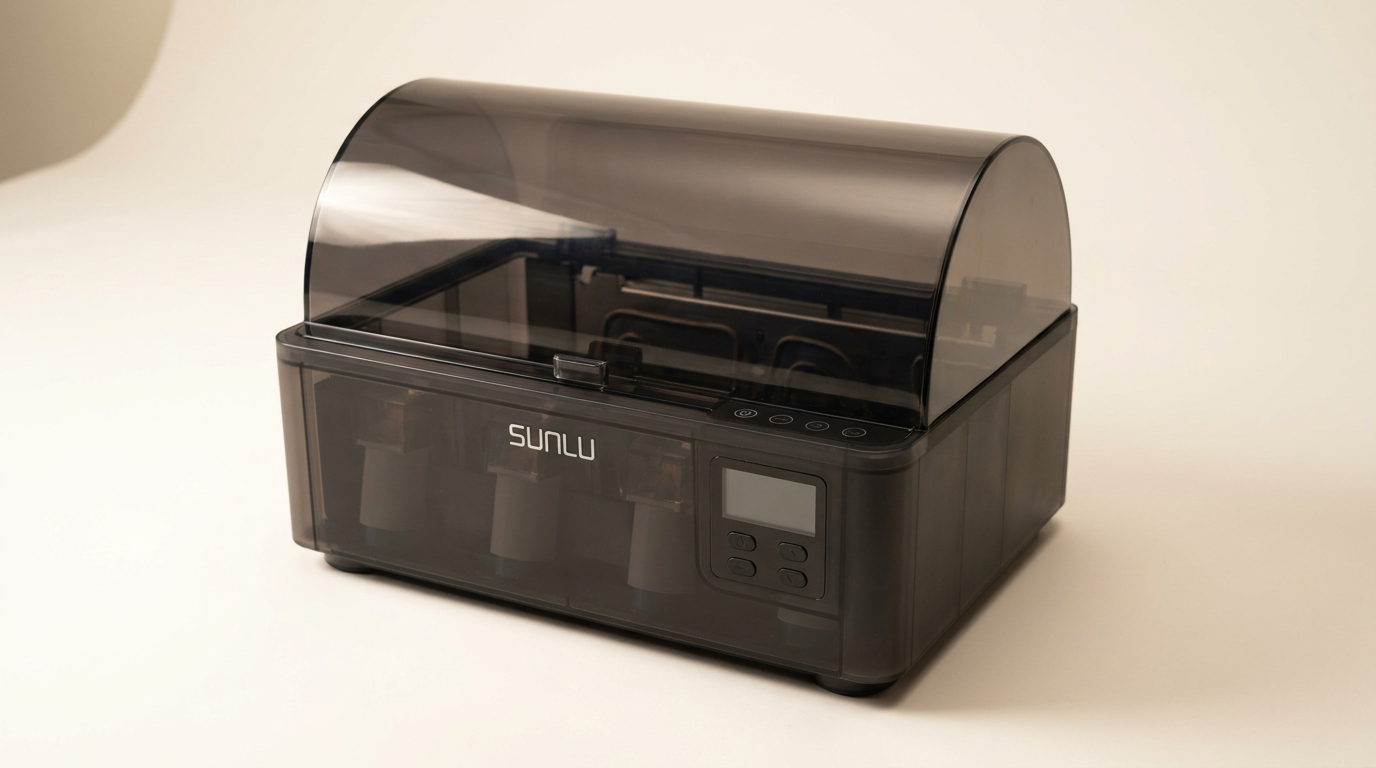
The modern 3D printing landscape increasingly emphasizes multi-material capabilities and advanced filament management, often creating a divide between older and newer hardware generations. For owners of the first-generation Bambu Lab Automatic Material System (AMS), the lack of integrated filament drying has been a noticeable functional gap. This omission forces a reliance on passive desiccants or external drying solutions, introducing friction into workflows designed for efficiency.
The SUNLU AMS Heater steps into this void not merely as an accessory, but as a critical enabling technology. It bridges the feature disparity, upgrading the original AMS to perform simultaneous drying and printing. This integration addresses a core challenge for many users, particularly those operating in humid environments or frequently printing with hygroscopic materials.
Our examination of owner experiences reveals that this heater isn't just an incremental improvement; it fundamentally redefines the utility of the Gen 1 AMS. It transforms a capable material switcher into a comprehensive, actively managed filament system, offering a "second life" to earlier hardware investments that might otherwise feel outdated.
What owners love
- + Enables simultaneous drying and printing
- + Significantly improves print quality, especially for moisture-sensitive filaments
- + Easy, non-destructive installation replaces the original lid
- + Maintains low humidity levels consistently in the AMS
- + Cost-effective alternative to purchasing an AMS Gen 2
Common complaints
- − Adds bulk, requiring more printer clearance from walls
- − Manual vent opening/closing for drying cycles
- − Cannot see filament spools as clearly through the new lid
- − Can cause warping of printed spools during high-temperature drying
- − Potential for filament to become too flexible or break if left loaded during drying
Design & Build
The SUNLU AMS Heater integrates directly with the Bambu Lab AMS Gen 1, replacing its existing lid. Owners report the installation is straightforward, requiring minimal effort and no permanent modifications to the AMS unit itself. The design incorporates a unique airflow system, directing heat specifically to the filament area while safeguarding the AMS feeding motors from overheating. This attention to thermal management is critical for device longevity. While the heater adds physical volume, increasing the overall footprint and depth requirement, owners generally accept this trade-off for the added functionality. A recurring observation is the reduced visibility of the filament through the new lid compared to the original transparent cover. This "visual transparency cost" is a minor aesthetic and monitoring inconvenience for many, outweighed by the functional gain.
Setup & Ease of Use
Installation of the SUNLU AMS Heater is consistently described as easy, often taking less than 30 minutes. The package includes all necessary tools and fasteners, with clear instructions guiding users through the process. The non-destructive nature of the upgrade is a key benefit, preserving the original AMS unit. Once installed, the heater operates independently, typically running for a set duration or continuously. The primary operational nuance involves the manual vent, which owners must open during active drying and close for storage. While effective, several users express a wish for an automated vent system. This manual step introduces a small point of friction, but it is a manageable aspect of what is otherwise a set-it-and-forget-it accessory.
Performance in Real Use
The core function of the SUNLU AMS Heater is active filament drying, and owners overwhelmingly confirm its effectiveness. It reaches 70°C rapidly, maintaining sub-20% humidity levels even in very humid environments. This capability translates directly into noticeable improvements in print quality, reducing common issues like stringing, adhesion failures, and inconsistent extrusion, particularly with hygroscopic materials like PETG, ASA, and nylon. Several users report a dramatic reduction in print failures. The standout feature, and the device's primary value proposition, is its ability to dry filament *while* printing. This "print-and-dry" synergy eliminates the need for separate drying cycles, streamlining the workflow. However, users advise caution with specific filament types and setups: printed spools can warp under high heat, and leaving filament loaded in the feeder during prolonged, non-printing drying cycles can cause softening or breakage at pinch points. This highlights a need for mindful operation, particularly with the "softening risk" for loaded filament paths.
Software & Ecosystem
The SUNLU AMS Heater operates as an independent accessory, not directly integrating with Bambu Studio software or the AMS unit's humidity sensors. Owners report that Bambu Studio may initially show increased humidity readings when the heater activates, as moisture is drawn out of the filament and into the chamber air. This is a temporary effect, and users confirm that despite these readings, the filament itself is drying effectively. The heater functions as a dedicated environmental control system, leveraging the AMS structure without requiring software-level communication. Its compatibility with existing AMS functions, including third-party accessories like the 'AMS flipper,' underscores its adaptability within the Bambu ecosystem, even without direct digital integration. This approach simplifies the design and likely contributes to its accessible price point, embodying a 'hardware-first' solution to a software-unaware problem.
Value & Reliability
Positioned around $100, the SUNLU AMS Heater represents a significant value proposition for Bambu Lab AMS Gen 1 owners. It delivers active drying capabilities comparable to those found in the newer AMS Gen 2, effectively extending the lifespan and utility of the original hardware without requiring a more substantial investment. Owners consistently describe it as a "must-have" or "game-changer" upgrade. The build quality holds up to the task, with simple internal components providing reliable heating. Longevity is supported by the non-destructive installation and the generally robust nature of heating elements. Its ability to recharge desiccants and its consistent performance in improving print outcomes make it a cost-effective solution for reducing material waste and print failures, offering substantial returns on the initial outlay, particularly for those in high-humidity regions or users of specialty filaments.
Verdict
Strong Buy - This accessory critically enhances the utility of the Bambu Lab AMS Gen 1, making active drying simultaneous with printing a reality.
This heater is ideal for anyone with a Bambu Lab P1S/X1C combo or standalone AMS Gen 1 unit who struggles with moisture-related print issues, particularly in humid environments. It offers a powerful, integrated drying solution at a fraction of the cost of upgrading to an AMS Gen 2, making it a smart investment for extending the capability of existing hardware. Users frequently printing with hygroscopic materials like PETG, ASA, or Nylon will see immediate and tangible benefits. Those who prioritize seeing their spools through a transparent lid or who require fully automated systems might find the minor design limitations notable, but these are generally superficial.
The SUNLU AMS Heater embodies the "extension economy" in 3D printing hardware: a product designed to extract maximum value from an existing, widely adopted platform rather than forcing a full-system upgrade. It acknowledges a core user need that the original hardware did not address and delivers a targeted, effective solution, proving that sometimes the most impactful innovation comes not from entirely new products, but from intelligent enhancements that unlock dormant potential in what users already own.
FAQ
More 3D Printing Supplies reviews
ELEGOO Silk PLA Filament Review: A Budget Silk Filament Leader
ELEGOO Matte PLA Filament: A Premium Finish for Everyday Prints
ELEGOO PLA Filament Bundle Review: The Daily Driver Standard
eSUN PLA Basic Filament Review: A High-Speed Performer
SUNLU Silk PLA Filament Review: The Aesthetic Play in 3D Printing
ELEGOO Rapid PETG Filament Review: High-Speed Printing Achieved
This review is based on real experiences shared by owners in online communities.