
Revopoint 6mm 3D Scanning Marker Dots Review: Essential for Detail
This review is based on real experiences shared by owners in online communities.
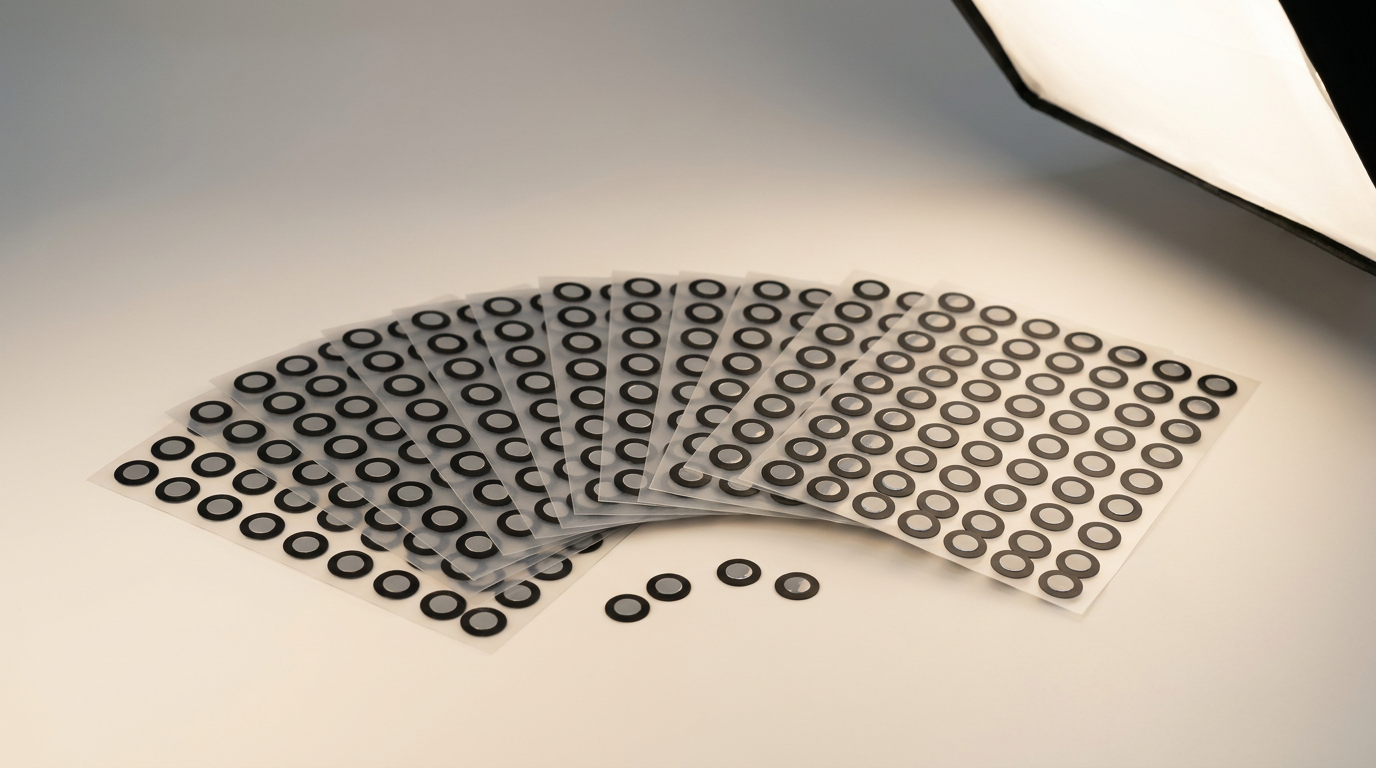
The modern 3D scanning landscape frequently emphasizes hardware capabilities, with manufacturers touting ever-increasing accuracy and resolution. However, a critical, often overlooked component for achieving optimal scan results, particularly with structured light or laser scanners, resides in the simplest of accessories: reference markers. Revopoint's 6mm 3D Scanning Marker Dots are not just an optional add-on; they represent a fundamental enabler for extending scanner utility beyond ideal geometric surfaces.
These markers address a core challenge in photogrammetry and 3D scanning: maintaining consistent tracking on featureless, smooth, or reflective objects. While a scanner might boast impressive specifications, its ability to register successive frames on a uniform surface diminishes rapidly. This review examines how these specific 6mm markers perform in real-world scenarios, considering their design, utility, and the practical implications of their consistent application.
What owners love
- + Significantly improves tracking stability on challenging surfaces
- + High reflectivity ensures reliable scanner recognition
- + Adhesion balances secure placement with residue-free removal
- + Uniform size aids consistent scan quality
- + Works effectively with both Revopoint and other scanner brands
Common complaints
- − Higher cost compared to generic alternatives
- − Some users report difficulty peeling markers from backing sheets
- − Larger 6mm size may be less suitable for very small objects
- − Considered a single-use consumable by many, adding to operational cost
Design & Build
Revopoint's 6mm markers feature a design optimized for visibility and adhesion. Owners consistently report the construction includes a highly reflective center surrounded by a matte black ring, a configuration designed to maximize contrast and scanner detection across varied lighting conditions. The 6mm outer diameter, with a smaller reflective inner core, is a deliberate choice for balancing visibility with minimal footprint. The physical stiffness of the markers is noted, which contributes to secure placement but also requires care during application to avoid damaging the reflective surface. While visually simple, the engineering behind these markers directly impacts their core function: providing unambiguous reference points for spatial reconstruction.
Setup & Ease of Use
Applying these markers is straightforward; they feature a self-adhesive backing. Users generally find the markers adhere well to a variety of materials, including wood, plastic, and metal, remaining secure during the scanning process. A recurring sentiment is the 'just right' adhesion - strong enough to stay put, yet easily removable without leaving residue. However, a minority of owners report some difficulty peeling individual markers from the backing sheet, occasionally destroying them in the process. This points to a minor but noticeable 'peeling paradox' where the manufacturing tolerance for separation could be improved to enhance the user experience.
Performance in Real Use
The primary purpose of these markers is to provide stable reference points, and in this, they excel. Users across various 3D scanner models, including Revopoint's own and others like Creaform's HandyScan and Creality's CR-Scan, confirm their efficacy. They are particularly indispensable for scanning objects with smooth, uniform, or highly reflective surfaces where the scanner otherwise struggles to maintain tracking. This includes human heads with long hair, large featureless panels, or shiny objects. The 6mm size is suitable for medium to larger objects, with some long-term users noting that smaller objects might benefit from even smaller markers to avoid excessive coverage or obstruction of fine details. This highlights the concept of 'marker granularity' where optimal marker size directly correlates with object scale for effective scanning.
Software & Ecosystem
These markers function as a hardware-agnostic input for 3D scanning software, rather than being tied to specific software features. Their primary role is to provide consistent visual data for the scanner's tracking algorithms. While optimized for Revopoint scanners, their universal compatibility with mainstream handheld 3D scanners is a significant advantage, allowing users to leverage them across different systems without proprietary limitations. This 'universal translator' capability for spatial data simplifies workflows for multi-scanner setups, ensuring that the fundamental need for stable tracking is met regardless of the specific hardware or accompanying software suite in use.
Value & Reliability
Reliability is a strong suit; the markers consistently perform their function of providing clear, reflective points. The adhesive properties are generally lauded, allowing for multiple reuses if removed carefully. However, value is a frequent point of contention. While acknowledged as essential, several owners describe these markers as 'pricey' compared to generic alternatives, considering them a consumable item that adds to the operational cost of 3D scanning. This creates a 'consumable cost friction' point for frequent users, where the undeniable utility clashes with the ongoing expenditure. A packet of 500 points at its price point may seem economical per unit, but the need for many points per scan means costs accumulate rapidly for intensive projects.
Verdict
Buy - These markers are a critical, often indispensable tool for achieving consistent and accurate 3D scans on challenging surfaces.
Users operating 3D scanners on a regular basis, especially those frequently encountering smooth, reflective, or featureless objects, should consider these markers. They provide tangible improvements in scan stability and data quality, making difficult projects feasible. Anyone invested in a quality 3D scanner, from hobbyists to professionals, will find these an essential accessory. Conversely, individuals scanning only objects with rich geometric detail or those with extremely limited budgets for consumables might explore more cost-effective alternatives, acknowledging a potential trade-off in scan reliability.
These Revopoint markers highlight a fundamental, understated truth in 3D scanning: the hardware is only as good as the data it can track. Their prevalence underscores a 'feature recognition gap' in scanner technology itself, where simple reflective dots often outperform complex algorithms in maintaining spatial integrity. Until scanners can flawlessly track on any surface, these markers remain an unglamorous but vital component in the pursuit of volumetric accuracy.
FAQ
More 3D Scanners reviews
EinScan SE V2 Review: Precision for Dedicated 3D Modelers
Honeywell Voyager 1452g Review: A Kit That Falls Short
Matter and Form Three Review: Precision 3D Scanning Reimagined
3DMakerpro Scanner Tripod Holder Review: A Micro-Tripod for Macro Precision
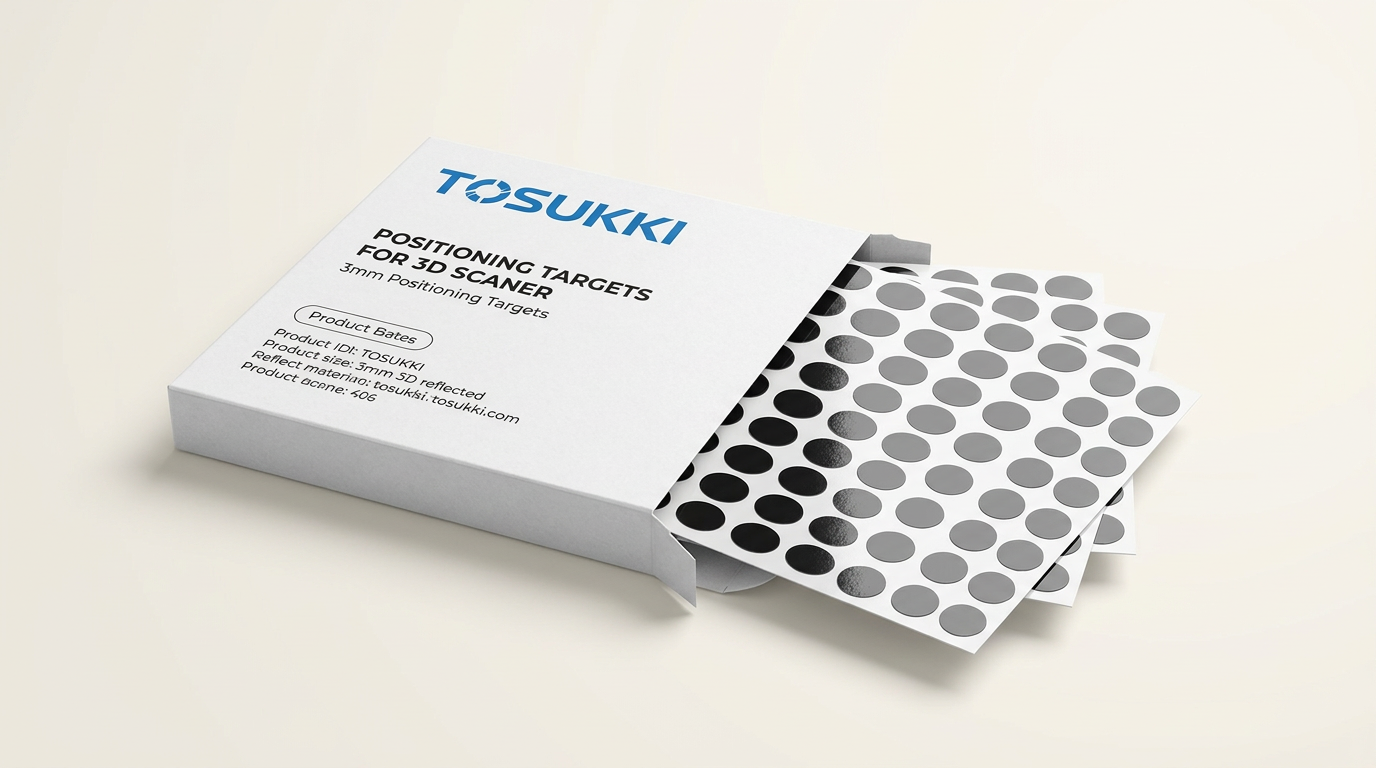
TOSUKKI 3mm Reflective 3D Scanning Targets Review
EinScan Rigil Lite 3D Scanner Review: Unchained Scanning Power
This review is based on real experiences shared by owners in online communities.