
Creality Pika Portable 3D Scanner Review
By AValidReview. An AI-assisted summary of customer feedback, not a hands-on test.
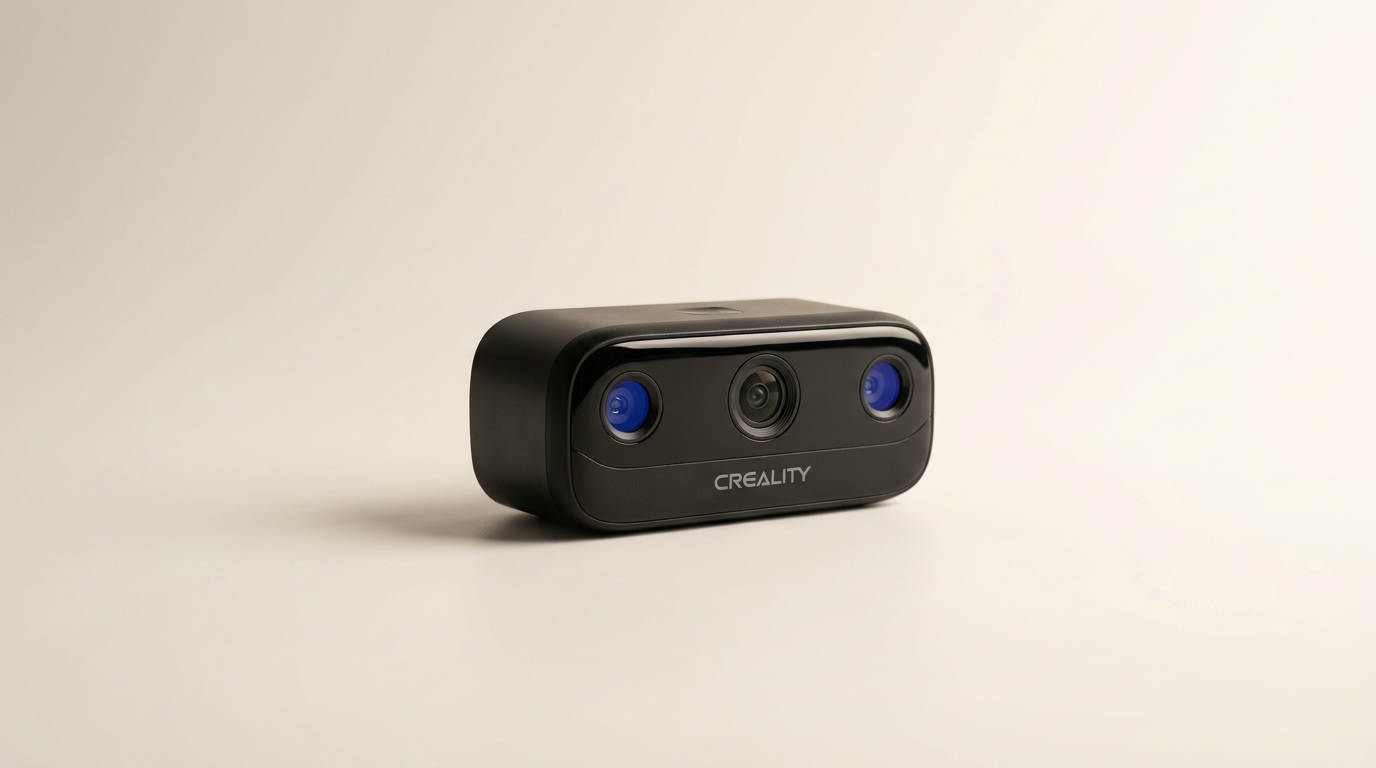
Consumer 3D scanning is undergoing an architectural shift away from tethered desktop rigs toward self-contained handheld field units. The Creality Pika enters this space targeting the high-precision portable tier, packing both a seven-line blue laser array and near-infrared structured light into an enclosure housing its own display and compute hardware. On paper, it represents what we call the standalone transition: liberating spatial capture from a workstation without requiring a flagship smartphone tethered via an awkward umbilical cord.
Yet high-density optical hardware cannot exist in a vacuum. Scanners that incorporate micro-metric tolerances rely heavily on precise physical accessory kits, flawless optical filtering, and rapid post-sale technical intervention when components fail. While Creality has aggressive ambitions to compete with industrial metrology tools in the sub-thousand-dollar category, early adoption exposes the traditional friction point of fast-iterating hardware brands: the post-purchase support chasm.
For makers, fabricators, and digital archivists looking at the Pika in the $600 to $800 range, the core question is not just whether the dual-light optics deliver clean point clouds. It is whether the complete operational ecosystem, from unboxing packaging to manufacturer responsiveness, can justify deploying this tool in mission-critical workflows.
What owners love
- + Dual-light architecture combines 0.03mm blue laser precision with NIR structured light
- + Integrated 3-inch touchscreen and onboard processor allow cable-free field scanning
- + High frame rates reaching up to 110 FPS when tethered to a USB 3.0 workstation
- + Removable infrared filtration designed to mitigate direct sunlight washout outdoors
- + Scans dark and metallic surfaces without mandatory anti-glare spray coatings
Common complaints
- − Customer service infrastructure is unresponsive when addressing missing or disputed parts
- − Confusing optical accessory inclusion creates out-of-box ambiguity regarding lens filters
- − Automated support channels loop repeatedly without resolving basic physical hardware tickets
Design & Build
The Pika departs from the stripped-down optical heads common to budget handheld scanners. By embedding an eight-core 2.0GHz processor, Wi-Fi 6 radio, and a 3-inch capacitive touchscreen, Creality attempts to eliminate the smartphone bracket entirely. This onboard compute layer bypasses the mobile interface fatigue that plagues field operators, turning the scanner into an independent measurement device. The chassis houses a seven-line blue laser projector alongside dual NIR tracking cameras and an RGB color sensor. However, the physical packaging introduces an immediate operational friction that we term optical disparity. Early field reports indicate the device ships with a single physical NIR filter despite utilizing twin tracking sensors. When precision equipment ships with asymmetric accessories, it signals an unforced packaging inconsistency that undermines an otherwise solid, dense enclosure.
Setup & Ease of Use
Initial configuration is streamlined on the device itself thanks to the native display, which provides real-time tracking feedback and framerate indicators directly in your line of sight. This removes the cognitive friction of shifting your gaze between an object and a separate monitor. Tethered operation via USB 3.0 unlocks peak capture rates of 110 frames per second, while wireless untethered operation scales down to conserve bandwidth. The core setup hurdle is not software calibration, but physical validation. Early buyers attempting to clarify accessory lists, specifically verifying whether dual-camera NIR setups require matched external filters, encounter severe friction. Setup ceases to be an engineering challenge and becomes an administrative barrier when documentation fails to match the hardware configuration on your workbench.
Performance in Real Use
In functional use, the dual-spectrum design addresses two distinct photogrammetric headaches. The blue laser mode, boasting a claimed 0.03mm precision, targets mechanical parts, coins, and reflective surfaces without demanding the chalky temporary scanning sprays required by basic infrared units. The NIR mode shifts focus to volume capture, taking in human forms and broad organic contours quickly. Outdoor operation benefits from the detachable IR cut filter to combat solar wash, though the presence of only one filter in standard retail shipments creates practical confusion when tracking across varying ambient light angles. In practice, the hardware delivers rapid tracking and minimal frame loss when properly illuminated, but operational consistency depends heavily on having complete, matched optical shielding.
Software & Ecosystem
Creality bundles automated post-processing routines, marketing features like AI-driven hole filling, texture re-projection, and automated mesh closure. The software outputs industry-standard formats including STL, OBJ, and PLY, allowing direct import into slicing engines like OrcaSlicer and CAD suites like Fusion 360. While the software processing pipeline functions reliably on modern Windows and macOS systems, the post-sale digital ecosystem reveals deep flaws. Users attempting to resolve technical inquiries via official avenues face an automated gatekeeping loop: AI chatbots provide inaccurate hardware counts, human chat queues demand repetitive documentation, and telephony routing frequently disconnects users. The software on the machine works, but the support network behind it remains fundamentally fractured.
Value & Reliability
Positioned firmly in the $600 to $800 price bracket, the Pika offers an aggressive spec sheet that undercuts established metrology instruments by thousands. If evaluated strictly on dollar-per-feature metrics, blue laser scanning at 110 FPS with an onboard screen is exceptional. However, long-term tool value requires what we call the support solvency test: when a part is missing, damaged, or poorly documented, how long until the tool becomes usable? Early experiences highlight that Creality has treated customer assistance as an afterthought, creating a support liability for commercial users. If you receive an incomplete hardware kit or a defective optical module, resolving the issue requires immense patience and administrative persistence.
Verdict
Consider - High-grade standalone optics undermined by an indifferent customer support pipeline.
FAQ
More 3D Scanners reviews
Shining 3D EINSTAR 2 Review: Wireless Freedom at a Compute Cost
Creality Pika Review: High Precision in a Pocket Form Factor
LIANGYUNZE 500 Magnetic 3D Scanner Markers Review
AESUB Violet 3D Scanning Spray Review
3DMakerpro Moose Review: Precision Scanning Meets a Real Learning Curve
Creality Otter Lite Basic 3D Scanner Review: Reality Capture
This review is based on real experiences shared by owners in online communities.