
Polymaker PolyDryer Filament Box Review: The Ecosystem's Cornerstone
This review is based on real experiences shared by owners in online communities.
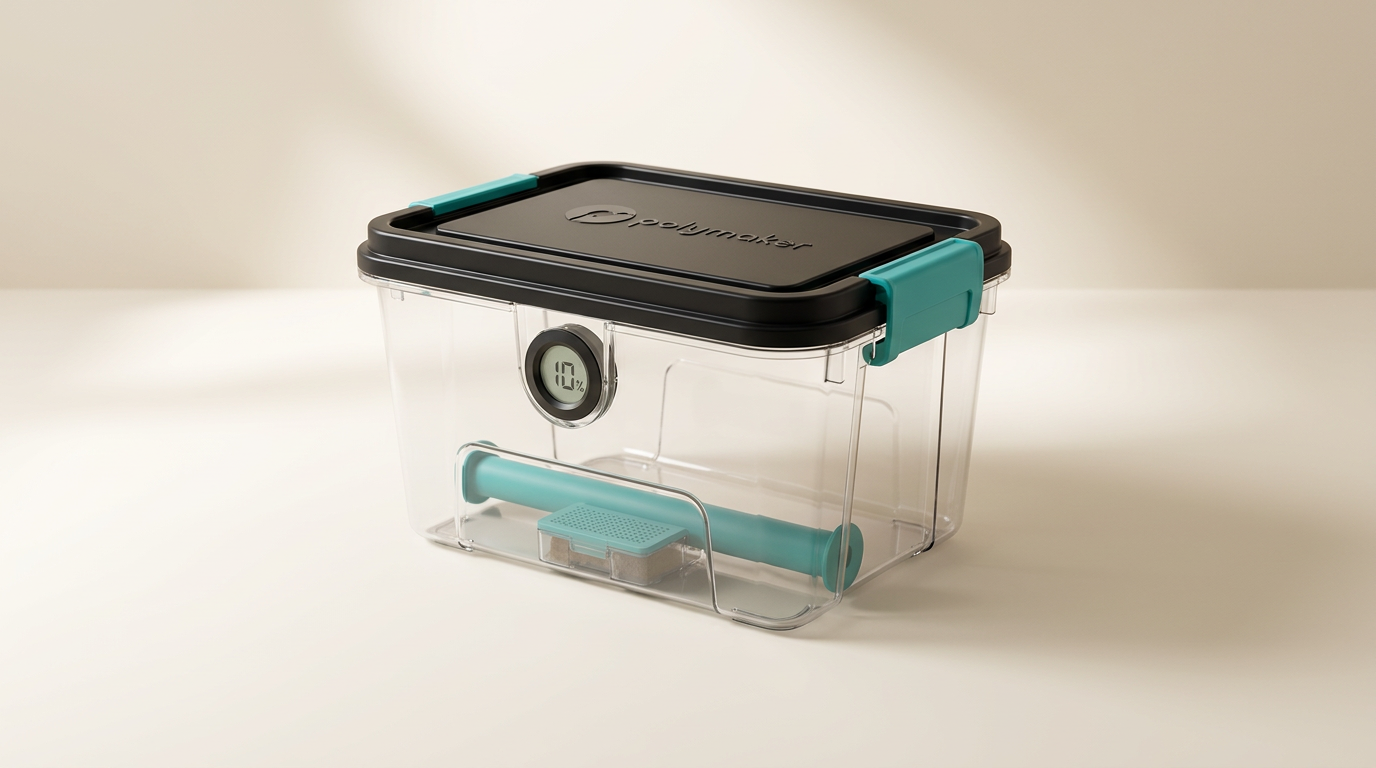
The modern 3D printing landscape, particularly for hobbyists and prosumers, increasingly emphasizes filament management. While many focus on drying solutions, the Polymaker PolyDryer filament storage box highlights a crucial, often overlooked aspect: maintaining dryness after the filament is conditioned. This product enters a market saturated with DIY solutions and integrated dryer-storage units, yet it carves out a niche by serving as a dedicated, high-quality passive storage component within a larger, modular system.
This review examines the PolyDryer storage box, focusing on its efficacy as a standalone preservation unit and its role in Polymaker's broader filament care ecosystem. We assess its design, real-world performance, and overall value proposition, distinguishing its function from active drying solutions. The intent is not merely to contain filament, but to uphold a controlled environment, a concept we term "dry-state retention," crucial for consistent print quality with hygroscopic materials.
What owners love
- + Robust construction with strong polycarbonate and urethane seals
- + Effective at maintaining low humidity levels long-term
- + Integrated hygrometer provides real-time humidity monitoring
- + Allows direct printing from the sealed box without exposure
- + Modular design integrates with Polymaker's active dryer unit
- + Versatile compatibility with various filament types and spool sizes
Common complaints
- − High price point compared to DIY storage alternatives
- − Latches are stiff and difficult to operate for some users
- − Included desiccant may require upgrading for optimal performance
- − Hygrometer can show slight inaccuracy at higher humidity levels
- − Storage box only does not actively dry filament, requires separate unit
Design & Build
The Polymaker PolyDryer storage box distinguishes itself with a robust and thoughtfully engineered physical design. Owners consistently highlight the strong polycarbonate construction and urethane seals, suggesting a durable unit capable of withstanding regular use. The design prioritizes an airtight seal, a fundamental requirement for effective filament storage. It includes a built-in hygrometer for convenient humidity monitoring, a feature frequently cited as valuable for at-a-glance status checks. While the overall build quality receives high praise, some users note the latches can be excessively stiff, requiring significant force to open and close. This tension, while ensuring a secure seal, introduces a minor usability friction point, a design trade-off between absolute sealing and ergonomic access. The unit also features roller bearings for smooth filament dispensing, a detail that enhances the 'print-from-box' functionality.
Setup & Ease of Use
Setting up the PolyDryer box is straightforward, primarily involving placing a filament spool inside and securing the lid. The included desiccant, while functional, is often immediately swapped or supplemented by owners for more effective, microwave-rechargeable alternatives. This suggests that while Polymaker provides a baseline desiccant, experienced users quickly move to optimize the humidity control. The direct feeding mechanism, with its dual ports and included guide tube, simplifies integration into existing 3D printer setups, allowing users to print without breaking the sealed environment. This "continuous dry path" capability is a key differentiator, reducing filament exposure during printing. Despite the simple setup, the stiff latches pose a recurring, albeit minor, impediment to quick filament swaps, influencing the overall user experience during routine operation.
Performance in Real Use
In day-to-day operation, the PolyDryer box excels at its primary function: maintaining a low humidity environment for filament. Owners report consistent humidity levels, often in the 10-15% range after initial conditioning, a significant achievement for preserving hygroscopic materials like PETG and nylon. This performance directly translates to a reduction in common moisture-related printing issues such as stringing, bubbling, and clogging. The ability to print directly from the sealed box is a major convenience, fostering a workflow where filament remains protected even during active jobs or overnight pauses. While the box itself does not actively dry filament, its effectiveness as a passive dry storage solution is well-documented by users. The 'passive preservation' model it champions means that once filament is dried, this box reliably sustains that dry state, preventing regression to a moist condition.
Software & Ecosystem
This product is a storage box and does not feature software in the conventional sense. However, its value is significantly amplified within the Polymaker ecosystem. The design includes specific plugs at the bottom that allow it to interface directly with Polymaker's separate active dryer unit. This modularity is a critical aspect, enabling users to purchase multiple storage boxes and a single dryer, rotating filament through the drying process before returning it to dry storage. This modular approach contrasts with all-in-one dryer-storage units and offers flexibility for managing a larger filament inventory. Owners appreciate the ability to expand their dry storage capacity without needing an active dryer for every spool. This represents an intelligent 'system-level thinking' in product design, offering a scalable solution for moisture management.
Value & Reliability
The Polymaker PolyDryer box occupies a higher price band than many DIY dry box solutions, often hovering around the sub-$50 mark for the storage-only unit. Despite this, owners frequently justify the cost by citing the product's robust build quality, effective sealing, and convenience features like the integrated hygrometer and direct-feeding ports. The reliability of maintaining low humidity levels over extended periods contributes significantly to its perceived value, especially for those using expensive or moisture-sensitive filaments. Some users note the inclusion of a spool bar, which suggests a focus on accommodating diverse spool types and ensuring smooth feeding. The long-term reliability appears strong, with many users purchasing multiple units. The primary critique on value often revolves around the cost compared to home-built alternatives, but for those prioritizing convenience and consistent performance, the investment is deemed worthwhile, especially when acquired during sales events.
Verdict
Buy - This storage box offers a robust and effective solution for maintaining filament dryness within a modular ecosystem.
This product is ideal for 3D printing enthusiasts and professionals who frequently use hygroscopic filaments or have a large inventory requiring consistent dry storage. It suits users who prioritize convenience and reliability over the lowest possible cost, especially those already invested in or considering Polymaker's active drying unit. Those on a strict budget or committed to entirely DIY solutions might find the price challenging. Similarly, individuals needing only occasional drying without extensive storage needs might find an all-in-one dryer-storage unit more suitable.
The PolyDryer storage box represents a crucial step in normalizing 'ambient dry storage' as a foundational practice in 3D printing. It moves beyond merely drying filament to actively sustaining its print-ready state. This quiet persistence is its real strength, making it less a standalone gadget and more an infrastructural component in an optimized 3D printing workflow, revealing a future where filament conditioning is a systematic, rather than reactive, process.
FAQ
More 3D Printer Parts & Accessories reviews
YUNHAN Air Filter for Bambu Lab 3D Printers Review

HYHJMISTY 91PCS 3D Printer Tools Kit Review: A Focused Starter Set
Black Magic 3D Printer Adhesion Kit Review: The Applicator Advantage
Fuitnerd 184-Piece 3D Printer Tool Kit Review: Value-Focused Utility
CreatryLab A1/A1 Mini Hotend Review: Budget Reliability for Bambu Labs
Fuitnerd 142Pcs 3D Printer Tools Kit Review: A Maker's Essential?
This review is based on real experiences shared by owners in online communities.