
Polymaker Fiberon PA612-CF15 Filament Review: The 'Accessible Engineering' Choice
This review is based on real experiences shared by owners in online communities.
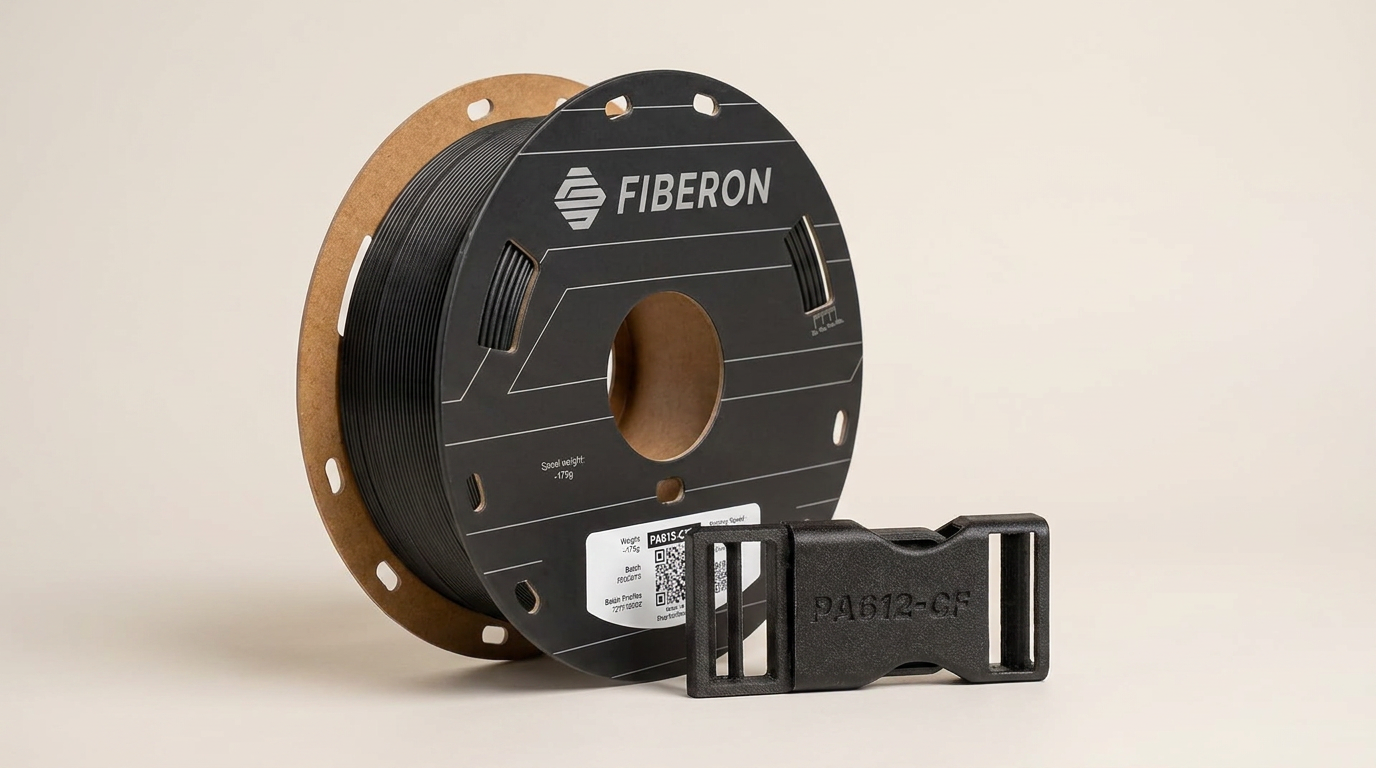
The professional 3D printing landscape is increasingly defined by the pursuit of engineering-grade materials, often at prohibitive costs or requiring specialized hardware. Polymaker's Fiberon PA612-CF15 carbon fiber nylon filament presents a compelling argument for what we term 'Accessible Engineering' a material that offers substantial performance gains over consumer plastics without demanding industrial-tier equipment or expertise. This isn't just another carbon fiber nylon; it's a strategically positioned offering designed to bridge the gap between hobbyist and professional applications.
While marketing often emphasizes strength, the true differentiator for PA612-CF15 lies in its unique balance of properties: mechanical robustness, reduced moisture sensitivity compared to other nylons, and a surprising printability that belies its advanced composition. This combination effectively lowers the barrier to entry for users seeking durable, functional parts, allowing more designers and engineers to experiment with high-performance composites without significant investment.
Our analysis of owner feedback reveals a consistent narrative: users are successfully leveraging this filament for demanding applications, from automotive components to industrial tooling, often on more common desktop machines. The recurring themes center on strength, dimensional stability, and a print experience that, while not entirely plug-and-play, is remarkably forgiving for a material in its class.
What owners love
- + Exceptional strength and durability for functional parts
- + Lower moisture sensitivity than many other nylon filaments
- + Good printability with reduced warping and adhesion issues
- + Impressive stiffness and dimensional stability
- + Suitable for high-speed printing when dialed in
- + Matte finish provides a professional aesthetic
Common complaints
- − Requires higher print temperatures, potentially demanding printer upgrades
- − Optimal results often necessitate drying the filament
- − Annealing is recommended for maximum strength, adding a post-processing step
- − Can clog standard nozzles; hardened nozzles are essential
- − Achieving top print quality at high speeds requires calibration
Design & Build
The Fiberon PA612-CF15 is a carbon fiber-reinforced nylon, specifically formulated for structural integrity and thermal resistance. Owners consistently describe prints as strong, solid, and stiff, with an appealing matte finish reminiscent of a 'spray-on bedliner' texture. This inherent material composition dictates its application, primarily serving those who need parts to endure significant mechanical stress or elevated temperatures. The inclusion of carbon fiber contributes directly to the material's excellent dimensional stability, a critical factor for functional components where precise tolerances are paramount. This design choice by Polymaker moves beyond simply adding strength; it aims for a material that maintains its form under load, avoiding the creep or deformation common with less robust plastics. The material's 'tough as nails' reputation among users is a direct result of this focused engineering.
Setup & Ease of Use
Despite its advanced material properties, the PA612-CF15 receives high marks for its relative ease of printing. Many users report successful prints on common desktop machines like the Ender 3 v3 KE, Creality K1, Bambu P1S, and Elegoo Neptune 3 Pro, though often with specific modifications or careful setup. The 'Stock Printer Threshold' for this filament typically involves a hot end capable of 280-300°C and a heated bed reaching 60-80°C. Users frequently mention upgrading to hardened nozzles to prevent clogging and replacing PTFE tubes for higher temperature resilience. Bed adhesion is generally strong, with reports of prints adhering well to glass beds (often with gluestick), textured PEI, or Bambu engineering plates, sometimes to the point of requiring a metal scraper for removal. The 'Moisture Maintenance Overhead' is a recurring theme; while Polymaker claims lower moisture sensitivity, owners overwhelmingly recommend drying the filament before use and keeping it dry during printing to prevent surface imperfections or degradation of mechanical properties. This isn't a flaw, but a characteristic of nylon-based materials that buyers must account for.
Performance in Real Use
The performance of Fiberon PA612-CF15 in real-world applications is where it truly distinguishes itself. Owners utilize it for a broad spectrum of demanding tasks, including motor mount brackets, gate latches, shop fixtures, protective coverings, and even automotive cold air intake systems. The primary driver for these choices is the filament's exceptional strength and durability. Several long-term users attest to the longevity of printed parts, noting their resilience even under constant stress or environmental exposure, such as direct sunlight. The material's thermal resistance is also a key attribute, making it suitable for parts exposed to heat without deforming. While the filament can print at high speeds (e.g., 300mm/s), owners observe that print quality suffers significantly at these velocities. For optimal part strength and surface finish, a more measured approach to print speed is often preferred. The manufacturer's recommendation for annealing parts post-print for maximum strength is also cited by many users, adding an extra step but yielding superior results, cementing its status as a true 'functional part' material.
Software & Ecosystem
Polymaker aims for broad compatibility, providing downloadable print profiles for various printers. While owners sometimes find their specific printer model isn't directly supported, the general consensus is that adapting settings is manageable. Users report successfully transferring settings from available profiles into their slicers. The lack of a specific profile for every machine creates a slight initial 'Calibration Burden,' but the underlying material characteristics generally allow for consistent dialing in. The ecosystem around this filament relies on the user's willingness to experiment and fine-tune settings, rather than a strictly plug-and-play approach. This reflects its positioning as an advanced material for users who are comfortable with, or willing to learn, detailed slicer adjustments. The absence of widespread negative feedback regarding software or compatibility suggests that while direct profiles might be missing, the material's behavior is predictable enough to allow for user-derived solutions.
Value & Reliability
At its price point, generally under $50 per spool, the Fiberon PA612-CF15 is consistently praised for offering excellent value given its performance. Owners view it as a cost-effective option for engineering-grade parts, often comparing it favorably to more expensive alternatives from other brands, particularly those targeting the Bambu Lab ecosystem. The reliability stems from its consistent print characteristics once settings are dialed in and its impressive mechanical performance. The emphasis on 'Good Stuff' and 'Worth the money' throughout owner feedback underscores its perceived value. The enhanced packaging, featuring a cardboard spool with a reinforced hard edge and a resealable vacuum bag, contributes to reliability by protecting the filament from dust and moisture, although pre-drying is still widely recommended. This combination of robust material properties and accessible pricing makes it a strong contender for those needing reliable, strong prints without moving into the well north of $100 per spool category.
Verdict
Strong Buy - This filament offers exceptional strength and printability for functional parts, making high-performance composites accessible.
This is the ideal choice for experienced hobbyists, prosumers, and small-batch manufacturers seeking robust, engineering-grade parts without the typical expense and specialized hardware demands of industrial materials. It excels in applications requiring high mechanical strength, thermal resistance, and dimensional stability, such as jigs, fixtures, automotive components, and durable enclosures. Users with printers capable of reaching 280-300°C nozzle temperatures and a heated bed, and who are comfortable with filament drying and basic calibration, will find significant value. Those new to technical filaments or seeking a truly 'print and forget' experience, especially on entry-level machines without high-temperature capabilities, should consider other options or be prepared for necessary upgrades.
The Fiberon PA612-CF15 is a crucial step towards 'Desktop Durability' allowing advanced material performance to trickle down to a broader user base. Its success signals a shift where material engineering is as much about lowering the operational ceiling as it is about pushing the performance envelope, democratizing what was once the exclusive domain of industrial additive manufacturing.
FAQ
More 3D Printing Supplies reviews
FLASHFORGE Rapid PLA: The 'Stealth Performance' Filament
RAMBERY Silk Dual Color PLA Filament Review: Aesthetic Impact for Small Prints
eSUN PLA+ Filament: The Go-To Choice for High-Speed 3D Printers
SUNLU High Speed PETG Filament Review: The 'Dry-First Economy' Advantage
ERYONE Silk Filament PLA+ Review: The Glossy Aesthetic Standard
ELEGOO Matte PLA Filament Bundle Review: A Premium Material on a Budget
This review is based on real experiences shared by owners in online communities.