
OVERTURE ASA Filament Review: Outdoor Prints, Hard-Earned Results
By AValidReview. An AI-assisted summary of customer feedback, not a hands-on test.
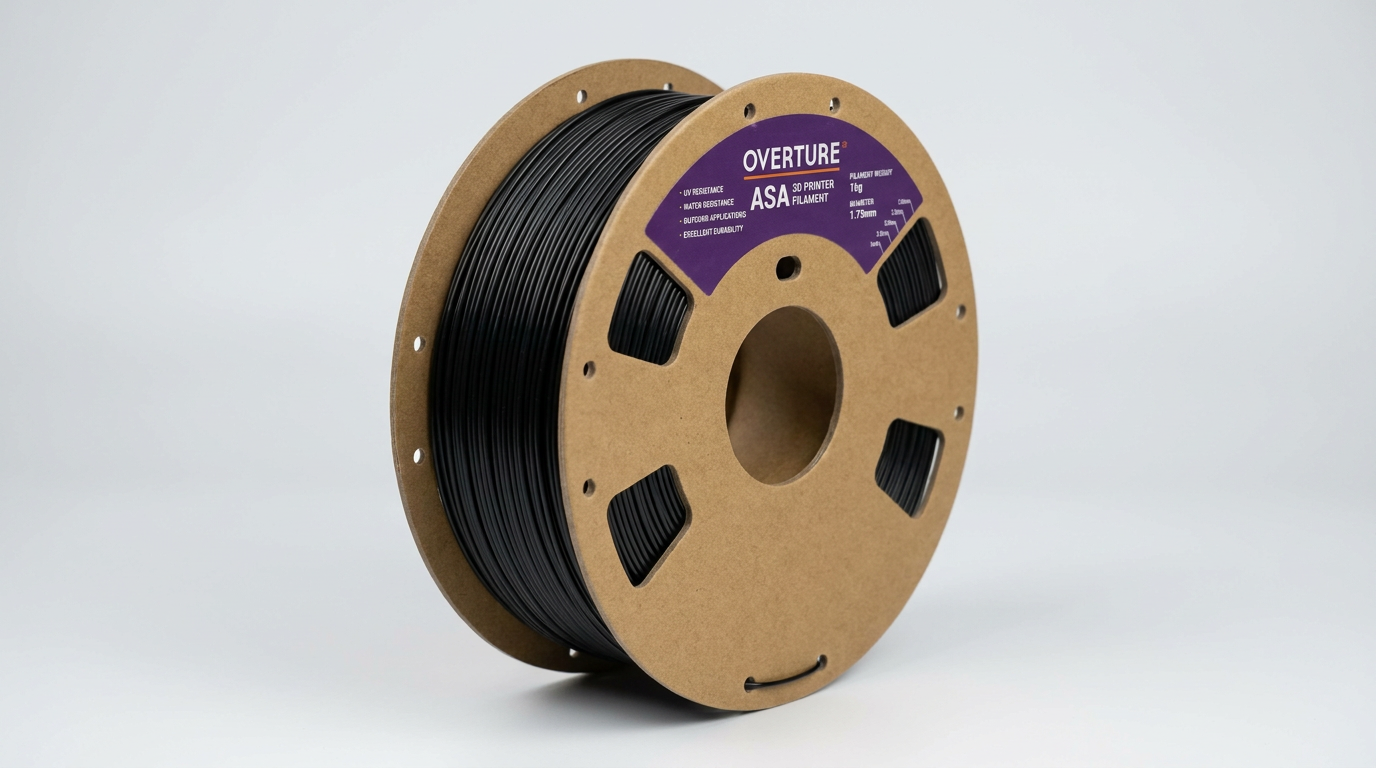
The Overture ASA filament enters a market where outdoor-ready 3D prints remain a specialist domain, often requiring more user expertise than its PLA or PETG counterparts. While the industry frequently markets new filaments as universally accessible, ASA, or Acrylonitrile Styrene Acrylate, inherently demands a more considered approach. It promises UV and weather resistance, features critical for functional parts exposed to environmental stressors. This particular offering from Overture navigates the inherent complexities of ASA while delivering on its core promise of durability.
Owners consistently highlight this filament's suitability for high-stress, outdoor applications. The material's resistance to UV degradation and elevated temperatures makes it an obvious choice for components that would quickly fail if printed in less robust plastics. However, this performance comes with a notable learning curve, a characteristic fundamental to ASA itself rather than a flaw of this specific product. The trade-off is clear: invest time in calibration and environmental control, and the filament delivers robust results.
Ultimately, the Overture ASA filament represents a high-value entry point into engineering-grade materials for hobbyists and professionals willing to engage with its specific demands. It exemplifies what we might call the "Enclosure Imperative" a hidden cost in time and equipment often overlooked by those new to advanced filaments, where successful printing becomes less about the filament itself and more about the controlled environment surrounding the printer.
What owners love
- + Exceptional UV and weather resistance for outdoor use
- + High impact strength and heat resistance up to 96°C
- + Delivers strong, durable functional parts
- + Consistent diameter and spool winding reported by many users
- + Often achieves better aesthetics than PLA+ with less visible layer lines
- + Good value for a technical filament
Common complaints
- − Requires an enclosure for successful printing
- − Emits significant fumes; requires excellent ventilation
- − Demands higher nozzle and bed temperatures, challenging some printers
- − Significant learning curve for bed adhesion and warping prevention
- − May require extensive calibration of print settings
- − Black color can appear as a very dark gray
Design & Build
Overture ASA filament comes on a cardboard spool, a common and environmentally conscious choice. Owners frequently commend the spool's winding, noting a lack of tangles or brittleness, which contributes to a more reliable printing experience. This attention to spool quality, especially for a filament demanding high-temperature printing, is a key factor in uninterrupted print jobs. The filament diameter is consistently reported to be 1.75mm, adhering to a +/- 0.02 mm tolerance, which is critical for consistent extrusion and print quality. While the physical presentation is straightforward, the material's inherent properties define its build: it is designed to be tough and resilient, a primary reason for its adoption over more common materials.
Setup & Ease of Use
Setting up Overture ASA requires a distinct shift in approach compared to printing with PLA or PETG. The filament demands significantly higher nozzle and bed temperatures, often pushing printer limits. Some owners report needing nozzle temperatures between 245°C and 270°C, and bed temperatures up to 110°C. This often necessitates an enclosed printer environment to manage temperature stability and minimize drafts, which are critical for preventing warping, a common ASA challenge. The "Enclosure Imperative" becomes evident here: success is heavily tied to creating a controlled thermal environment. While some users found success with generic ASA settings on modern printers like the Bambu Lab P1S, many others spent considerable time calibrating settings, particularly for bed adhesion and shrinkage compensation. Gloves are recommended when handling the filament for extended periods, indicating a material that requires more careful interaction than standard plastics.
Performance in Real Use
The Overture ASA filament excels in its intended purpose: producing durable, weather-resistant parts. Owners consistently use it for outdoor applications, car parts, and functional components requiring high heat and UV stability. Prints exposed to car interiors, direct sunlight, and even hot desiccant drying within containers show no signs of warping or degradation. Mechanically, parts printed with this ASA are described as 'super strong' and significantly more robust than those made from PLA+. The finish quality also receives praise, with many noting barely noticeable layer lines, sometimes resembling carbon fiber. However, this high performance is balanced by the distinct challenge of managing fumes during printing. The release of styrene, characteristic of ASA, necessitates robust ventilation or air purification to avoid discomfort or health issues, a factor some users describe as a 'migraine tax' for the material's benefits. Despite these ventilation requirements, the resulting prints reliably meet the demands of challenging environments.
Software & Ecosystem
Overture ASA integrates well with various slicing software, though specific profile adjustments are often necessary. Many users report success using generic ASA profiles, particularly with more advanced printers like the Bambu Lab P1S or Creality K1C, sometimes requiring minimal modifications. For less sophisticated setups, extensive calibration of flow, temperature, and pressure advance is frequently mentioned as essential. The filament supports a broad range of FDM printers, from Ender 5 Pro to Prusa Mk3s and Voron clones, indicating good compatibility once settings are dialed in. The need for a dedicated enclosure and effective fume management system (e.g., carbon filters, air purifiers) effectively places this filament within a specialized ecosystem, distinguishing it from materials that print reliably in open-air conditions. This suggests an implicit "environmental overhead" that users must account for, beyond just the filament cost.
Value & Reliability
Overture ASA filament consistently earns praise for its value, particularly given its performance characteristics. For a technical filament offering UV and heat resistance, it is considered well-priced, typically falling in the under $30 range for a 1kg spool. Reliability is generally high once print settings are optimized and environmental controls are in place. Many owners have used multiple spools and colors with consistent results, and several users identify Overture as a trusted brand for various filament types. The filament's ability to resist moisture absorption over time, especially when stored correctly, contributes to its long-term reliability. Its strength and durability in functional applications mean that successful prints provide lasting utility, making the initial investment in calibration and setup worthwhile for the right projects. The "longevity dividend" of robust, stable parts offsets the initial printing hurdles.
Verdict
Buy - This Overture ASA filament delivers excellent UV, heat, and impact resistance for demanding outdoor and functional parts.
This filament is an ideal choice for experienced 3D printer users or those with enclosed, well-ventilated setups seeking robust, engineering-grade materials. It performs exceptionally for outdoor components, automotive parts, or any application requiring high durability and temperature stability. Users printing on capable machines like Bambu Lab or Voron systems, or those willing to invest time in extensive calibration and environmental control, will find its performance justifies the effort. Individuals new to 3D printing or those without proper enclosures and ventilation for managing fumes should consider starting with more forgiving materials like PETG.
This Overture ASA filament represents a practical application of the 'Material Maturity Curve' in 3D printing. It is not an entry-level filament, nor is it experimental; rather, it is a highly capable material for specific, well-understood applications. Its success hinges on the user's operational discipline, validating the principle that for advanced materials, the printer environment and user skill are as critical as the filament itself, shifting the focus from plug-and-play simplicity to controlled process mastery.
FAQ
More 3D Printing Supplies reviews
ACESAY Glow in the Dark PLA+ Review: Novelty With Hidden Costs
Kretrum Glow in the Dark PLA Review: Vivid Color, Subdued Glow
MarsWork Pre-Dried PLA Basic 8x250g Bundle Review
Meuymeu 8-Pack Silk and Glow PLA+ Filament Review
SUNLU 16 Color PLA Filament Bundle Review
ANYCUBIC Multicolor PLA 10KG Review: Budget Bulk Reality
This review is based on real experiences shared by owners in online communities.