
Miailuy Silk PLA Filament Review: Visual Appeal Over Speed
This review is based on real experiences shared by owners in online communities.
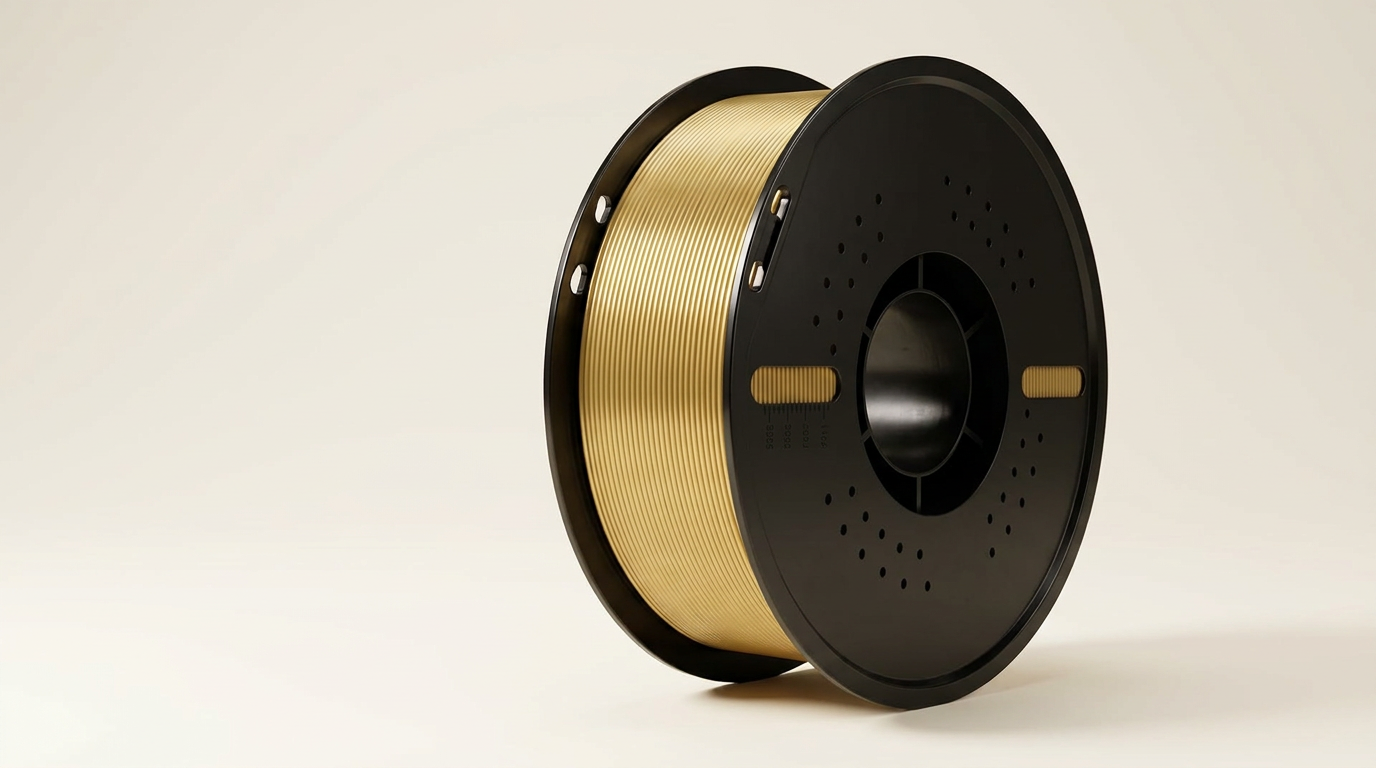
The 3D printing filament market often presents a compromise: speed or surface finish. Most new users prioritize ease of printing and structural integrity, but the Miailuy Silk PLA filament quietly carves out a niche by prioritizing visual impact. While not designed for high-speed production, its appeal lies squarely in its ability to transform functional prints into aesthetic objects, a characteristic many entry-level filaments fail to deliver consistently.
This filament distinguishes itself through a focus on cosmetic quality, a feature often overlooked in the pursuit of pure print speed or material strength. It serves a specific segment of the 3D printing community: those who value the final look of their printed objects as much as, if not more than, their mechanical properties. This positions it as a 'finishing layer filament' rather than a foundational material, best suited for display pieces, artistic creations, or parts where a metallic sheen is paramount.
Owners consistently report that the Miailuy Silk PLA delivers on its promise of striking aesthetics, often exceeding expectations for a product in its price bracket. However, this visual advantage comes with an implicit understanding of its operational limits, particularly regarding print speed and structural demands.
What owners love
- + Delivers vibrant, true-to-color silk finish
- + Consistently smooth extrusion with minimal issues
- + Affordable price point for its quality
- + Low warping and minimal stringing reported
- + Available in a wide range of colors
Common complaints
- − Requires slower print speeds for optimal results
- − Lesser structural strength compared to standard PLA+
- − Layer lines can be visible without post-processing
- − Specific colors may have subtle sheen variations
Design & Build
The Miailuy Silk PLA filament arrives vacuum-sealed with desiccant, a standard practice that owners confirm effectively preserves material quality prior to use. While this is a basic expectation, its consistent execution contributes to the filament's reliable performance. The spools maintain consistent 1.75mm diameter, crucial for reliable extrusion. Owners report no issues with precision winding, which translates to an absence of tangles and clogs, a common frustration with lesser quality filaments. The core design philosophy here is to deliver a consistent base material that allows the silk effect to shine, rather than introducing variables through poor manufacturing.
Setup & Ease of Use
This filament demonstrates notable user-friendliness across various FDM 3D printers, from Creality to Bambu Lab. Owners report successful prints with recommended nozzle temperatures between 190°C and 230°C and a heated bed at 50°C to 60°C. A recurring observation, however, is that optimal results, particularly a defined shine, often require slightly higher print temperatures. This highlights a common 'silk filament tax' a characteristic across the category where achieving the desired aesthetic often necessitates minor calibration adjustments from standard PLA profiles. Minimal warping and low odor further simplify the printing process, making it suitable for diverse environments.
Performance in Real Use
In operation, the Miailuy Silk PLA prioritizes aesthetic output. Users consistently praise its smooth, seamless extrusion, resulting in vibrant, visually appealing prints with an attractive sheen. The brass color, for example, is frequently cited for its authentic appearance. However, this visual fidelity introduces a performance trade-off: successful silk prints often require slower speeds. Attempts to print too fast can compromise the surface finish, diminishing the very quality that defines a silk filament. While stringing and jamming are rare, some users note visible layer lines, suggesting post-processing like sanding may be necessary for a truly flawless finish on certain geometries. The material also exhibits a comparative lack of strength, positioning it firmly as a decorative rather than structural filament.
Software & Ecosystem
As a filament, the Miailuy Silk PLA operates within the existing 3D printing software ecosystem without demanding specialized configurations or proprietary drivers. It functions effectively with standard slicing software and printer firmware, requiring only minor temperature and speed adjustments for optimal results. Owners printing on a range of machines, including Bambu Lab P1S and Elegoo Centauri Carbon 1, report high compatibility. The strength of this filament lies in its material consistency, not in any integrated software features. Its performance is largely dependent on the printer's capabilities and the user's calibration rather than complex software interaction.
Value & Reliability
Owners consistently rate the Miailuy Silk PLA highly for its value, particularly given its attractive price point, often landing in the low to mid-teen dollar range per spool. Many consider it a "great buy" or "good stuff" for the cost. The reliability stems from consistent extrusion, absence of tangles, and low rates of clogging or jamming, factors critical for uninterrupted print jobs. While its mechanical strength is acknowledged as less than standard PLA+, its consistent delivery of a premium aesthetic at an accessible price makes it a reliable choice for decorative applications. The overall impression is that this filament offers a compelling balance of cost and visual output.
Verdict
Buy - This filament consistently delivers striking aesthetic results for decorative 3D prints at an accessible price point.
This is an excellent option for hobbyists and designers who prioritize the visual appeal of their printed objects. If your projects include decorative pieces, artistic models, or items where a metallic or vibrant sheen is desired, and you are comfortable printing at slightly slower speeds, the Miailuy Silk PLA offers exceptional value. It performs reliably across a range of FDM printers and consistently produces vibrant, smooth finishes.
However, users needing high-strength functional parts or those who demand maximum print speed should consider alternative filaments. Its inherent aesthetic focus means a trade-off in structural rigidity compared to standard PLA+ variants. If layer line visibility is a concern for highly detailed, un-sanded models, other options might be more suitable.
The Miailuy Silk PLA thrives as a 'cosmetic specialist' in a market often dominated by utility. It represents a micro-trend towards niche materials that accept specific performance limitations in exchange for delivering a highly refined visual output. This filament proves that for many makers, the finish line is not about structural integrity, but about the 'wow' factor of the surface.
FAQ
More 3D Printing Supplies reviews
ELEGOO Water Washable 2.0 Resin Review: Convenience vs. Durability
Frucindra Glow PLA+ Filament Review: Fun in Small Batches
EONO3D PETG Filament Review: The Low-Friction PETG for Modern Printers
Creality Ender PETG Filament Review: Value for the Volume Printer
Bambu Lab PLA Filament Review: The Smart Choice for Bambu Printers
ANYCUBIC PLA Filament Bundle Review: The Workhorse Default
This review is based on real experiences shared by owners in online communities.