
iSANMATE ASA Filament Review: Affordable Outdoor Durability
By AValidReview. An AI-assisted summary of customer feedback, not a hands-on test.
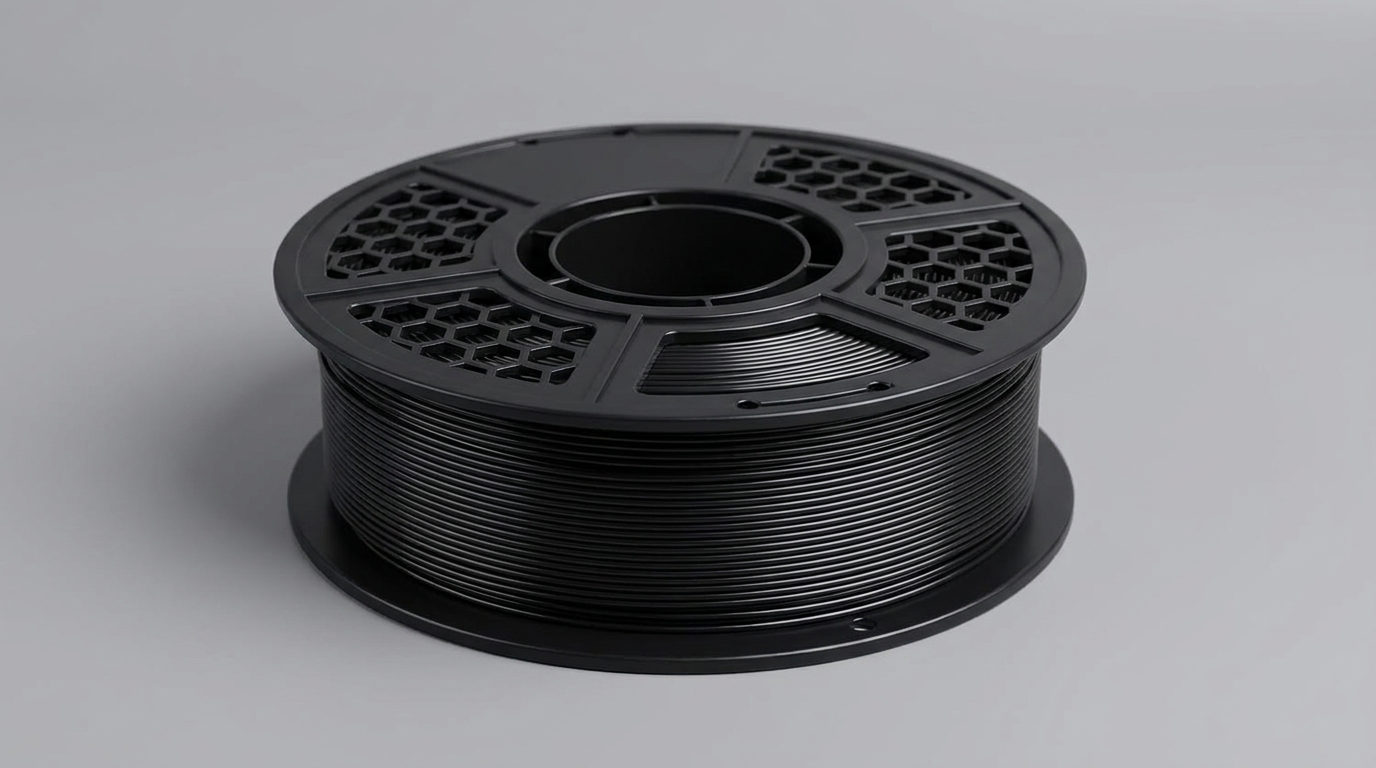
The 3D printing landscape increasingly offers specialized materials designed to push the boundaries of functional parts. Among these, ASA filament stands out for its UV and weather resistance, a critical factor for components exposed to the elements. While often associated with challenging print characteristics, the iSANMATE ASA filament carves a niche by providing this robust material at an accessible price point, blurring the lines between premium engineering plastics and everyday consumables. This shifts the conventional trade-off, inviting a broader range of makers to consider outdoor-ready prints without a steep investment.
However, this accessibility does not negate the fundamental requirements of printing with ASA. Success with iSANMATE's offering still hinges on specific environmental controls and careful printer calibration, as owners consistently report. The material delivers its advertised durability and aesthetic, but it demands attention to the printing environment to unlock its full potential. This review examines how well iSANMATE navigates this tension between material capability and user experience.
Unlike many specialized filaments that command a significant cost premium, iSANMATE positions ASA as a viable alternative for a wider user base. This review investigates whether its performance justifies its value proposition, particularly for those seeking reliable outdoor parts without the typical financial or technical barriers.
What owners love
- + Excellent UV and weather resistance for outdoor applications
- + Prints with good layer adhesion and strength
- + Significantly more affordable than competing ASA brands
- + Many report minimal odor compared to other ASA/ABS filaments
- + Broad compatibility, including Bambu Lab AMS systems
- + Available in a good range of colors
Common complaints
- − Requires an enclosed printer for optimal results
- − Needs thorough drying before use, or performance degrades
- − Some spools may not fit certain AMS systems perfectly
- − Can exhibit warping if chamber temperature is not maintained
- − Some colors, like white, may have a noticeable tint
Design & Build
The iSANMATE ASA filament is designed for applications demanding high resistance to UV, weather, mechanical stress, and thermal exposure. Owners consistently affirm its industrial-grade durability, noting its suitability for outdoor engineering parts like garden hose hangers and automotive trim. The material yields a desirable matte finish when printing parameters are dialed in. While the primary appeal is its resilience, owners also report good dimensional accuracy. The spools are vacuum-sealed with desiccant, a standard practice, but critical for a hygroscopic material like ASA. This attention to packaging indicates an understanding of the material's sensitivity to moisture, a recurring theme in user feedback about performance.
The physical characteristics of the filament itself are generally positive; owners describe it as consistently wound with good density. However, one user noted that the white color has an ivory tint, which could be a factor for color-critical projects. This suggests that while performance is strong, color accuracy might sometimes present minor variations from expectations.
Setup & Ease of Use
Despite ASA's reputation for being challenging, many users find the iSANMATE ASA surprisingly manageable, especially for a first-time ASA experience. The critical insight from owner reports is the "pre-print prep tax": success is highly dependent on drying the filament thoroughly before use and printing in a temperature-controlled, enclosed environment. Without these steps, users report issues like poor adhesion, layer problems, and artifacts. Printers like the Bambu Lab X1C and K1 Max, with their built-in enclosures, are frequently mentioned as producing excellent results with minimal fuss, often using generic ASA profiles or specific Bambu Lab settings. Some users even note successful prints right out of the package without drying, though this appears to be the exception rather than the rule and carries inherent risk. Bed adhesion is generally strong, with some users applying glue or using textured PEI plates for optimal results. The recommended printing temperatures (240-270°C nozzle, 80-100°C bed) are standard for ASA, indicating that while forgiving, it still operates within the expected thermal envelope of engineering filaments.
Performance in Real Use
The core promise of ASA is its performance in harsh environments, and iSANMATE largely delivers on this. Owners report successful prints for outdoor functional items, vehicle components, and tooling fixtures, all holding up well against direct sunlight and temperature fluctuations. The material's strength and heat resistance are frequently highlighted, with one user specifically citing a cup holder printed for a Jeep that withstood summer heat without issue. Print quality is described as excellent, strong, and rigid, often with minimal layer lines. A notable "odor advantage" is frequently mentioned; many users found the smell significantly less potent than other ASA or ABS filaments they had used, a distinct improvement for those sensitive to fumes. However, achieving these results consistently requires careful management of chamber temperatures, with 45-60°C being cited as ideal to prevent warping and ensure strong parts. Users also discovered that while the spool might suggest 'no fan', some printers, particularly Bambu Lab models, achieved better results with the fan enabled and specific Bambu Lab ASA settings, indicating that manufacturer recommendations are a starting point, not a rigid rule, and adaptation to specific machine profiles is key.
Software & Ecosystem
The iSANMATE ASA filament exhibits strong compatibility across a range of popular 3D printers, from Creality K1 Max to Prusa MK3 and Sovol SV08. Its most frequently cited compatibility success is with Bambu Lab printers, including the X1/X1E/P1P/P1S/A1 series, and their Automatic Material System (AMS). Many owners confirm seamless integration with Bambu Lab's AMS, often requiring only a switch from generic ASA profiles to Bambu Lab's specific ASA settings for optimal results. This high degree of compatibility with a leading enclosed printer ecosystem significantly lowers the barrier to entry for users considering ASA, streamlining the printing process for a material traditionally known for its finicky nature. However, a few users noted that the spool dimensions might present fitment issues in some AMS systems, like the Anycubic Ace Pro, requiring minor adjustments or alternative feeding methods. This suggests a slight "spool-fit lottery" that users of multi-material systems should be aware of, even with generally good compatibility.
Value & Reliability
The iSANMATE ASA filament consistently receives praise for its exceptional value. Owners frequently compare its price favorably to other ASA brands, and even to some PETG or PLA filaments, positioning it as an affordable entry point into engineering materials. Many buyers mention purchasing multiple rolls or reordering after initial success, signaling high satisfaction with the price-to-performance ratio. The reliability of the filament, once proper printing conditions are established, is also strong. Reports of consistent winding, solid color throughout the spool, and absence of tangling contribute to its positive perception. While the initial setup may require attention to drying and enclosure, the overall consensus is that the product offers a compelling balance of quality and cost. This makes it a strong contender for users looking to experiment with ASA or to produce durable outdoor parts without committing to the higher price tag of premium brands, especially for projects where cost-per-part is a factor.
Verdict
Buy - The iSANMATE ASA filament offers a compelling combination of outdoor durability and value, making it a strong choice for functional parts.
This filament is an excellent option for users with enclosed 3D printers who need to produce strong, UV and weather-resistant parts, particularly those who have experience with more challenging materials like ABS. It performs well for automotive components, outdoor fixtures, and tooling, offering a high-quality matte finish. Users already invested in ecosystems like Bambu Lab will find it integrates well. Individuals new to ASA should be prepared to invest time in drying the filament and dialing in printer settings for optimal results. Those without an enclosed printer should skip this, as achieving successful prints without a controlled environment will be difficult and frustrating.
What iSANMATE demonstrates is a pivotal moment for advanced filaments: the "commoditization of durability." By delivering ASA's robust properties at a price point approaching common materials, it effectively democratizes access to engineering-grade outdoor performance, shifting the cost curve and opening new application spaces previously constrained by material expense. This makes high-performance materials less of a niche luxury and more of an accessible tool for everyday makers, challenging established pricing structures in the process.
FAQ
More 3D Printing Supplies reviews
ACESAY Glow in the Dark PLA+ Review: Novelty With Hidden Costs
Kretrum Glow in the Dark PLA Review: Vivid Color, Subdued Glow
MarsWork Pre-Dried PLA Basic 8x250g Bundle Review
Meuymeu 8-Pack Silk and Glow PLA+ Filament Review
SUNLU 16 Color PLA Filament Bundle Review
ANYCUBIC Multicolor PLA 10KG Review: Budget Bulk Reality
This review is based on real experiences shared by owners in online communities.