
Hatchbox PLA Filament Review: The Unsung Workhorse
This review is based on real experiences shared by owners in online communities.
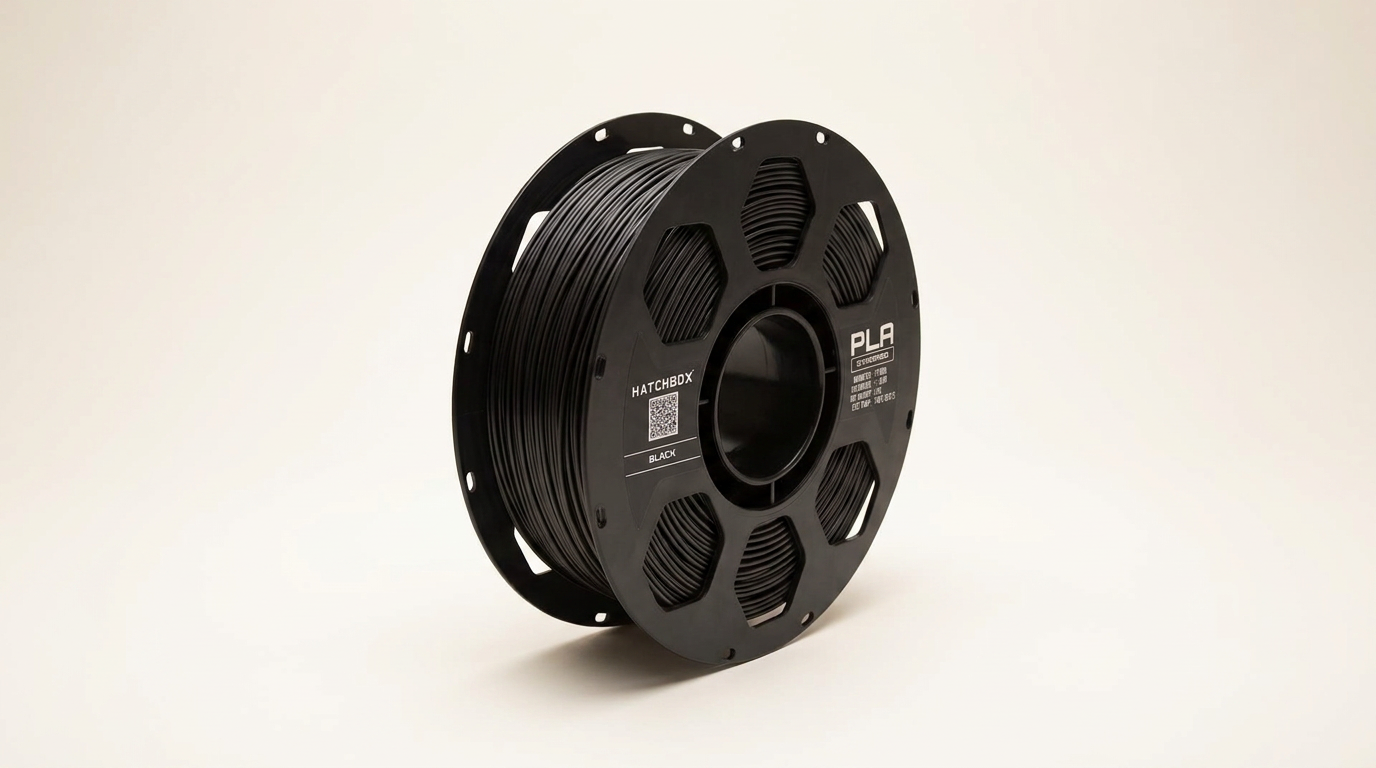
In a 3D printing market perpetually chasing the next exotic material or ultra-fast machine, it is easy to overlook the foundational elements that enable consistent success. PLA filament is the bedrock of many printing operations, from hobbyist benches to prototype labs. The true test of a filament is not its peak-performance claim but its ability to deliver repeatable results across diverse hardware and user skill levels.
Hatchbox 1.75mm PLA has quietly solidified its position as a go-to option, largely because it embodies a principle we term 'invisible reliability.' This is filament that vanishes into the background of the printing process. You load it, you set basic parameters, and it works, allowing the printer's capabilities and the user's design to take center stage. For many, this predictable operation is the most valuable feature a material can offer. This review examines how Hatchbox achieves this consistency, where it fits in the broader filament landscape, and for whom its 'invisible reliability' translates into genuine printing advantage.
What owners love
- + Consistently reliable print performance across various printers
- + Good bed adhesion minimises first layer issues
- + Clean extrusion with minimal stringing or warping
- + Wide compatibility with diverse 3D printer models
- + Dimensional accuracy is consistently maintained
- + Generally arrives well-sealed and ready for use
Common complaints
- − Occasional spools might exhibit tangling issues
- − Some users report specific spools do not fit certain AMS systems
- − Can be susceptible to moisture if left exposed for extended periods
- − Price is slightly higher than some budget options
Design & Build
The physical characteristics of Hatchbox PLA filament are centered on a pragmatic approach to material science. Its 1.75 mm diameter is consistently maintained within the advertised +/- 0.03 mm tolerance, a critical factor for reliable extrusion. This dimensional precision is the foundation of its 'invisible reliability,' ensuring consistent material flow through the nozzle over long prints. Unlike some specialty filaments that prioritize aesthetics or extreme properties, Hatchbox focuses on functional consistency. Owners frequently highlight the uniform winding on the spool as a contributor to jam-free printing, though a small minority report occasional tangles. The vacuum-sealed packaging with desiccant is also noted as effective in protecting the filament from moisture during shipping and storage.
Setup & Ease of Use
Hatchbox PLA demonstrates a remarkable 'printer-agnostic' quality, making it accessible for both entry-level and advanced users. Owners report successful initial prints across a wide range of machines, from popular models like the Ender 3 V2 Neo and Anycubic Kobra to high-end Prusa and Bambu Lab X1C printers. The recommended extrusion temperature range of 180°C - 210°C is broad, allowing users flexibility in fine-tuning settings for their specific printer and desired print quality. The material generally requires minimal calibration compared to other brands; several users noted that once their printer was dialed in, this filament simply worked without continuous adjustment, a significant advantage for those who prioritize printing over constant tinkering. This ease of setup effectively lowers the 'first-layer cliff' for new users by reducing a common point of failure.
Performance in Real Use
In day-to-day operation, Hatchbox PLA performs predictably and reliably. Owners consistently report excellent bed adhesion, which is crucial for preventing print failures regardless of the build surface. The material exhibits minimal warping and stringing, contributing to cleaner prints with less post-processing. Its ability to produce strong layer adhesion results in durable parts. While not explicitly designed for high-speed printing, its consistent flow and dimensional accuracy mean it generally performs well even in faster printing scenarios, provided the printer's thermal capabilities can keep up. The absence of strong odors during printing is also a frequently cited benefit, enhancing the user experience in home environments. Users often refer to it as their 'go-to' or 'workhorse' filament, indicating its consistent capability to deliver usable parts without unexpected issues.
Software & Ecosystem
Hatchbox PLA operates within the standard PLA material profiles for most slicing software, requiring no proprietary settings or unique calibration routines. This broad compatibility aligns with its 'printer-agnostic' nature, ensuring it integrates seamlessly into existing workflows whether using open-source slicers like Cura or manufacturer-specific software. Its consistent parameters mean users can rely on established print profiles for PLA, reducing the need for extensive trial-and-error. The ecosystem around Hatchbox is less about integrated software and more about its broad acceptance within the 3D printing community as a reliable standard. This makes it a dependable choice for users who may switch between different printers or frequently update their software, without encountering new material-specific challenges. However, a small number of users noted issues with the spool design not fitting into certain Automated Material System (AMS) units, highlighting a mechanical compatibility consideration rather than a software one.
Value & Reliability
The perceived value of Hatchbox PLA is consistently high among its user base, often described as the 'gold standard for mid-range filament.' While it may not always be the absolute cheapest option available, its reliability and consistent performance are frequently cited as justifying a slightly higher price point, typically in the mid-$20 range per kilogram spool. Many owners have tried cheaper alternatives only to return to Hatchbox due to print failures and frustration, underscoring its competitive advantage in total cost of ownership when factoring in wasted material and time. The filament's long-term stability is also notable; several users reported successful prints even after spools had been stored for years, as long as basic precautions against moisture were taken. This longevity and consistent positive outcome establish a 'reliability premium' that makes it a preferred choice for many serious enthusiasts and professionals.
Verdict
Buy - This filament consistently delivers reliable prints across a wide range of 3D printers and user skill levels.
Hatchbox 1.75mm PLA is an excellent choice for anyone seeking consistent, stress-free 3D printing. It is particularly well-suited for beginners who need a reliable material that minimizes initial hurdles, and for experienced users who require a workhorse filament for production or prototyping. Its proven compatibility with diverse printers makes it a safe bet for a wide audience. Those prioritizing absolute lowest cost, or who rely on specific spool designs for advanced AMS systems, might consider alternatives, but these instances are less common.
Hatchbox PLA embodies what can be termed the 'default excellence' of 3D printing materials. In a segment often driven by niche applications or speculative innovations, this filament distinguishes itself by consistently performing the core task exceptionally well. Its true contribution is not in breaking new ground, but in reinforcing the fundamental stability and reproducibility that allows the broader 3D printing ecosystem to thrive.
FAQ
More 3D Printing Supplies reviews
ELEGOO Rapid PETG Filament Review: High-Speed Printing Achieved
ARKA 3D Printing Super Glue Gel Review: Bonds PLA, ABS, PETG, TPU
ELEGOO Rapid PLA Plus Filament Review: Speed Without Compromise
DIYSELF 16-Piece Exacto Knife Set Review: Precision for the Practical Crafter
Miailuy Silk PLA Filament Review: Visual Appeal Over Speed
ELEGOO Water Washable 2.0 Resin Review: Convenience vs. Durability
This review is based on real experiences shared by owners in online communities.